
U.S. Treasury yields moved higher on Tuesday as investors reacted to renewed uncertainty surrounding Middle East tensions and fluctuating oil prices. The bond market reflected growing caution, with traders adjusting positions amid conflicting geopolitical signals and persistent energy market volatility.
QuilCapital’s broker Martin H offers a clear perspective on how global developments are influencing interest rates and shaping investor expectations across fixed-income markets.
Benchmark Yields Edge Higher Across The Curve
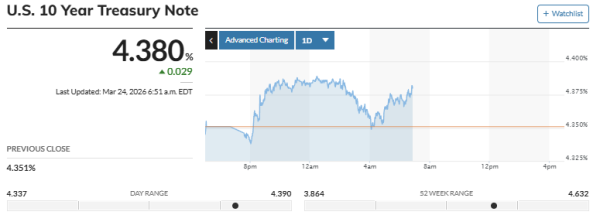
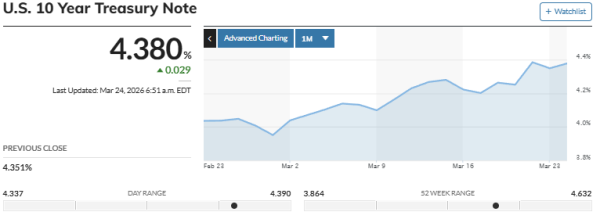
The benchmark 10-year Treasury yield climbed to approximately 4.37%, rising by more than 3 basis points in early trading. Longer-duration bonds followed a similar pattern, with the 30-year yield increasing to around 4.94%, while the 20-year yield approached 4.97%.
Shorter-term maturities also reflected upward pressure. The 2-year yield rose near 3.89%, signaling that market participants continue to reassess expectations around monetary policy and inflation.
In bond markets, yields move inversely to prices, meaning that the upward movement suggests investors are selling Treasurys as uncertainty grows.
Oil Market Swings Drive Rate Movements
A key factor behind the rise in yields has been the behavior of crude oil prices. After experiencing a sharp drop earlier in the week, oil rebounded during Asian trading hours, reversing part of the previous session’s losses.
This rebound indicates that traders remain cautious about the outlook for the Middle East conflict. Initial optimism had emerged following reports of potential diplomatic progress, but conflicting statements from involved parties have quickly undermined confidence.
The resurgence in oil prices has reinforced inflation concerns, which in turn places upward pressure on bond yields as investors demand higher returns to compensate for potential price increases.
Conflicting Signals Fuel Market Uncertainty
Markets have been particularly sensitive to mixed headlines regarding geopolitical developments. While earlier reports suggested progress toward de-escalation, subsequent denials have created confusion and heightened volatility.
This environment has made it difficult for investors to establish a clear directional view. As a result, both energy and fixed-income markets are reacting quickly to new information, often reversing course within short periods.
The lack of clarity surrounding the situation has kept risk sentiment fragile, with traders remaining cautious and responsive to any changes in geopolitical dynamics.
Treasury Demand Weakens Amid Rising Risks
Earlier in the week, falling oil prices and easing tensions had supported demand for Treasurys, pushing yields slightly lower. However, the renewed rise in energy prices has reversed that trend.
Higher oil prices tend to increase inflation expectations, reducing the attractiveness of fixed-income assets unless yields adjust accordingly. This dynamic has contributed to the recent sell-off in Treasurys.
Investors are now balancing the safe-haven appeal of government bonds against the potential impact of rising inflation, leading to a more complex market environment.
Market Focus Shifts To Energy And Headlines
According to the analysis, bond markets are currently being driven less by traditional economic data and more by external factors, particularly energy price movements and geopolitical developments.
This shift highlights how global uncertainty can temporarily override standard market drivers such as economic indicators or central bank guidance.
Until there is greater clarity on the geopolitical situation, Treasury yields are likely to remain closely tied to fluctuations in oil prices and headline-driven sentiment.