
Robinhood (HOOD) has become a standout platform for retail investors, rapidly gaining popularity as a simple and accessible way to trade stocks and cryptocurrencies. Brokers from Aurudium analyze the company’s third-quarter results, where sales doubled to $1.3 billion and adjusted earnings surged 259% to $0.61 per share, to determine whether this growth is sustainable.
Much of Robinhood’s performance has been driven by younger investors engaging in speculative trading, particularly in cryptocurrencies and options. While the platform’s growth story is compelling, brokers caution that market optimism and volatility may limit upside, making it a stock that requires careful evaluation before buying.
Robinhood’s Rapid Growth
Robinhood has quickly established itself as a user-friendly platform for buying and selling stocks and cryptocurrencies, helping reduce barriers for retail investors. Its focus on low-cost, commission-free trading has resonated strongly with younger investors, and the third-quarter results reflect this success.
Sales doubled to $1.3 billion, while non-GAAP earnings surged 259% to $0.61 per share. The platform now boasts 26.8 million users, up 10% year over year, and average revenue per user (ARPU) jumped 82% to $191. This growth demonstrates Robinhood’s ability to expand its user base while increasing revenue from each investor, making the platform a powerful driver of top-line performance.
Key Drivers of Performance
Robinhood’s revenue growth is heavily tied to transaction-based income, which includes stock trades, options, and cryptocurrency transactions. In the most recent quarter, $730 million of revenue came from trading activity, with cryptocurrency trading surging 300% year over year. Options trading also contributed meaningfully to revenue, highlighting how Robinhood’s business model depends on investors taking active and sometimes riskier positions in the market.
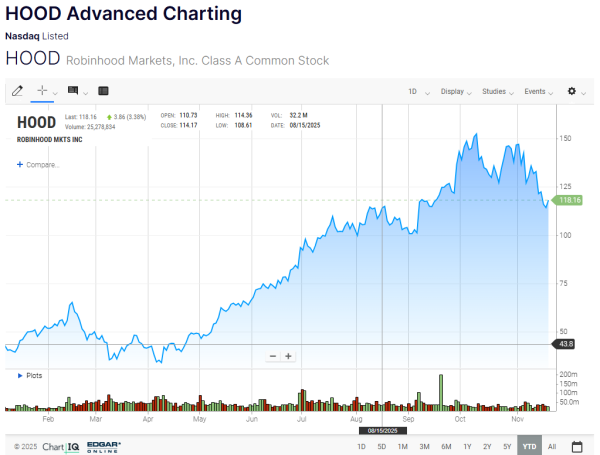
The combination of these drivers has fueled Robinhood’s stock performance, contributing to a 1,100% increase in share price over the past three years. Some analysts note that this growth is impressive, but it comes with unique risks tied to market sentiment and investor behavior.
Reasons for Caution
Despite Robinhood’s growth story, there are several important risks investors should consider:
- Market Dependency: The company’s success relies on bullish market conditions. The platform has only been tested during periods of strong equity performance, with the S&P 500 rising roughly 50% since Robinhood’s IPO. A bear market or economic slowdown could sharply reduce trading activity and negatively impact revenue.
- Speculative Revenue Sources: A substantial portion of sales stems from cryptocurrency and options trading, both of which carry high volatility. While crypto surges have contributed to recent earnings, declines in cryptocurrency prices could quickly reverse gains. Brokers warn that Robinhood’s dependence on speculative activity makes its revenue less predictable than traditional brokerage firms.
- Economic Headwinds: Recent data suggests a slowing job market, with October layoffs reaching their highest level for that month in 22 years. Coupled with retreating cryptocurrency prices, this could reduce investor appetite for risk and, in turn, affect Robinhood’s trading volume and revenue.
Why Buying Now Might Be Risky
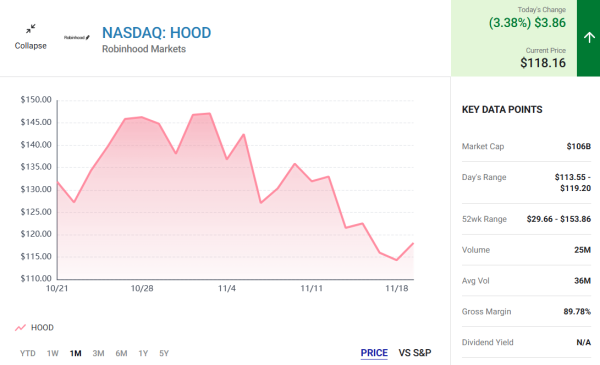
Given these factors, brokers advise caution before purchasing Robinhood stock under $120. While the platform shows long-term potential due to its large and growing user base, current stock valuations may already reflect optimistic assumptions about continued trading growth. Investors should recognize that the company’s performance is tied closely to market sentiment, which can fluctuate rapidly.
Robinhood may remain a solid long-term investment for risk-tolerant investors who are confident in sustained market activity and ongoing adoption of its platform. However, buying after a strong run-up without considering potential market volatility could expose investors to significant downside risk.
What Investors Should Watch
Investors should monitor several key indicators:
- Trading volume trends, particularly in stocks, options, and cryptocurrency.
Economic indicators, such as employment data and consumer confidence, which affect investor risk appetite. - Regulatory developments affecting retail trading platforms and cryptocurrency markets.
Understanding these factors will help investors gauge whether Robinhood can maintain its recent growth trajectory or if volatility and market corrections will pressure the stock.
Conclusion
Robinhood has undeniably transformed retail investing and achieved impressive growth metrics. Many financial analysts highlight its rapid sales increase, expanding user base, and rising ARPU as significant accomplishments. Yet, the company’s heavy reliance on speculative trading and market optimism means caution is warranted.
For now, investors may consider holding off on buying Robinhood stock below $120, opting instead to watch for more stable market conditions or potential dips that better align risk with reward. While Robinhood’s long-term prospects remain compelling, its short-term trajectory is closely tied to factors outside the company’s direct control, underscoring the importance of strategic timing for prospective investors.