
The sharp reversal in U.S. markets on Thursday caught many investors off guard. Brokers at Aurudium note that the day began with strong optimism following Nvidia’s phenomenal third-quarter earnings, which boosted confidence in the strength of the artificial intelligence ecosystem.
Futures were green, major indexes surged at the open, and Nvidia looked set for another breakout session. Yet by the afternoon, enthusiasm had collapsed into broad selling. Nvidia plunged from its highs, the S&P 500 and Nasdaq tumbled, and what looked like a bullish session quickly became a rout. Understanding why this reversal happened sheds light on deeper market anxieties.
Nvidia’s Blowout Earnings Set the Stage for Early Optimism
Nvidia’s strong third-quarter results ignited significant investor enthusiasm, driven by intense demand for its industry-leading GPUs that power global AI data centers. Shares rose 5.1 % in after-hours trading, setting expectations for further gains.
As the most valuable company on the S&P 500 and a key AI bellwether, Nvidia’s performance often influences broader market sentiment. When markets opened Thursday, Nvidia climbed another 5.1 %, with the S&P 500 up 1.4 % and the Nasdaq rising 2.2 %. Early trading reflected confidence that Nvidia’s momentum signaled continued growth in AI-driven spending across the technology landscape.
How Early Gains Quickly Erased Into Red
Despite the strong opening, the optimism did not last. Traders watched the sea of green fade throughout the morning as selling pressure intensified. By the afternoon, gains had reversed across nearly every major sector.
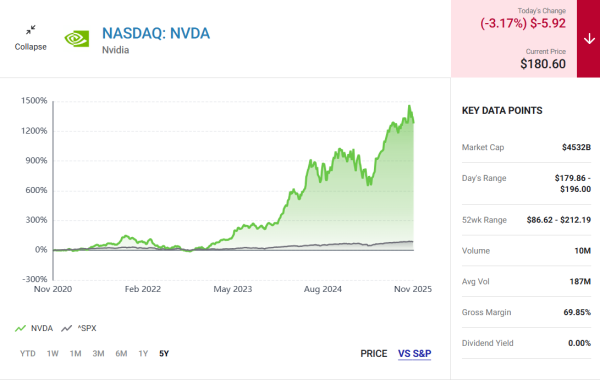
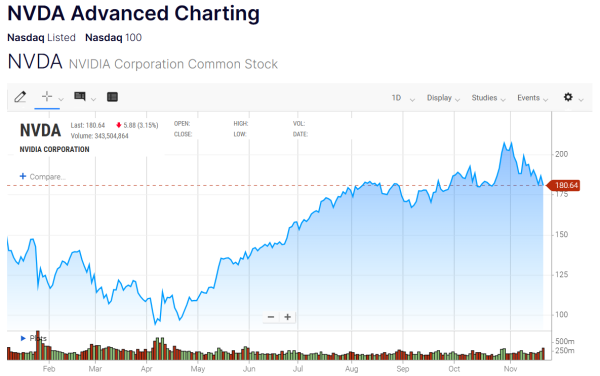
NVIDIA’s stock was hit hardest. After opening sharply higher, it slid steadily and eventually closed down 3.2 %, a stark contrast to the early excitement. From its morning peak, Nvidia dropped 7.8 %, signaling a dramatic shift in investor sentiment.
The rest of the market echoed this reversal. The S&P 500 closed down 1.6 %, while the Nasdaq finished down 2.2 %, erasing the morning’s strong rally. Even companies benefitting indirectly from AI enthusiasm followed Nvidia lower, underscoring how intertwined market psychology has become with the chipmaker’s performance.
What Spooked Investors: Two Catalysts Behind the Sudden Reversal
According to expert analysts, two primary factors drove Thursday’s abrupt downturn: growing concern over Federal Reserve policy and renewed anxiety surrounding a potential AI bubble.
1. Rising Fear the Federal Reserve Will Delay Rate Cuts
The biggest trigger was the release of delayed September jobs data, which painted a mixed picture of the labor market. While not alarming on its own, the report sparked speculation that the Federal Reserve may choose not to cut interest rates in December, a scenario investors had increasingly priced in.
Higher rates for longer would pressure valuations, particularly for high-growth technology stocks that rely on expectations of future earnings. The abrupt adjustment in rate expectations caused fast rebalancing across portfolios, hitting tech and AI names especially hard.
2. Renewed Jitters About an AI Bubble
The second issue weighing on traders was the persistence of concerns that AI stocks have run ahead of fundamentals. Nvidia’s blockbuster earnings helped alleviate many of these fears, but not completely.
Sentiment took a hit earlier in November when Michael Burry revealed bearish positions on Nvidia and Palantir, sparking debates about whether AI valuations reflect excessive speculation. While Nvidia’s results confirmed strong underlying demand, Thursday’s market action made clear that skepticism remains.
Nvidia’s Position in the AI Ecosystem Remains Strong
Despite volatility, many analysts argue that Nvidia is not in a bubble. AI infrastructure demand continues to expand across cloud hyperscalers, enterprises, and defense applications. Nvidia’s technological leadership, especially in GPUs and accelerated computing, remains intact.
Its earnings reaffirmed that AI spending is not slowing. The company’s growth continues to be supported by structural forces, including rising data center demand, the proliferation of generative AI, and global investment in advanced computing capabilities.
Market Volatility Highlights Ongoing Sensitivity to Macro Signals
Thursday’s reversal demonstrates how sensitive markets remain to macroeconomic signals and narrative shifts. Even a blowout report from one of the world’s most influential tech companies could not overpower worries about interest rates or questions about long-term valuations.
For investors, the episode serves as a reminder that strong company performance does not always translate into immediate stock gains, especially in an environment shaped by uncertainty around monetary policy and shifting expectations for future growth. Nvidia continues to lead in AI technology, but the broader market must still navigate inflation, rate decisions, and fluctuating sentiment toward cutting-edge innovation.
In the coming weeks, clarity from the Federal Reserve and additional data on labor market strength may help stabilize conditions. Until then, volatility is likely to remain elevated as markets digest both exceptional corporate results and persistent macro headwinds.