
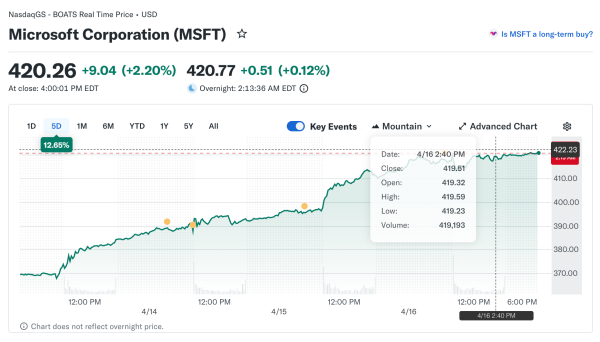
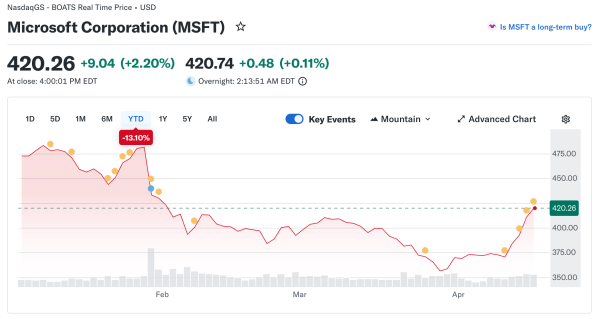
Technology stocks led Wednesday’s market advance as investors reconsidered artificial intelligence’s competitive threats. Software companies suffered brutal selloffs earlier when disruption fears reached peak intensity. The sector recovery demonstrated how quickly sentiment shifts when fundamentals remain solid.
Microsoft surged 4.64%, extending recent gains as cloud computing demand stayed robust. Mr. Schneider at ArcheInvest explores how Oracle jumped 4.18% on database modernization progress. ServiceNow rocketed 7.18% as enterprise workflow automation showed resilience despite AI alternatives emerging.
The Sentiment Shift
Investors who sold software stocks during the panic now rushed back, fearing missing the recovery. The psychological whipsaw created volatility as positions reversed dramatically within weeks. Algorithms amplified moves as systematic strategies detected momentum shifts, triggering programmatic buying.
Valuation resets during correction created attractive entry points for long-term holders. Price-to-sales multiples compressed to levels last seen during the previous bear market. Quality companies trading at distressed valuations rarely last long before value hunters emerge.
The Cloud Momentum
Azure revenue growth remained strong despite concerns about enterprise spending slowdowns. Hyperscaler capital expenditures continued to support infrastructure software providers. Database migration to cloud platforms accelerated as on-premises alternatives aged.
Salesforce advanced 3.67%, recovering from year-to-date losses exceeding 30% previously. Customer relationship management adoption persisted across industries despite economic uncertainty. The installed base provided recurring revenue stability through cycles.
The AI Integration
Companies successfully embedding AI capabilities into existing products strengthened competitive positions. The integration approach proved more defensible than feared versus standalone AI tools. Customers preferred unified platforms over managing multiple point solutions.
Microsoft Copilot adoption exceeded internal targets as enterprises experimented with productivity enhancements. Early results showed measurable efficiency gains justifying subscription premium pricing. The monetization pathway for AI features became clearer, reducing investor skepticism.
The Subscription Economics
Recurring revenue models demonstrated resilience during volatile periods, providing visibility. Annual contract values remained stable with limited churn despite competitive pressures. Net revenue retention rates held above critical thresholds, indicating healthy customer expansion.
Free cash flow generation impressed analysts as operating leverage materialized from scale. Profitability improvements occurred alongside revenue growth, creating attractive financial profiles. The combination appealed to investors seeking quality growth at reasonable prices.
The Valuation Compression
Forward price-to-earnings multiples for the software sector fell below five-year averages. The dislocation created opportunities for fundamental investors willing to look past noise. Historical patterns suggested that mean reversion eventually occurred when fear subsided.
Growth-at-any-cost models fell out of favor, replaced by profitability-focused strategies. Companies demonstrating a path to sustainable margins outperformed pure growth stories. The market rewarded capital discipline over aggressive expansion.
The Competitive Dynamics
Consolidation within the software industry accelerated as scale advantages became apparent. Smaller vendors struggled to compete against platform players with broader offerings. Merger activity increased as strategic buyers sought technology capabilities.
Open source alternatives gained traction in certain categories, pressuring proprietary vendors. The competitive threat forced incumbents to adjust pricing and product strategies. Innovation cycles shortened as disruption threats from multiple directions intensified.
The Enterprise Spending
Chief information officers maintained technology budgets despite economic headwinds affecting other areas. Digital transformation initiatives continued as companies recognized competitive necessity. Cloud migration projects proceeded on schedule with limited delays.
Seat count reductions during efficiency drives impacted some vendors materially. However, price increases on remaining users partially offset volume declines. The net effect on revenues proved less severe than initially feared.
The Security Imperative
Cybersecurity spending remained prioritized as the threat landscape intensified continuously. Ransomware attacks and data breaches drove increased investment in protective technologies. Compliance requirements expanded, creating sustained demand for security solutions.
Zero-trust architectures gained adoption, requiring substantial software investments. The transition from perimeter-based to identity-based security created an opportunity. Vendors positioned in emerging categories enjoyed tailwinds from architectural shifts.
The Infrastructure Software
Observability platforms benefited from increasing application complexity requiring monitoring. Database modernization drove migrations from legacy systems to cloud-native alternatives. Data integration tools gained importance as enterprises managed sprawling landscapes.
DevOps tooling adoption continued as software development became more central. Automation of deployment pipelines reduced manual processes and error rates. The infrastructure layer proved more resilient than application software.
The International Markets
Software companies with global footprints navigated currency headwinds affecting revenue translations. European growth slowed as macroeconomic conditions deteriorated across the region. Asian markets showed strength, particularly in India and Southeast Asia.
Localization requirements created barriers to entry, protecting established vendors. Compliance with regional data sovereignty regulations added complexity and cost. The fragmentation limited economies of scale in certain markets.
The Forward Outlook
Analysts raised estimates following strong quarterly results and improving visibility. Full-year guidance appeared conservative, providing upside potential if conditions held. The risk-reward profile improved substantially from oversold levels.
Patient investors accumulating quality software names during the panic positioned well for recovery. The sector historically led market advances following corrections. Current valuations offered compelling entry points for long-term holders.