
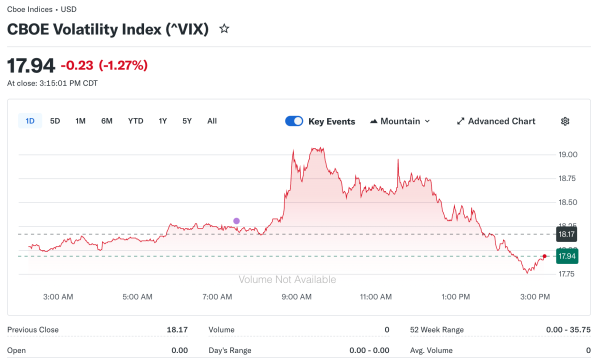
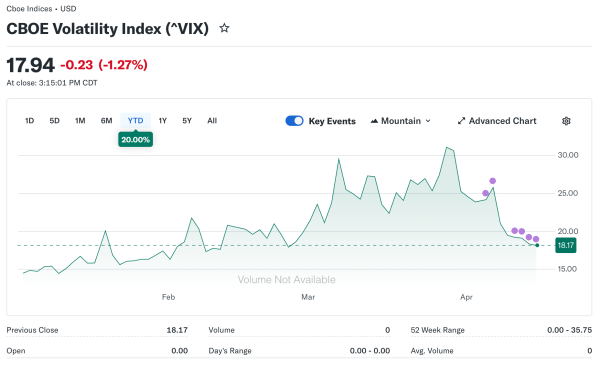
The VIX volatility index declined for the tenth time in twelve sessions. Implied volatility compressed dramatically from crisis peaks reached during late March. Options markets priced a substantially reduced probability of extreme price movements ahead.
Mrs. Weber at ArcheInvest analyzes how options traders reduced hedging positions as tail risks diminished. Put option demand collapsed as investors unwound protective strategies purchased during panic. The premiums paid for downside insurance evaporated as calm returned.
The Premium Collapse
Index options implied volatility fell to levels last seen before the conflict erupted. The compression benefited premium sellers who profited from time decay. Covered call strategies generated income as volatility crushed.
Volatility term structure normalized with near-term contracts trading below longer-dated maturities. The backwardation that characterized crisis periods reversed to the typical contango shape. Market makers adjusted positioning as gamma exposure declined.
The Hedging Unwind
Institutional investors who purchased portfolio insurance during March now faced decisions. Maintaining expensive protection ate into returns as markets rallied. The opportunity cost of hedging became apparent during recovery.
Some managers chose to monetize gains on put options to fund equity purchases. Others allowed protection to expire, worthlessly accepting losses as insurance costs. The hedging decisions impacted overall portfolio performance materially.
The Skew Dynamics
Volatility skew, measuring the difference between put and call prices, compressed significantly. The equalization suggested balanced sentiment replacing earlier fear-dominated positioning. Historical patterns showed skew normalization preceded sustained advances.
Out-of-the-money put options lost value faster than at-the-money equivalents. The smile pattern flattened as extreme downside scenarios were priced out. Technical indicators suggested volatility likely remained subdued absent new catalysts.
The Dispersion Trade
Single-stock volatility remained elevated relative to index volatility, creating opportunities. Dispersion strategies buying individual stock options while selling index options profited. The correlation breakdown between stocks allowed for profitable positioning.
Tech stocks exhibited higher implied volatility than defensive sectors, reflecting uncertainty. The differentiation enabled sophisticated strategies exploiting relative value. Market makers provided liquidity, facilitating complex multi-leg trades.
The Calendar Spreads
Time spreads selling near-term volatility against longer-dated purchases gained popularity. The strategy profited from term structure steepness as front-month contracts decayed. Risk management required careful monitoring of gamma and vega exposures.
The approaching earnings season created opportunities in event-driven volatility trades. Stocks reporting results experienced temporary implied volatility spikes. Traders positioned ahead of announcements seeking to capture premium expansion.
The Delta Hedging
Market makers reduced dynamic hedging activity as volatility subsided. Lower gamma exposure meant less frequent rebalancing of underlying positions. The reduced trading flow contributed to calmer price action.
Dealers who accumulated short volatility positions during the crisis now profited handsomely. Mark-to-market gains on options books exceeded losses from previous periods. The volatility cycle rewarded those maintaining discipline through extremes.
The Risk Reversal
Risk reversals measuring out-of-the-money call versus put prices shifted bullishly. The metric indicated growing optimism about upside potential. Historical analysis showed positive risk reversals preceded rallies.
Institutional flows favored call buying over put purchasing as sentiment improved. Retail traders purchased upside-down lottery tickets on their favorite stocks. The preference for calls over puts reinforced the bullish narrative.
The Correlation Breakdown
Stock correlations declined from unity levels reached during panic selling. Individual company fundamentals mattered again versus indiscriminate liquidation. The differentiation allowed active managers to add value through selection.
Sector rotations created dispersion as winners and losers diverged sharply. The variance in returns across stocks increased, providing trading opportunities. Index performance masked underlying cross-currents within the market.
The Implied Distribution
Options-implied probability distributions showed narrowing expected ranges. The tighter bands suggested reduced uncertainty about future price paths. Fat tails representing extreme outcomes shrank as confidence returned.
Realized volatility began converging with implied levels after earlier divergence. The alignment indicated that options pricing became more accurate. Market efficiency improved as information flows normalized.
The Volatility Arbitrage
Traders buying realized volatility through delta-hedged options profited during convergence. The trade required disciplined rebalancing and risk management. Sophisticated quantitative strategies dominated this space.
Variance swaps, allowing pure volatility exposure without directional bias, attracted interest. The instruments provided an efficient way to express volatility views. Liquidity remained concentrated in major index products.
The Historical Context
Current volatility levels approached pre-crisis norms, suggesting normalization is complete. The round trip from calm to panic and back occurred within months. Investors who maintained discipline through the cycle performed best.
Volatility clustering meant low volatility periods tended to persist. The current regime shift suggested extended calm absent new shocks. However, complacency risks emerged when volatility compressed too far.
The Forward Expectations
Options markets priced a stable environment through the summer months based on the term structure. Event risk from earnings and economic data is expected to create temporary spikes. Baseline forecast assumed gradual volatility compression continuing.
Any resurgence of geopolitical tensions would reverse current trends rapidly. Markets remained vulnerable to unexpected developments despite a calm surface. Prudent investors maintained some portfolio protection despite expensive premiums.