
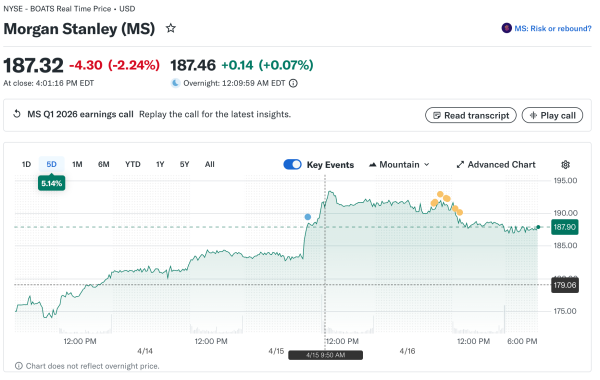
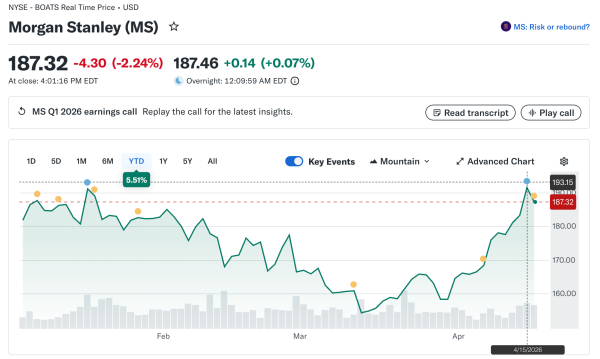
Morgan Stanley reported outstanding first-quarter results on Wednesday, exceeding analyst expectations significantly. The stock surged 4.52% on an earnings beat, demonstrating operational strength. Investment banking revenues rebounded sharply as deal activity resumed following the conflict pause.
Mrs. Weber at ArcheInvest examines how the wealth management division delivered record results, driving profitability. Net interest income stabilized after the previous quarter’s compression, pressuring margins. The diversified business model proved resilient through volatile market conditions.
The Revenue Breakdown
Total revenues reached levels surpassing pre-crisis projections from analysts. Investment banking fees jumped as M&A advisory and underwriting accelerated. Equity capital markets particularly strong with multiple IPO completions.
Fixed income trading exceeded expectations, driven by volatility, creating opportunities. Institutional clients repositioned portfolios, generating commission revenues. The trading desks capitalized on market dislocations during the turbulent period.
The Wealth Management Strength
Assets under management grew despite market volatility affecting account values. Net new assets remained positive with high-net-worth clients maintaining relationships. The sticky client base provided revenue stability.
Fee-based advisory model generated predictable recurring revenues. Margin expansion occurred as efficiency initiatives gained traction. The wealth platform demonstrated superior economics versus transactional businesses.
The Deal Pipeline
Corporate confidence returned as the geopolitical situation stabilized gradually. Companies previously delaying strategic transactions moved forward with plans. The advisory backlog filled with mandates across industries.
The technology sector M&A is particularly active, with AI-related acquisitions proliferating. Private equity sponsors returned to the market pursuing buyout opportunities. Debt financing availability improved, supporting leveraged transactions.
The Equity Underwriting
IPO calendar packed with companies waiting for favorable market windows. The rally created a conducive environment for new issue activity. Bankers worked overtime preparing filings and roadshows.
Follow-on offerings accelerated as existing public companies raised capital. Special-purpose acquisition company activity remained subdued from previous peaks. Traditional IPOs dominated the issuance calendar.
The Credit Performance
Loan loss provisions decreased as credit quality remained solid. Consumer lending portfolios showed minimal deterioration despite economic pressures. Commercial borrowers maintained debt service without significant stress.
Net charge-offs stayed well below historical averages. The conservative underwriting standards implemented previously paid dividends. Risk management discipline prevented credit problems.
The Trading Volatility
March market turbulence created opportunities for skilled traders. The volatility generated client activity and spread widening. Both institutional and wealth management clients adjusted positions.
Risk-weighted assets grew modestly, reflecting increased trading inventories. However, value-at-risk metrics remained well-controlled within limits. The balance between opportunity and prudence is maintained.
The Technology Investments
Digital platform enhancements improved client experience and operational efficiency. Mobile app usage increased as customers embraced technology. The investments in infrastructure began delivering returns.
Artificial intelligence applications expanded across functions from compliance to research. The automation reduced manual processes, lowering costs. Competitive positioning improved through technology leadership.
The Talent Retention
Compensation ratios remained elevated as the firm competed for top performers. Investment banking and trading talent commanded premium pay. The retention of key personnel critical for sustaining revenues.
Deferred compensation structures aligned employee interests with shareholders. The long-term incentive programs reduced short-term risk-taking. Cultural emphasis on sustainability rather than quarterly maximization.
The Capital Management
Share buybacks resumed after a temporary suspension during crisis volatility. The repurchase program supported earnings per share growth. Excess capital above regulatory minimums is deployed for shareholder returns.
Dividend payments remained secure with conservative payout ratios. The quarterly distribution provided an income component for investors. Capital adequacy ratios exceeded regulatory requirements comfortably.
The Regulatory Environment
Basel III implementation continued to create uncertainty about future requirements. The firm engaged constructively with regulators on rule modifications. Compliance costs remained substantial but manageable.
Stress test preparation is ongoing, with results determining capital distribution permissions. The annual exercise required significant resources and planning. Management expressed confidence about passing requirements.
The Competitive Positioning
Market share gains in investment banking as competitors faced challenges. The integrated model combines banking and wealth management of a differentiated firm. Cross-selling opportunities between divisions created synergies.
Bulge bracket competition remained intense, particularly for large deals. However, the middle-market advisory provided a stable revenue stream. The diversified client base reduced concentration risks.
The International Operations
European business navigated a challenging environment with economic headwinds. The Asia-Pacific region showed strength, particularly in China. Geographic diversification balanced regional cyclicality.
Cross-border transaction activity increased as globalization trends continued. Currency fluctuations created headwinds, but hedging strategies mitigated the impact. International expansion remained a strategic priority.
The Institutional Securities
Prime brokerage revenues grew as hedge fund activity increased. Equity financing and securities lending generated stable income. The institutional client relationships deepened.
Research coverage expanded into emerging sectors like AI. Analyst rankings remained strong, supporting banking relationships. The investment in research is justified by franchise value.
The Investor Takeaway
Strong execution during a challenging period validated the business model. The diversification between banking and wealth management proved valuable. Quality financial franchise trading at a reasonable valuation.
Patient investors could accumulate positions for long-term holdings. The combination of growth and capital returns appealed. Risk-adjusted returns appeared attractive versus alternatives.