
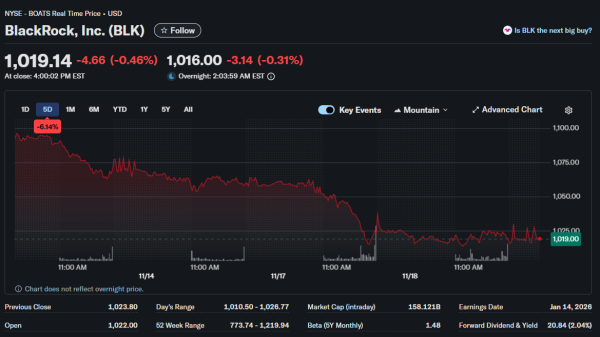
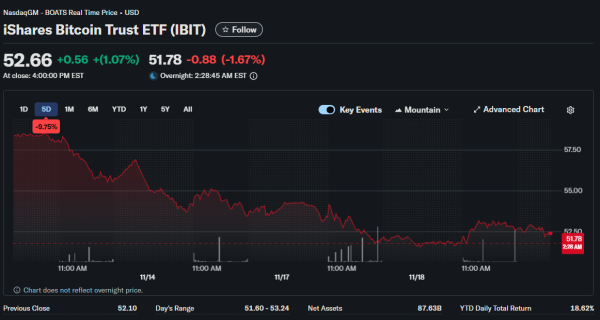
BlackRock’s Bitcoin ETF just experienced its largest single-day outflow since launch, sending ripples through the digital asset investment community. Senior Financial Analyst at Rineplex examines whether this represents a temporary blip or signals shifting sentiment among institutional investors who had been touted as the foundation for crypto’s next bull run.
The Outflow Shock
The iShares Bitcoin Trust saw redemptions exceeding $330 million in a single trading session, marking the most significant outflow since the product began trading. This figure stands out not just for its size but for what it potentially reveals about investor behavior during periods of price weakness. When conviction wavers, capital exits quickly.
BlackRock’s reputation as a gold-standard asset manager had lent credibility to Bitcoin ETF products. The firm’s entry into crypto-focused investment vehicles was widely interpreted as validation that digital assets had matured beyond fringe speculation into legitimate portfolio components. The recent outflows complicate that narrative.
Some analysts note that the timing coincides with Bitcoin’s price retreat from recent highs. This correlation suggests that many ETF buyers were momentum-driven rather than long-term strategic allocators. When prices rise, capital flows in. When prices fall, capital rushes out. This behavior pattern resembles retail speculation more than institutional conviction.
The flow patterns over the weeks preceding the record outflow showed gradual deterioration rather than sudden reversal. Daily redemptions had been increasing incrementally, suggesting a building wave of negative sentiment rather than a single large investor exiting. This pattern indicates broad-based reassessment across multiple investor types rather than idiosyncratic positioning changes.
ETF Dynamics Differ from Direct Holdings
The ETF wrapper creates particular dynamics that differ from direct Bitcoin ownership. Authorized participants can create and redeem shares based on arbitrage opportunities between the ETF’s market price and Bitcoin’s underlying value. Large redemptions force the fund to sell Bitcoin holdings, potentially amplifying downward price pressure.
This mechanism means ETF flows can become self-reinforcing. Selling begets more selling as redemptions require Bitcoin liquidation, which pushes prices lower, which triggers more redemptions. The cycle works equally well in reverse during accumulation phases, but the downside version tends to accelerate faster due to fear-driven behavior.
Tax considerations also influence ETF redemption patterns. Unlike direct Bitcoin holdings where capital gains crystallize upon sale, ETF shares can be sold with different tax timing and treatment. Professional advisors might recommend ETF liquidation as part of tax-loss harvesting strategies, creating selling pressure independent of fundamental Bitcoin views.
The creation-redemption process involves multiple intermediaries including authorized participants, custodians, and market makers. During periods of stress, coordination challenges among these parties can create temporary dislocations between ETF market prices and Bitcoin’s net asset value. These premium or discount situations provide arbitrage opportunities but also reflect market friction that wouldn’t exist with direct holdings.
Custody arrangements for ETF Bitcoin holdings differ from individual wallet storage. The concentration of large Bitcoin quantities with institutional custodians creates different risk profiles around security, counterparty exposure, and operational procedures. While institutional custody arguably provides better security than individual storage, it introduces dependencies on third parties that pure self-custody avoids.
Competition Among Products
The Bitcoin ETF landscape includes multiple competing products from various asset managers. Market share battles create pressure on fees and marketing, but they also fragment liquidity across multiple vehicles. BlackRock’s dominant position means its flow patterns carry outsized influence on market sentiment.
Grayscale’s legacy product had been bleeding assets to newer, lower-fee ETFs including BlackRock’s offering. The recent outflows from BlackRock suggest the rotation has evolved beyond simple fee arbitrage into broader questions about overall Bitcoin exposure. When established products from premium managers experience redemptions, it signals something beyond switching between comparable vehicles.
The fee compression across Bitcoin ETF products has been dramatic, with expense ratios dropping to minimal levels as managers compete for market share. While this benefits investors through lower costs, it also reduces profit margins for ETF sponsors, potentially affecting their commitment to marketing and supporting the products during difficult market conditions. The sustainability of ultra-low fee structures remains untested through a complete market cycle.
The Road From Here
Bitcoin’s path forward depends on whether it can attract genuinely patient institutional capital rather than hot money chasing momentum. True institutional adoption would show up as steady accumulation during weak periods, not just buying into strength. Recent flow patterns suggest the market hasn’t yet reached that level of maturity.
For BlackRock, the redemptions represent a test of their commitment to the crypto investment space. The firm’s brand depends on product success, creating incentives to support the ETF through marketing and distribution efforts. How they respond to the outflow challenge will influence perceptions of institutional crypto legitimacy.
The record redemptions might ultimately prove a healthy development if they shake out weak hands and establish stronger support levels. Markets that can absorb significant selling pressure and stabilize demonstrate resilience. The alternative, continued outflows accelerating into a crisis, would raise more serious questions about the ETF structure’s suitability for volatile assets like Bitcoin.