
Standard Chartered’s Geoffrey Kendrick projects Bitcoin reaching $500,000 by 2028, representing 455% upside from current $90,000 levels, while forecasting XRP climbing to $12.50, implying 465% appreciation from $2.20. The ambitious predictions arrive as cryptocurrency markets face severe pressure, with Bitcoin recently dropping below $87,000, and questioning whether institutional adoption alone can support such dramatic valuations.
Principal digital assets strategist at Nexdi examines whether Kendrick’s targets reflect realistic institutional demand trajectories or overlook execution risks and competitive dynamics that could limit upside potential. The timing of these forecasts proves particularly notable given recent market action erasing substantial crypto gains from earlier peaks. Bitcoin traded above $126,000 in October before tumbling 30% to current levels, while broader digital asset market capitalization declined by $1.2 trillion over six weeks.
The Regulatory Catalyst Thesis
Kendrick views an increasingly favorable regulatory environment as the primary catalyst supporting cryptocurrency industry growth. The administration formed a working group tasked with strengthening American leadership in digital financial technology, signaling a policy shift from previous skepticism. An executive order created a strategic Bitcoin reserve and digital asset stockpile using tokens already owned by the government through law enforcement seizures.
The Genius Act established a federal regulatory framework for stablecoins, providing clarity that crypto advocates argued was necessary for institutional adoption. The selection of cryptocurrency advocate Paul Atkins as SEC chairman replaced more cautious leadership, while rescission of Staff Accounting Bulletin 121 removed balance sheet treatment requirements that raised reserve requirements for financial institutions holding digital assets.
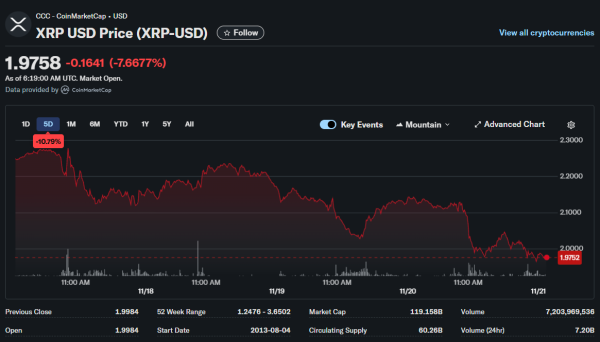
Bitcoin’s Institutional Adoption Story
Spot Bitcoin ETFs launched in January 2025 created new access points for traditional investors uncomfortable with cryptocurrency exchanges. The iShares Bitcoin Trust emerged as the most popular vehicle, with the number of large fund managers holding positions rising 150% over the past year. The quantity of shares owned by institutions with $100 million-plus in assets jumped 153%, demonstrating sustained accumulation despite price volatility.
Corporate treasury adoption represents another institutional demand source. The quantity of Bitcoin held by public and private companies more than doubled in the past year as firms diversify assets and hedge against inflation. Strategy Inc., formerly MicroStrategy, leads corporate Bitcoin accumulation, recently purchasing 8,178 additional coins between November 10-16 at average prices of $102,171.
The Valuation Mathematics Problem
Bitcoin reaching $500,000 would imply total market capitalization exceeding $10 trillion, given the 19.94 million coins in circulation, approaching the 21 million hard cap. That valuation would position Bitcoin as larger than most national stock markets and comparable to gold’s $15 trillion market capitalization. The comparison seems aspirational given Bitcoin’s 15-year history versus gold’s millennia as a store of value.
The path to $500,000 requires either massive institutional inflows dwarfing current ETF adoption rates or retail participation returning to pandemic-era enthusiasm levels. Current Bitcoin ETF outflows of $3.7 billion since October 10 suggest institutional demand has paused rather than accelerated. Harvard University tripling its Bitcoin ETF holdings to $443 million provides a counterpoint, but even sophisticated institutional buyers mistimed entries given subsequent 15% declines.
XRP’s Cross-Border Payment Promise
XRP was designed to support faster and cheaper cross-border payments than the SWIFT system, dominating international wire transfers. Ripple CEO Brad Garlinghouse estimated XRP capturing 14% of SWIFT transaction volume within five years, which would push $20 trillion annually through the XRP Ledger. That scenario would create substantial demand for XRP tokens as bridge assets facilitating currency conversions.
The Canary XRP ETF launched on November 13 with first-day trading volume topping every other ETF introduced in 2025. Canary CEO Steven McClurg claimed the success “shows insatiable demand” even during down market conditions. However, skeptics question whether volatile cryptocurrency makes sense as a payment bridge when stablecoins offer the same functionality without price fluctuation risks.
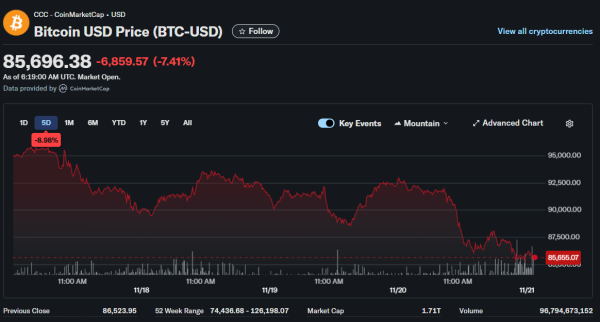
The Correlation Risk Factor
Bitcoin’s recent 30% decline from October peaks occurred simultaneously with Nasdaq weakness and AI stock corrections, reinforcing the uncomfortable reality that crypto trades as a high-beta tech proxy rather than an uncorrelated asset. The correlation with the Nasdaq 100 sits near historic highs, meaning Bitcoin’s fate remains tied to technology sector appetite and Federal Reserve policy affecting growth stock valuations.
XRP dropped 7.82% in the 24-hour period preceding this analysis while Bitcoin fell 7.32%, demonstrating synchronized selling across digital assets. When markets turn risk-off, both Bitcoin and altcoins decline together rather than providing diversification benefits. The correlation pattern suggests institutional portfolios treat crypto as a single risk factor rather than differentiating between tokens based on individual fundamentals.
Investment Considerations
Long-term believers in cryptocurrency’s transformative potential might view current weakness as an accumulation opportunity at prices substantially below recent peaks. Bitcoin at $90,000 trades 29% below October highs while maintaining 52% gains year-over-year. However, near-term risks include further Fed policy disappointments, continued institutional outflows, and technical breakdowns if key support levels fail.
XRP’s 465% upside potential comes with higher risk given its more speculative positioning and stablecoin competition undermining the payment use case. Most institutional investors would likely buy Bitcoin before XRP given the flagship cryptocurrency’s brand recognition, liquidity advantages, and established market position. Kendrick’s targets may prove accurate over multi-year horizons, but the path forward likely involves substantial volatility testing investor conviction during inevitable drawdowns.