
A secondary stock sale just pushed an artificial intelligence company to a staggering $500 billion valuation, potentially making it the world’s most valuable private startup. A junior broker at Hash X Capital takes a closer look at what this astronomical figure reveals about investor appetite for AI technology, and whether the numbers justify the hype or signal dangerous market euphoria.
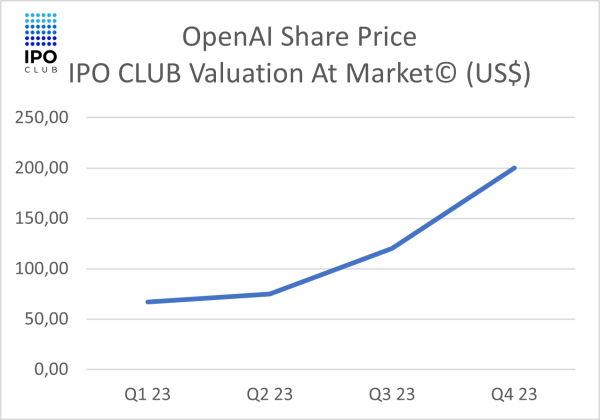
Valuation Mechanics Behind the Deal
The ChatGPT creator reached its half-trillion dollar valuation through a $6.6 billion secondary stock sale where current and former employees sold shares to a consortium of investors. This group included Thrive Capital, Dragoneer Investment Group, T. Rowe Price, SoftBank, and the United Arab Emirates’ MGX fund.
Secondary sales differ fundamentally from primary funding rounds. The company itself doesn’t receive capital; instead, employees cash out their equity holdings. This structure allows early team members to realize gains without triggering the regulatory complexities of an initial public offering.
The $500 billion figure now surpasses SpaceX and ByteDance, TikTok’s parent company, in private market valuations. This positioning places the San Francisco-based firm in rarefied air, valued higher than established public companies like Goldman Sachs or Boeing, despite generating zero profit.
The Profitability Paradox
Traditional valuation metrics break down when applied to this situation. The company burns through substantial capital on computational infrastructure, talent acquisition, and research while revenues remain insufficient to cover expenses. This creates a precarious dynamic where investor belief in future monetization props up present-day pricing.
CEO Sam Altman addressed bubble concerns during a recent tour of a data center facility in Abilene, Texas. His response acknowledged inevitable market cycles: “Between the ten years we’ve already been operating and the many decades ahead of us, there will be booms and busts.” He predicted both overinvestment leading to losses and underinvestment causing missed revenue opportunities.
Altman’s framework spans decades, but investors operate on much shorter time horizons. Public market participants typically demand profitability within three to five years, while private backers at these valuations need clear paths to returns within seven to ten years maximum.
The tension between long-term technological development and near-term financial performance creates risk for stakeholders. Employees who sold shares captured gains, but buyers now hold assets whose value depends entirely on future execution and market conditions.
Corporate Structure Complications
The organizational architecture adds another layer of complexity. A for-profit subsidiary carries the $500 billion valuation while technically remaining controlled by a nonprofit board bound to pursue charitable purposes. This hybrid model creates potential conflicts between maximizing shareholder returns and fulfilling nonprofit obligations.
California and Delaware attorneys general have begun scrutinizing this structure and the company’s partnerships with major corporations. These regulators oversee charitable organizations operating in their jurisdictions and can challenge arrangements that appear to prioritize profit over mission.
Regulatory uncertainty represents a material risk factor. If authorities determine the current structure violates nonprofit governance requirements, forced reorganization could impact valuation, ownership stakes, and operational flexibility. Investors buying secondary shares may not have fully priced in this regulatory overhang.
The company announced a tentative agreement with Microsoft in September regarding the nonprofit’s future stake in the for-profit entity, but released minimal details. This opacity makes independent valuation assessment nearly impossible for outside observers.
Competitive Pressure and Market Positioning
Recent product launches reveal aggressive expansion into new revenue streams. The company partnered with Etsy and Shopify for online shopping integration through ChatGPT, while launching Sora, a social media application for AI-generated video content. These moves demonstrate attempts to diversify beyond core language model applications.
Talent competition has intensified dramatically. Meta Platforms has been recruiting elite AI engineers aggressively and made a $14.3 billion investment in Scale AI during June, poaching its CEO, Alexandr Wang. This bidding war for specialized expertise drives up operating costs and forces companies to offer competitive compensation packages.
The secondary sale partially addresses this challenge by providing liquidity for employees who might otherwise leave for public companies offering easier stock monetization. However, the $6.6 billion represents only a fraction of total employee equity holdings, meaning most team members remain dependent on future valuation growth.
Infrastructure partnerships with Oracle, SoftBank, and Nvidia through the Stargate data center venture require enormous capital commitments. Simultaneously, the company has reduced reliance on longtime backer Microsoft, potentially creating tensions with a partner that previously provided crucial cloud computing resources and financial support.
Market Implications and Risk Assessment
The $500 billion valuation occurs against broader technology market dynamics worth examining. Public market AI-related stocks have experienced volatility as investors reassess growth assumptions and profitability timelines. Nvidia’s performance, despite strong earnings, shows sensitivity to expectations about AI infrastructure spending sustainability.
Generative AI products face growing questions about return on investment. Enterprises deploying these tools struggle to quantify productivity gains and cost savings sufficient to justify subscription expenses and implementation costs. If business customers reduce AI spending, revenue projections supporting current valuations collapse.