


In a week marked by geopolitical jitters and rapid market recalibrations, the U.S. dollar–the world’s most dominant reserve currency–has unexpectedly found itself on the defensive. The recent intensification of the global trade dispute, particularly between the U.S. and China, has triggered a wave of pessimism across foreign exchange markets, pushing investors to seek shelter in traditional havens.
As mounting tariffs threaten economic growth, and confidence in U.S. fiscal stability falters, a striking shift in sentiment is underway. QuilCapital‘s financial strategist, Jamie Manslie, sheds light on this unfolding dollar exodus and what it means for global markets moving forward.
The Dollar’s Unexpected Plunge
The greenback, measured by a Bloomberg index, has slid to its lowest point in six months, dragged down by an abrupt shift in market confidence. This comes on the heels of China’s announcement to raise tariffs on all U.S. goods to between 84% and 125%, effective April 12–a retaliatory move in response to new U.S. trade barriers.
The fallout has been swift and unforgiving: options traders, for the first time in five years, have turned overtly bearish on the dollar, signaling a broader loss of faith in U.S. assets.
A Flight to Safety
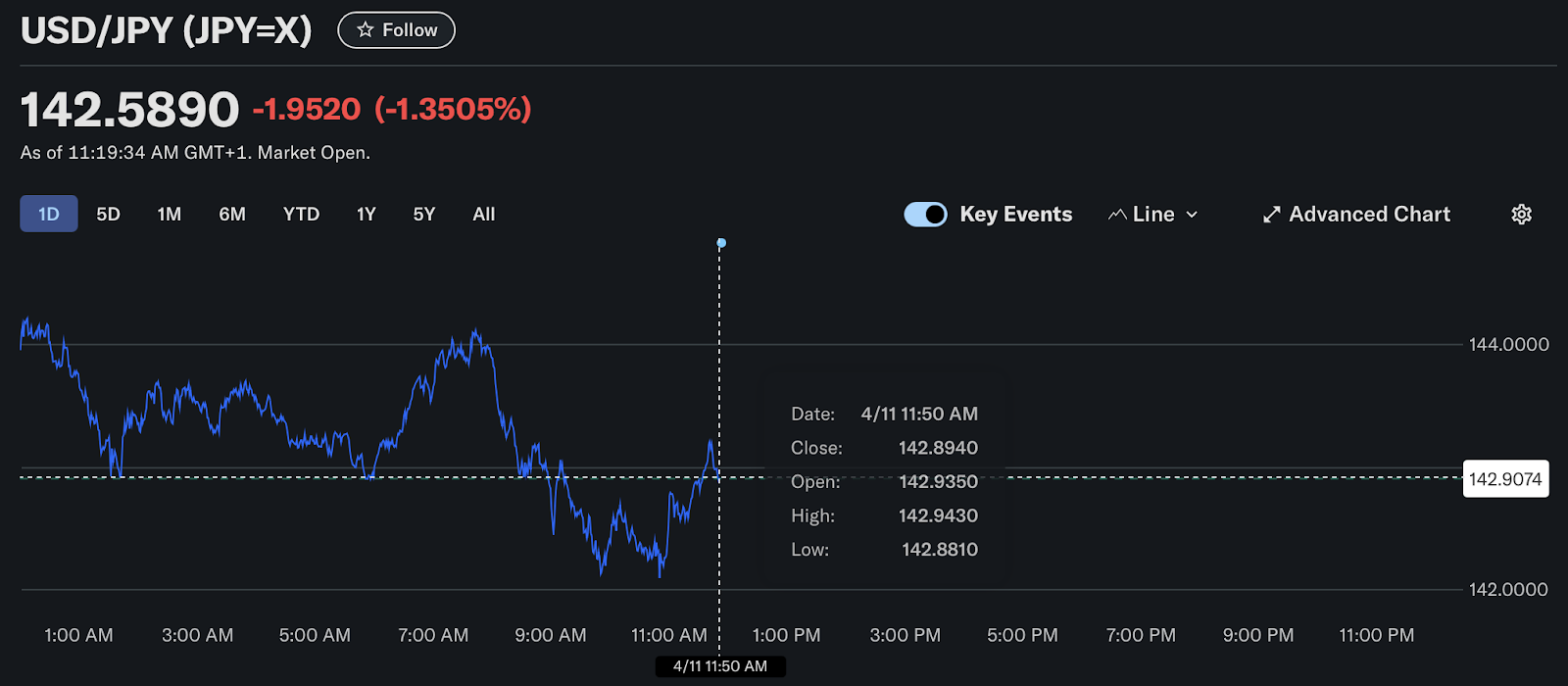 image from finance.yahoo.com
In contrast to the dollar’s downfall, classic safe-haven assets are surging. The Japanese yen appreciated by 1.6%, reaching 142.18 per dollar, its strongest level since September. The Swiss franc surged to 0.8113, a figure not seen since 2015.
Meanwhile, gold soared to a new all-time high, solidifying its role as the crisis-era asset of choice. The euro climbed to $1.1473, its highest since February 2022, buoyed by renewed confidence in Europe’s economic resilience following Germany’s suspension of its constitutional debt brake, an unprecedented fiscal move aimed at stabilizing its economy.
Bearish Bets and Record-Breaking Reversals
Data points from derivatives markets paint a clear picture of the market’s sudden reversal. One-year risk reversals have turned negative, favoring the dollar downside for the first time in half a decade. This indicates a growing appetite for protection against further declines. More telling, a Z-score analysis reveals this bearish pivot is the most extreme on record, illustrating the scale at which investors are abandoning the dollar.
The significance of this lies not just in the rate of change but in the fact that the greenback’s long-standing reputation as a dependable store of value is now under serious scrutiny.
Underlying Factors: Why Confidence Is Eroding
Beyond immediate trade tensions, deeper structural concerns are eroding confidence in the dollar:
- Fading U.S. economic exceptionalism: As growth forecasts dim, the narrative that the U.S. will outpace global peers has weakened.
- Ballooning U.S. debt levels: With fiscal deficits expanding and debt-to-GDP ratios reaching concerning levels, long-term sustainability is in question.
- Policy unpredictability: The rapidly shifting trade strategies from the current U.S. administration have added layers of uncertainty to markets already under pressure.
Together, these elements are forcing traders and institutions to reevaluate the greenback’s privileged status.
Ripple Effects Across U.S. Markets
 image from finance.yahoo.com
It’s not just the currency that’s taking a hit. On Thursday, the S&P 500 dropped by 3.5%, marking one of the sharpest daily declines in years. U.S. Treasury yields also fell, reflecting investor anxiety over future economic prospects.
According to overnight indexed swaps, markets are now pricing in 96 basis points worth of Federal Reserve rate cuts this year, a dramatic shift from earlier expectations of policy tightening. This move underscores the market’s belief that the Fed will be forced to respond to trade-induced slowdowns with monetary easing.
Uncertainty Ahead: Tariff Timelines and Geopolitical Risks
One of the central points of market anxiety lies in the uncertainty around the 90-day pause for higher tariffs affecting dozens of nations. If the reprieve lapses without a diplomatic breakthrough, global trade flows could be further disrupted.
Additionally, China’s next steps remain unclear, and traders are watching closely for retaliatory measures that could deepen economic fragmentation. As long as these uncertainties persist, analysts argue the market’s “path of least resistance” will remain an exit from U.S. assets and further weakening of the dollar.
Conclusion: A Shifting Landscape in Global Finance
The dollar’s fall from grace this week is not just a blip–it’s a signal of changing tides in global finance. Once considered the immovable anchor in turbulent seas, the greenback is now facing pressure from both macroeconomic vulnerabilities and geopolitical upheaval.
The flight to traditional havens, a record-breaking reversal in sentiment, and surging volatility across global currencies indicate that investors are no longer willing to overlook the cracks in America’s economic armor.
As we navigate this uncertain terrain, the global financial order appears increasingly fluid. Experts emphasize the importance of adapting to this evolving landscape, as long-held assumptions about stability, reserve currencies, and economic leadership are being redefined in real-time. Whether this dollar decline marks a temporary dip or the beginning of a longer-term shift remains to be seen–but the implications are undeniably profound.

COMTEX_465114332/2922/2025-05-01T12:48:52
This press release was originally published on this site