
Wall Street’s top voices are ringing alarm bells as the U.S. economy enters a phase of heightened uncertainty, driven by escalating global trade conflicts, persistent inflation, and rising market volatility. Despite strong earnings posted by major financial institutions, warnings are surfacing that the road ahead may be far from smooth.
The signs are subtle but growing–more cautious clients, mounting loan loss provisions, and paused mergers–all hinting at a potentially stormy outlook. A financial strategist from QuilCapital, Anara Stewart, unpacks the deeper concerns behind these signals and explores what they could mean for markets and Main Street alike.
A Strong Quarter with Caution Lurking Behind the Numbers
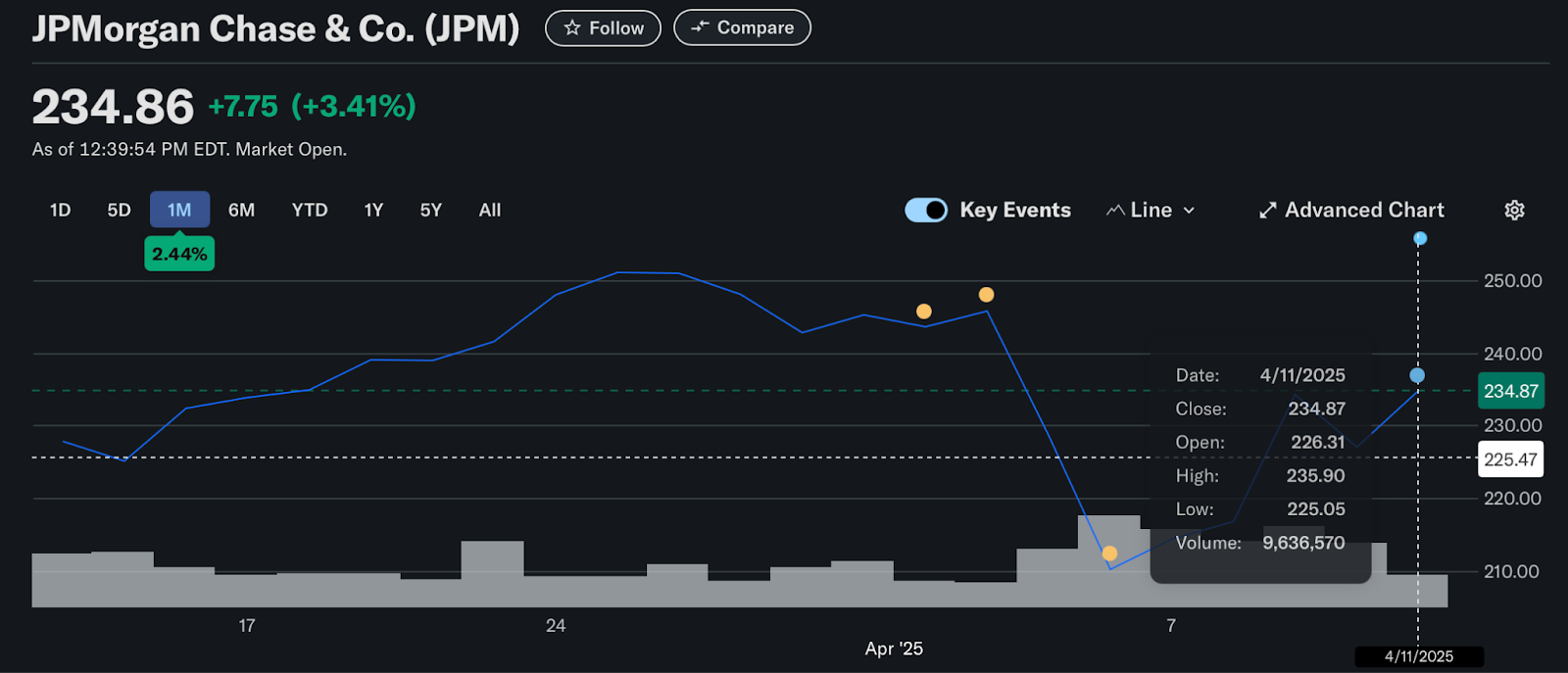 image from finance.yahoo.com
JPMorgan Chase & Co. posted $14.64 billion in earnings for the first quarter, marking a 9% year-over-year increase. This impressive figure, however, came with a significant caveat: the institution increased its loan loss provisions by 75%, signaling an expectation that more borrowers could struggle to repay their debts soon.
This move, while prudent, suggests that the bank foresees tougher times ahead. The uptick in provisions is not isolated–rather, it reflects a broader trend among lenders preparing for heightened financial strain in consumer and commercial sectors alike.
Investment banking clients have reportedly become more reserved, scaling back as market volatility, fueled by trade disputes and inflation, continues to rise. Even as trading desks posted record quarterly revenues, the optimism was tempered by a growing sense that this performance might be difficult to sustain.
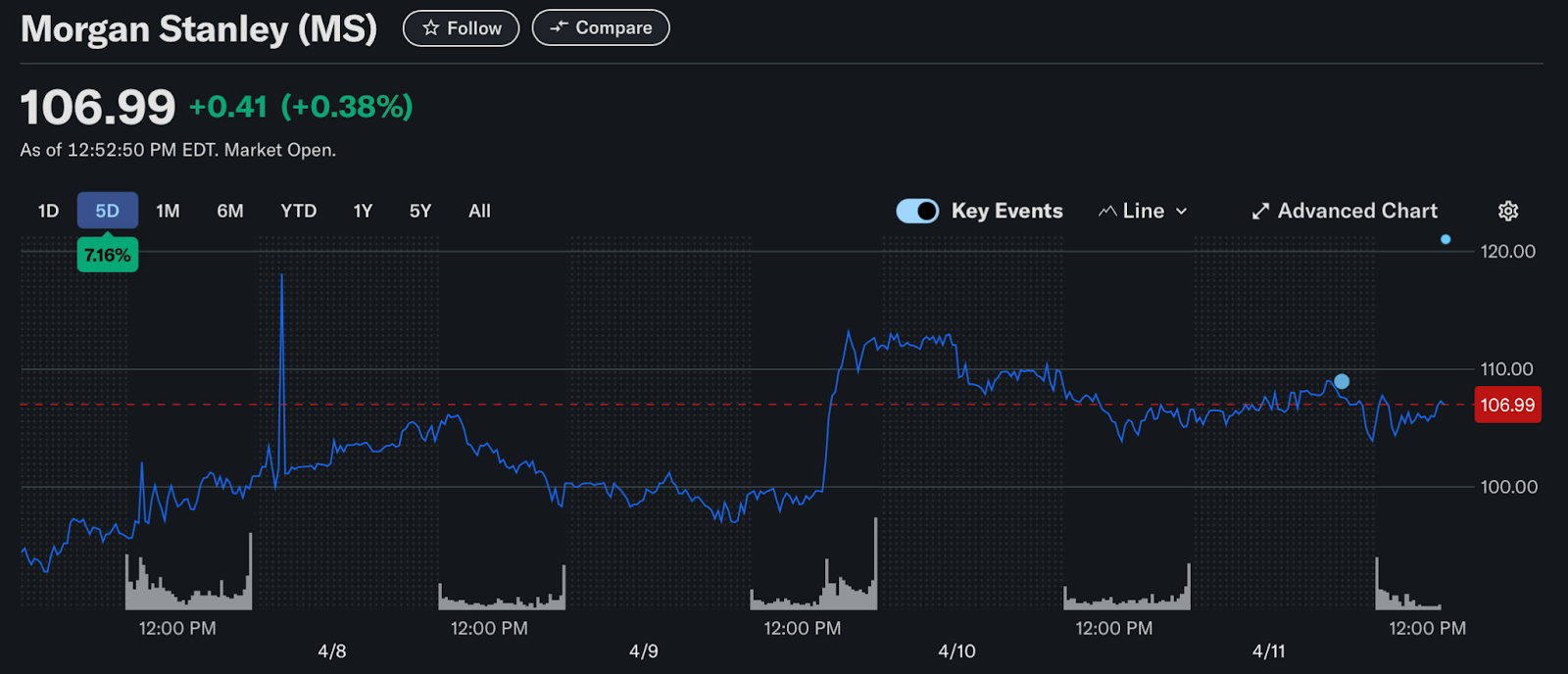 image from finance.yahoo.com
Sticky Inflation and a Bond Market on Edge
Economic turbulence isn’t just playing out in the stock market. The bond market has seen sharp movements, with Treasury yields rising swiftly, prompting concerns about future borrowing costs and liquidity.
Executives noted that they’re monitoring these developments “every minute,” an acknowledgment that volatility in fixed-income markets can ripple out into broader financial conditions. While some downplayed the possibility of the U.S. losing its position as a global haven, they also admitted that the combination of high fiscal deficits, trade frictions, and inflation creates an unpredictable mix.
Banks are responding by stockpiling capital and bolstering liquidity–a clear signal that, despite strong current fundamentals, they’re preparing for scenarios that could stretch the financial system.
The Trade War Factor: Tariffs Create a Ripple Effect
The introduction of steep tariffs, including a 145% duty on Chinese imports, has injected significant anxiety into both corporate boardrooms and investment firms. Some banks suggested that these aggressive trade moves could become a catalyst for a recession, or at the very least, a slowdown in economic activity.
Executives across multiple institutions echoed this concern. One top-level CFO warned that the tariffs would “have an impact on growth this year,” and that many clients are temporarily pausing investments as they reassess the economic landscape.
Others warned that these trade tensions aren’t just theoretical issues for economists–they affect real people, from business owners managing supply chains to workers with retirement savings invested in the stock market. One market leader remarked that the sweeping tariff announcements were among the most extreme developments he’d seen in nearly five decades of finance.
Signs of Slowdown: M&A on Ice, Loans on Hold
Beneath the surface of headline earnings lies a more fragile picture. Initial public offerings (IPOs), mergers, and leveraged loan activity have slowed, with many deals shelved due to rising uncertainty.
At the same time, margin calls have intensified, with hedge funds experiencing the steepest cash demands since the early COVID-19 crisis. These pressures can lead to forced asset sales, amplifying market declines.
Even though the most severe financial shocks haven’t yet materialized, the banking world isn’t taking chances. Multiple CEOs emphasized the importance of preparing for “a wide range of scenarios,” from prolonged volatility to full-blown trade-driven recessions.
Clients Growing Cautious: Sentiment Shift Underway
Conversations with clients reveal a subtle but significant sentiment shift. Companies–especially in the middle-market space–are starting to hold back on dealmaking and capital investments.
There’s a growing feeling that uncertainty, not opportunity, is now driving decisions, particularly among businesses trying to anticipate the long-term effects of tariffs, rate hikes, and geopolitical instability.
Despite these concerns, some leaders still expressed measured optimism. They pointed to deregulation and tax reforms as possible offsets to broader economic headwinds, though they also acknowledged these positives may take time to materialize.
Conclusion: Navigating the Crosscurrents of an Uncertain Future
In the face of what some describe as the most complex environment since the 2008 crisis, America’s financial giants are demonstrating resilience–but also restraint. Elevated earnings and strong trading performances cannot mask the underlying stress signals across markets: from loan loss provisions and muted client activity to paused deals and mounting geopolitical risk.
As the global financial system balances between optimism and unease, decision-makers are treading carefully. While preparation doesn’t mean panic, it does reflect an honest read of the risks ahead. Whether or not a recession takes hold, the steps banks are taking now signal that they’re gearing up for a prolonged period of volatility–where the ability to adapt quickly might just define who comes out stronger on the other side.

COMTEX_465114376/2922/2025-05-01T12:49:59
This press release was originally published on this site