

International financial markets often resemble sensitive ecosystems, easily perturbed by unexpected political decisions and sudden economic shifts. This delicate balance was vividly illustrated recently, as America’s current president abruptly decided on a 90-day pause on his previously announced reciprocal tariff plans for nearly all nations, excluding China.
Initially spurred by market anxiety, this decision introduced unexpected relief across financial sectors worldwide. To grasp the nuances and consequences of such significant economic moves, Harvey Ross, a senior financial analyst from QuilCapital, sheds valuable insight into America’s latest tariff strategy, its global repercussions, and the potential road ahead.
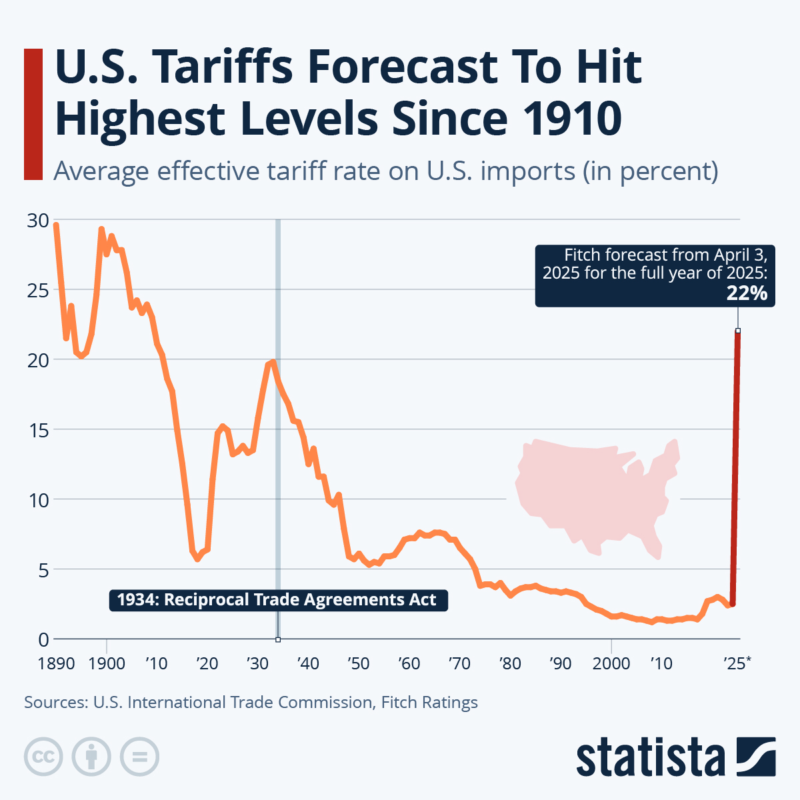
????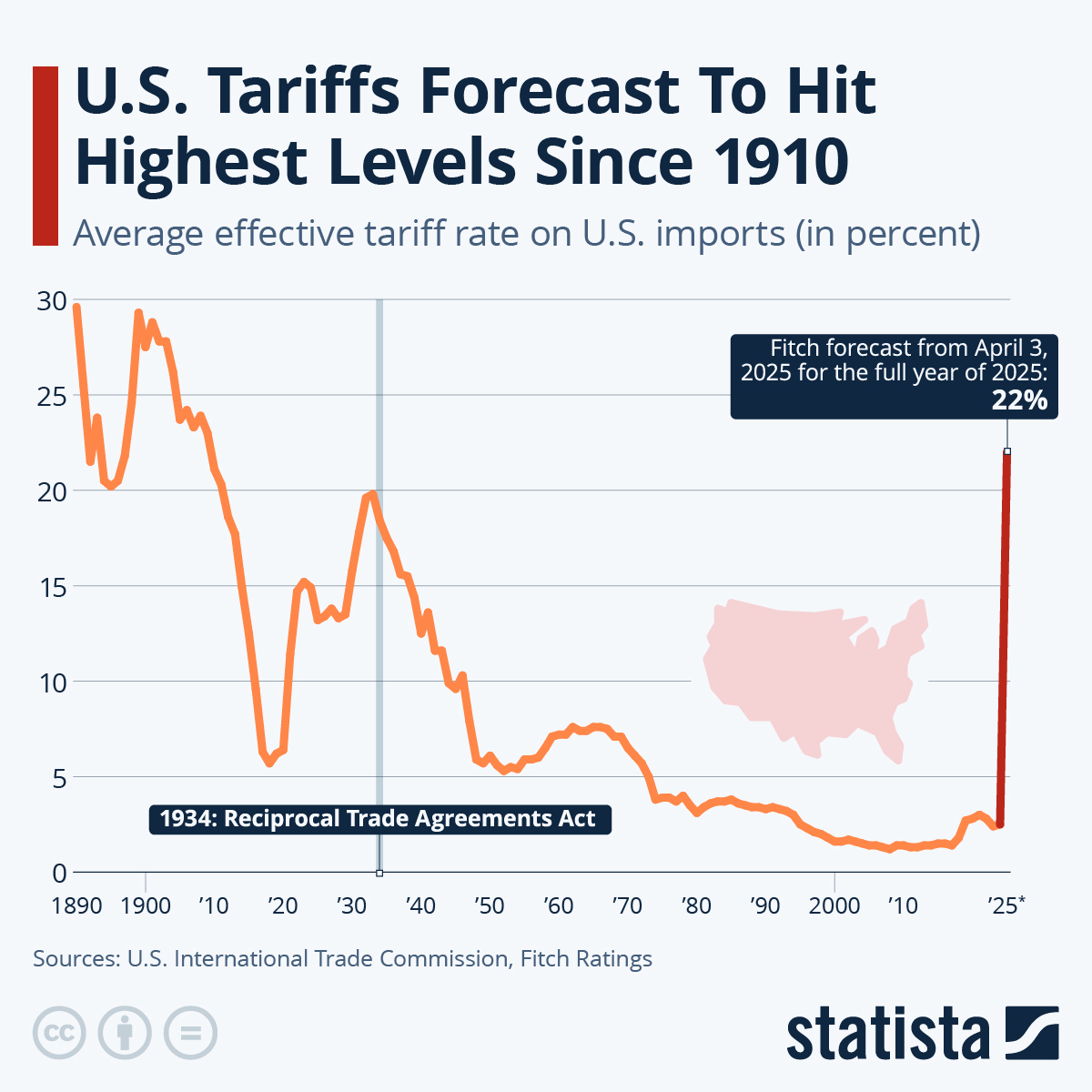 image from statista.com
Behind the Sudden Decision
In an astonishing policy reversal, the American administration moved swiftly to authorize a pause in reciprocal tariffs previously enforced against various global trade partners. According to the president, the decision emerged due to noticeable apprehension and volatility among market participants.
He remarked specifically that financial stakeholders were getting “yippy” and “afraid,” underscoring the apparent market unease following his initial aggressive tariff stance announced just a week prior, which had dramatically shaken investors’ confidence.
As a direct consequence of this sudden tariff pause, global markets witnessed significant rebounds. The benchmark S&P 500 Index surged by more than 9.5%, marking the sharpest single-day rise since the financial crisis of 2008. Such notable upticks underscore how sensitive market sentiment is to international trade policies, highlighting the interconnectedness of global finance and geopolitics.
 image from finance.yahoo.com
Strategic Exceptions and Ongoing Tensions with China
Despite the relief provided by the tariff pause, one major player notably remains excluded from this respite–China. America’s leader explicitly singled out the world’s second-largest economy, justifying an increase of duties specifically against China to an aggressive 125% rate, citing an alleged “lack of respect” from Chinese negotiators and authorities.
This unprecedented tariff elevation amplifies economic friction and points clearly to escalating tensions, marking China as the primary focus of America’s intensified trade policy stance.
Moreover, while a baseline duty of 10% persists on imports from various countries, special considerations remain in place for Canada and Mexico, which face distinctive duties relating explicitly to fentanyl trafficking issues. Simultaneously, sector-specific tariffs, notably on steel, aluminum, and automobiles, remain fully intact, highlighting continued pressure on specific industries and commodities critical to international trade.
Market Sentiment and Political Flexibility
Interestingly, despite initial assertions from the Treasury Secretary that the president’s abrupt decision was premeditated and strategically planned independently from market pressures, subsequent presidential remarks candidly acknowledged market reaction as part of the rationale.
The administration’s leader openly noted the palpable unease within bond markets, admitting explicitly that market sentiment significantly influenced policy adjustments. This rare admission reveals the pragmatic responsiveness within economic policy-making circles, accentuating the inherent uncertainty investors must navigate regularly.
Global Reactions and Future Negotiations
America’s abrupt tariff pause has sparked widespread international dialogue. Over 75 nations reportedly reached out swiftly to initiate tariff negotiations, highlighting their eagerness to avoid prolonged economic damage. America’s negotiating team promises the creation of tailored, “bespoke solutions” during this brief 90-day relief period, suggesting a highly customized diplomatic approach designed to stabilize international economic relations.
Among immediate beneficiaries, tariffs targeting the European Union dropped from an impending 20% to the baseline 10% already in effect since early April. Although the EU had previously approved retaliatory tariffs, the recent American tariff pause essentially defuses these threats, at least temporarily, as reciprocal European tariffs had yet to take effect.
However, according to a fresh report from the Yale Budget Lab, persistent tariffs, even at reduced rates, could significantly impact consumer prices. Analysts estimate potential cost increases reaching approximately 2.3%, equating to an extra annual burden of roughly $3,800 per family. Such tangible financial repercussions highlight the broader domestic implications of ongoing international trade disputes.
The Path Ahead: Negotiations and Market Stability
The forthcoming 90-day negotiation window is critical. Prominent Asian economies, including Japan, South Korea, and Vietnam, stand first in line to begin formal negotiations imminently.
Yet, broader international talks remain ambiguous, potentially stretching beyond the limited reprieve provided. Experts caution that prolonged uncertainty may continue exerting pressure on global markets, underscoring investors’ collective anxiety and the continued need for strategic clarity.
The Treasury Secretary underscored this lingering uncertainty, emphasizing the administration’s commitment to “negotiate in good faith.” However, financial markets are still cautious. As negotiations begin, ongoing tariff policies could maintain volatility, underscoring investor vigilance in navigating the ever-evolving landscape of international economic policy.
Conclusion
In an interconnected world, decisions made by major economic powers resonate profoundly across global markets, affecting both international relationships and everyday consumer wallets. The American administration’s rapid policy pivot vividly demonstrates this sensitivity, highlighting the fragile balance governing global trade.
As nations now enter intensive negotiations within this temporary pause, international observers and investors alike must closely monitor developments. The current episode reinforces a central financial truth: the intersection of economics and geopolitics remains ever-complex, unpredictable, and profoundly impactful.

COMTEX_465114072/2922/2025-05-01T12:41:08
This press release was originally published on this site