

As global economic fears continue to intensify, major financial markets have experienced sharp fluctuations, driven by growing concerns of a potential recession. Investors across the globe are closely monitoring currency movements, commodity prices, and monetary policy shifts, seeking clarity in an increasingly uncertain environment.
In this comprehensive review, a senior financial strategist from QuilCapital, Jack Emas, explores the underlying dynamics and sheds light on the factors influencing these market developments.
Currency Markets: Dollar Declines Amid Uncertainty
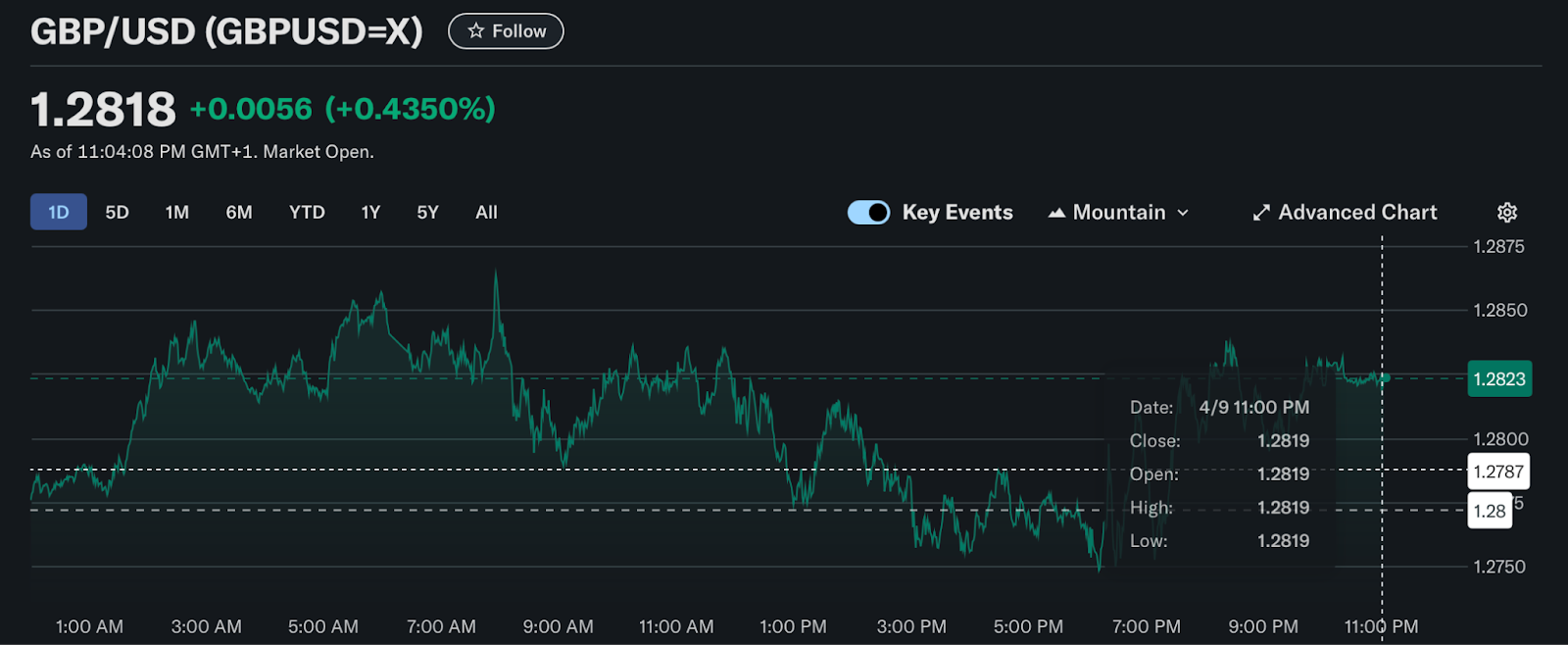 image from finance.yahoo.com
Recent trading sessions saw the British pound strengthening against the US dollar, rising 0.4% to $1.2795 during early European market activity. This movement came as the US dollar experienced significant pressure, plunging to a six-month low.
The dollar index, which evaluates the dollar’s performance against a basket of six major currencies, notably decreased by 0.6% to 102.31, marking its weakest point in half a year.
According to a senior currency analyst at MUFG, the recent volatility questions the traditional safe-haven status of the US currency, primarily due to intensifying global trade conflicts. The analyst predicts continued volatility and suggests that traditional safe-haven currencies such as the Japanese yen and Swiss franc are likely to outperform in the near term.
Intensifying Trade Wars Fuel Recession Fears
The root of these anxieties largely stems from escalating trade tensions initiated by recent US tariff implementations. America’s current administration enacted some of the highest tariffs seen since the early 20th century, extending these measures across 86 international trade partners. These newly activated tariffs, dubbed “liberation day” duties, took full effect early Wednesday morning, significantly elevating global economic uncertainty.
In response, the European Commission is contemplating retaliatory tariffs of up to 25% on a broad spectrum of US exports valued at around EUR22.1 billion (19 billion). The proposed tariff list prominently features agricultural and industrial goods, including commodities such as soybeans, meat, tobacco, iron, steel, and aluminum. If approved, these tariffs would activate from May 15 unless a majority of EU member states vote otherwise.
Gold Prices Surge as Investors Seek Safety
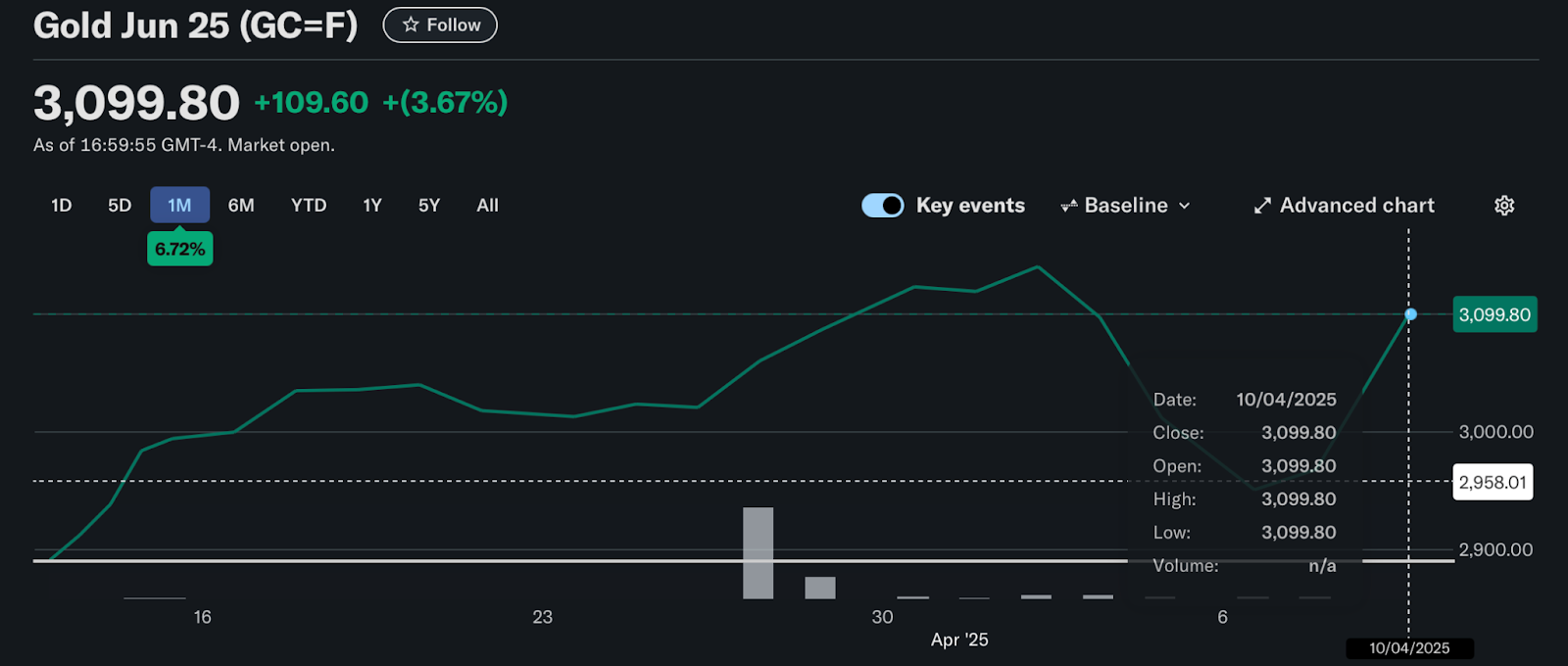 image from finance.yahoo.com
Amid this widespread economic uncertainty, gold’s appeal as a safe-haven asset has significantly increased. Investors are increasingly turning towards precious metals, propelling gold futures to a remarkable increase of 2.3%, reaching $3,059.40 per ounce. Meanwhile, the spot gold price surged 1.2% to $3,043.01 per ounce, driven by the weakening US dollar and escalating trade tensions.
A leading market analyst from KCM Trade attributed gold’s recent recovery primarily to the dollar’s sharp depreciation, allowing gold to reclaim and surpass the critical psychological barrier of $3,000 per ounce. The analyst emphasizes that despite recent volatility, gold maintains a bullish trajectory, fueled by uncertainties around global growth, inflation rates, and US monetary policy.
Further insights from FXTM’s senior research analyst highlight gold’s resilience despite three consecutive sessions of price declines. The analyst outlines critical price thresholds, indicating a possible ascent towards $3,100 to $3,130 per ounce should gold firmly surpass $3,055. Conversely, sustained weakness below $3,000 could potentially trigger a decline towards $2,950 to $2,930 per ounce.
Oil Prices Hit Four-Year Low Amid Demand Concerns
Concurrently, the oil market has experienced significant setbacks, reflecting heightened recessionary fears. Brent crude prices notably dropped by 2.8% to $61.03 per barrel, marking a continued five-day downward trend. Similarly, US West Texas Intermediate (WTI) crude prices retreated substantially, declining over 3% to $57.72 per barrel.
This prolonged downward pressure stems primarily from reduced global demand forecasts linked directly to persistent trade tensions between the US and China, the world’s two largest economies. A prominent oil commodity market expert from Rystad Energy pointed out the critical impact of China’s retaliatory stance.
China’s projected oil demand growth, initially estimated at 50,000 to 100,000 barrels per day, is now significantly jeopardized. Nevertheless, the expert suggests that internal stimulus measures within China could potentially alleviate some demand losses if effectively implemented.
China’s Resolute Response
In reaction to the aggressive tariff increases from the US, China has asserted its commitment to safeguarding its economic interests. Chinese officials emphasized their resolve to protect the nation’s right to economic development, indicating preparedness for prolonged trade conflict, thus potentially exacerbating global economic instability.
Concluding Insights
The unfolding scenario in global markets underscores a critical moment marked by economic volatility and geopolitical tensions. Investors worldwide remain cautious as currencies fluctuate, precious metals surge, and commodity markets respond sensitively to international developments.
As we navigate these turbulent economic waters, careful monitoring of policy shifts and market signals will be essential for understanding the broader implications for global economic stability. This detailed exploration by QuilCapital’s financial strategist highlights not only the complexity of the current financial landscape but also the imperative for vigilance amid rising uncertainties.

COMTEX_465114104/2922/2025-05-01T12:42:14
This press release was originally published on this site