


As global financial markets react to intensifying trade disputes, cryptocurrencies have found themselves caught between resilience and volatility. With the United States, China, Canada, and the European Union escalating tariff wars, traditional markets are facing renewed pressure–and so is the digital asset space.
Despite claims that cryptocurrencies remain insulated from geopolitical frictions, recent price movements tell a more nuanced story. Vanguard LGC‘s financial analyst, Maria Rodrigues, explores how escalating trade tensions are reshaping crypto dynamics and what it could mean for investors navigating this volatile landscape.
A Volatile Response to Global Trade Shocks
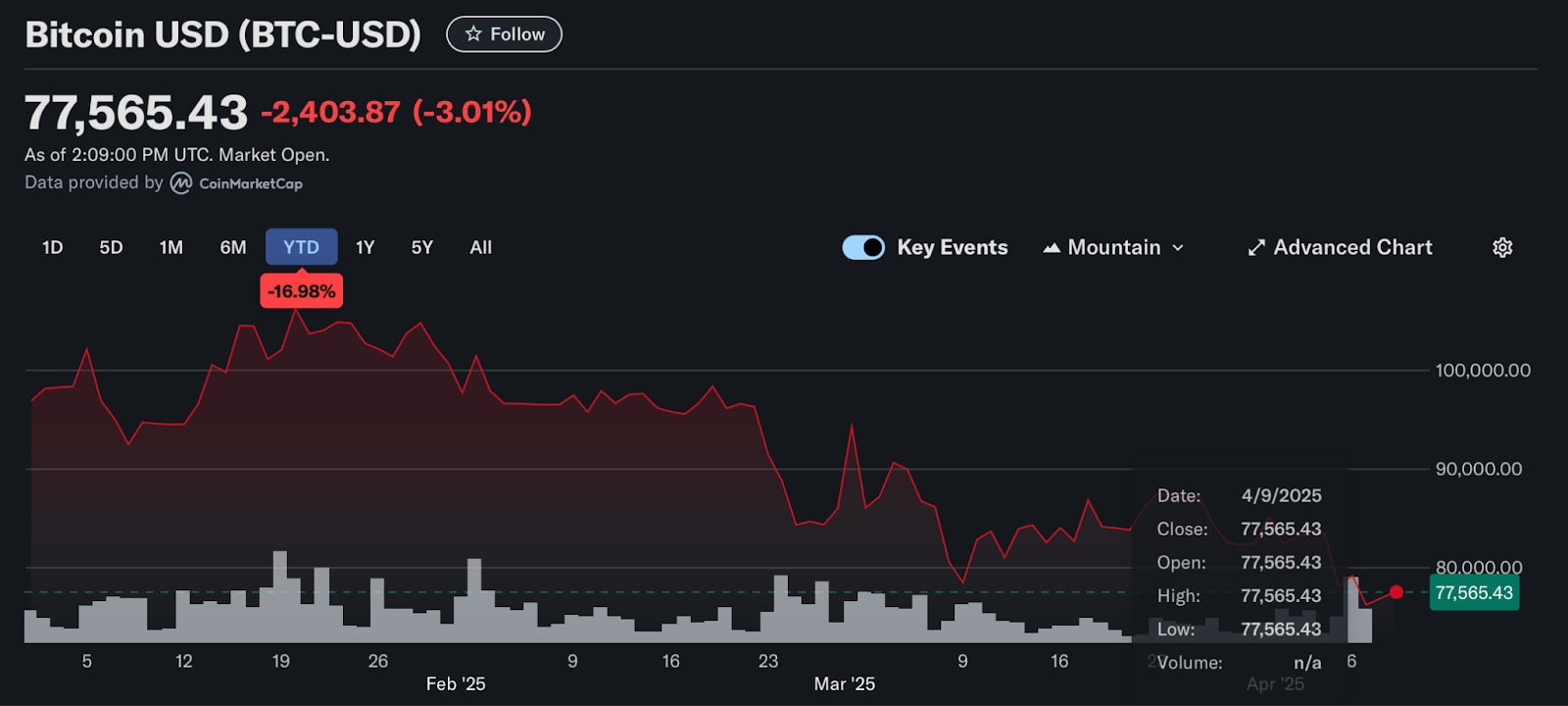 image from finance.yahooo.com
In the wake of heightened trade tensions, digital assets such as Bitcoin, Ether, XRP, and Solana have experienced notable price swings. Bitcoin, the largest cryptocurrency by market capitalization, has fluctuated sharply in recent sessions, falling by approximately 4.8% to $76,137 within 24 hours, according to CoinDesk. This followed an initial brief rally, underscoring the uneasy sentiment pervading global markets.
Meanwhile, XRP tumbled 8.9% to $1.79, while Ether lost 8.2% to settle at $1,453, and Solana dropped 7.3% to $103. These declines occurred alongside a broader equity market selloff triggered by China’s announcement of an 84% tariff on U.S. goods, escalating the ongoing trade standoff initiated by America’s current president earlier this month.
Though digital assets aren’t directly impacted by tariffs in the way that manufacturing sectors are, investor sentiment remains highly correlated across asset classes during periods of macroeconomic stress. As such, cryptocurrencies are increasingly behaving like risk assets, reacting to global shocks rather than operating independently as some had previously claimed.
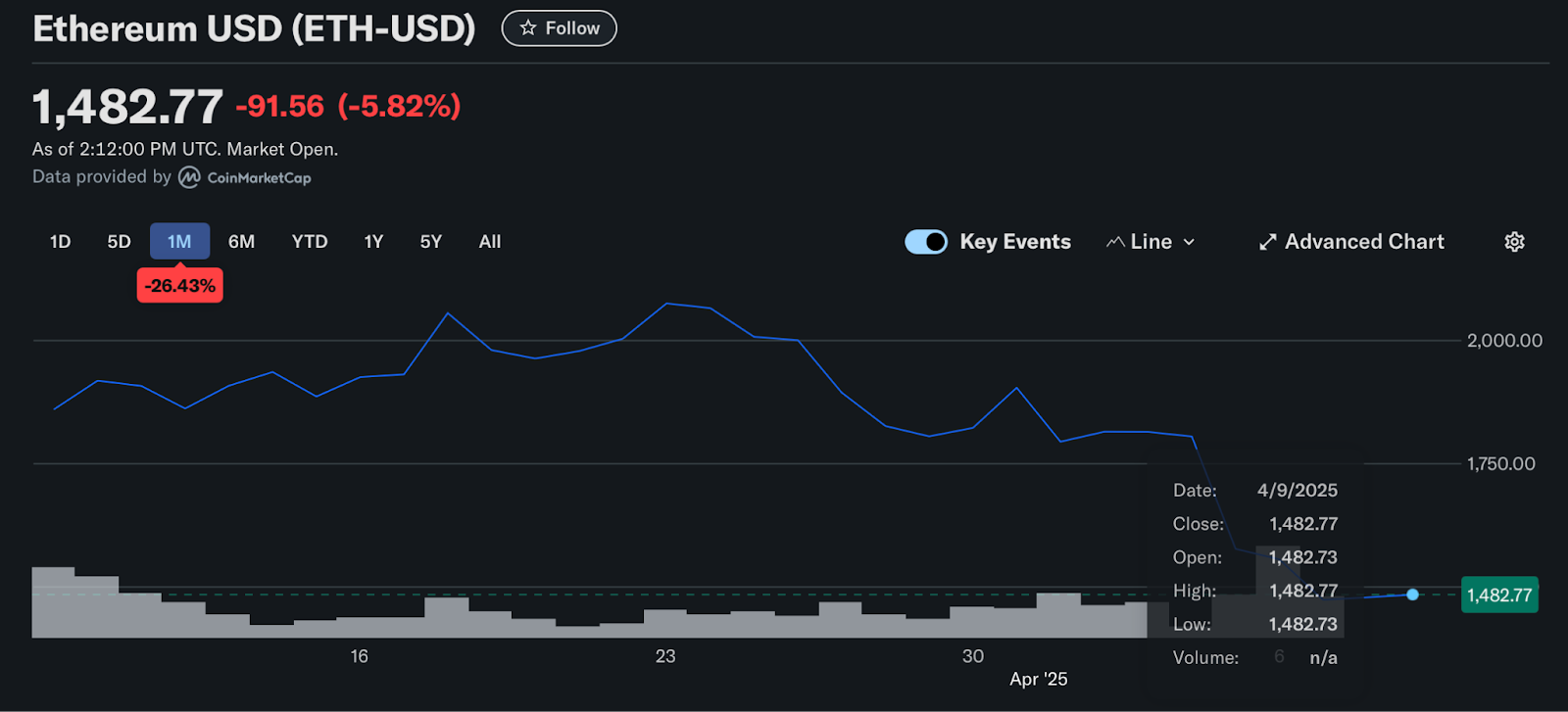 image from finance.yahooo.com
Shifting Perceptions of Crypto’s Role
Despite the price drops, some analysts argue that the recent performance of cryptocurrencies may reinforce their utility in diversified portfolios. Unlike traditional stocks and bonds, which have been dumped en masse by investors seeking safer ground, Bitcoin and other cryptocurrencies have demonstrated periods of relative resilience.
One market strategist noted that while Bitcoin is currently down about 30% from its January all-time high, its ability to avoid deeper losses compared to major equity indices signals that it still holds potential as a hedge against market turbulence. This emerging view could reshape how institutional investors perceive crypto assets, particularly in times of geopolitical uncertainty.
Risk Management Takes Center Stage
Nevertheless, the volatility has not gone unnoticed. In a clear sign that traders are preparing for further downside, put options for Ether and Solana have seen increased demand–a defensive move that highlights the growing caution among crypto investors. These instruments provide downside protection and are often used during periods of anticipated turbulence.
A regional derivatives head at a major digital-asset brokerage firm explained that the next key support level for Bitcoin sits around $65,000, suggesting that further losses could be ahead if market stress continues to mount. This underlines the importance of risk management strategies in today’s unpredictable climate.
Correlation with Traditional Markets
Cryptocurrencies have shown a growing tendency to move in sync with equities during global market stress. This was particularly evident after the most recent tariff escalation, when U.S. equity futures fell around 2% and European stock markets tumbled, closely mirroring crypto price drops.
While digital assets were once hailed as decentralized and decoupled from traditional finance, reality suggests a more complex relationship. During risk-off events–when investors exit positions in response to uncertainty–correlated selling occurs across both traditional and digital asset classes. This reflects a shift in how institutional capital interacts with the crypto market, treating it as a higher-beta extension of tech-heavy indices.
Resilience in the Face of Systemic Shocks
That said, cryptocurrencies have still outperformed some traditional assets in specific windows of volatility, especially when factoring in moderate leverage and supportive regulatory frameworks in jurisdictions like the U.S. The current crypto landscape is less exposed to systemic leverage compared to previous cycles, which has prevented deeper liquidations during recent drawdowns.
This backdrop may support the argument that cryptocurrencies, particularly Bitcoin, still offer relative stability in comparison to over-leveraged traditional instruments during moments of global stress. As one crypto strategist noted, investors are beginning to appreciate Bitcoin’s long-term value proposition, especially as an alternative store of value when inflation and political risk cloud conventional options.
Conclusion: A Market in Transition
As the global economy faces an uncertain path shaped by tariff battles, inflation pressures, and macro headwinds, cryptocurrencies are revealing both their vulnerabilities and their evolving role in the financial system. Though recent losses have rattled some traders, the overall market behavior suggests that digital assets are no longer on the fringes–they are increasingly integrated into broader financial narratives.
Whether as a hedge, speculative asset, or alternative investment, crypto is maturing in real-time. Its sensitivity to geopolitical developments now places it in the same conversation as equities, commodities, and sovereign debt. For investors and strategists alike, the current cycle offers a crucial opportunity to reassess crypto’s place within the global portfolio.
In an era defined by uncertainty, one thing is becoming clearer: digital assets are not immune–but they are adaptive.

COMTEX_465113540/2922/2025-05-01T12:26:55
This press release was originally published on this site