
Chipotle Mexican Grill experienced a brutal 13% drop in after-hours trading after leadership announced another reduction to revenue expectations. The fast-casual dining company trimmed its same-store sales projections for the third straight quarter. Management cited weakening foot traffic as the main driver behind deteriorating results.
A senior analyst at LFTrade investigates what this ongoing weakness reveals about consumer behavior and the restaurant business landscape.
Revenue Outlook Takes Another Hit
Company executives now expect fiscal 2025 comparable store sales to fall by a low single-digit percentage. This represents a stark shift from February when management predicted modest positive growth instead. Actual quarterly revenue missed analyst estimates significantly as customer visits declined more sharply than forecasters anticipated.
Comparable store sales measure how established locations perform after operating for at least twelve months. This indicator offers vital clues about core business momentum and underlying health. The string of downward revisions indicates Chipotle faces serious structural demand issues rather than short-term headwinds.
The troubles seem especially striking given the brand’s historically loyal following and strong reputation built over many years. Chipotle established itself by emphasizing better ingredients than typical fast food chains. Patrons traditionally paid higher prices willingly in return for what they perceived as superior quality.
Restaurant Sector Under Strain
Chipotle’s struggles reflect widespread challenges hitting the dining industry as household spending power diminishes. Rising prices have squeezed family budgets hard, particularly for lower and middle-class households who previously drove reliable traffic to casual dining spots. These consumers are noticeably cutting back on eating out.
Menu price hikes rolled out industry-wide to counter escalating wages and food costs have dampened appetite for restaurant visits. Customers increasingly treat dining out as optional spending they can eliminate when money gets tight. Rivalry has grown fiercer as operators fight desperately over a contracting customer base.
Mobile ordering apps and delivery services enable diners to easily compare options before choosing where to eat. Brand loyalty has weakened substantially as switching restaurants requires minimal effort. This trend hurts all operators but particularly those caught in the middle tier between budget chains and upscale establishments.
Profits Come Under Pressure
The reversal from anticipated expansion to actual shrinkage represents a multi-percentage-point swing in business trajectory. Such magnitude usually signals either broad economic weakness or internal operational problems. Revenue falling short of targets beyond comparable sales suggests new restaurant openings are underperforming badly.
Operating margins face intense squeeze from slowing sales combined with ongoing cost inflation. Wages stay persistently high while ingredient expenses swing wildly based on farming commodity markets. Without revenue growth to offset fixed expenses, bottom-line results suffer significantly.
Chipotle has aggressively opened numerous new locations in recent years pursuing rapid expansion. These newer spots performing below expectations worsens the traffic problems already affecting older, established restaurants. The chain may need to completely rethink its growth approach.
Market Response Brutal
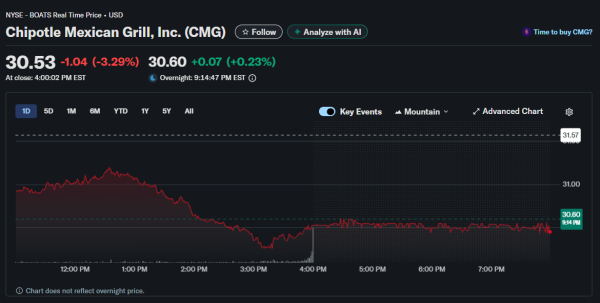
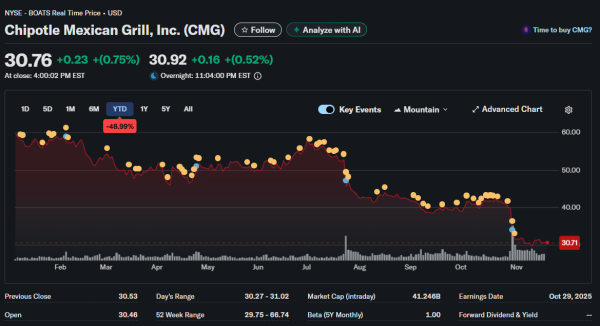
The after-hours collapse wiped out billions in market value instantly as investors absorbed the disappointing news. Shares had held up reasonably well through 2025, making this sudden reversal psychologically jarring. Late trading frequently sees amplified price swings that sometimes moderate when regular hours resume.
Yet the decline’s severity suggests heavy selling will likely continue when normal trading starts Thursday. Options activity probably showed existing owners frantically hedging exposure while traders bet on further drops. Rival restaurant stocks fell in related selling as investors assumed Chipotle’s troubles affect competitors too.
The sharp selloff raises bigger questions about restaurant valuations more broadly. If Chipotle’s issues stem from industry-wide problems rather than company mistakes, peers face similar risks. Consumer spending-sensitive stocks generally could see rotation if weakness spreads.
Leadership Credibility Damaged
Three consecutive guidance cuts seriously undermine management’s credibility with investors depending on reliable forecasts. Repeated negative surprises suggest either overly rosy internal assumptions or rapidly changing conditions nobody foresaw. Either explanation raises concerns about leadership’s judgment and business assessment capabilities.
Executives may have overestimated how well new menu items and marketing would work. Alternatively, household spending could have deteriorated faster than anyone reasonably expected. Being transparent about underlying challenges becomes essential for preserving investor trust going forward.
The company must clearly explain whether current troubles represent temporary obstacles or permanent shifts in the business model. Different root causes demand different solutions and carry vastly different implications for long-term value. Investors need this clarity to make informed decisions.
Valuation Adjustment Coming
Chipotle’s price-to-earnings multiple will almost certainly shrink following guidance cuts and stock declines. Slower-growing companies get lower valuation multiples, especially with limited forward visibility. Shares might eventually offer attractive entry points for patient investors.
However, trying to catch falling consumer stocks carries genuine risks if conditions deteriorate further. Competitor valuations will help assess whether Chipotle trades reasonably relative to prospects. If problems prove company-specific rather than industry-wide, eventual rebound becomes more likely.
Markets will now demand concrete evidence management can stabilize the business before rewarding shares. Several consecutive quarters of improving operational metrics will prove necessary to restore confidence. Until then, valuation pressure will likely persist on the stock.