Taurus One senior technology analyst Anna Tutova examines how Alphabet’s unprecedented capital expenditure announcement sent shockwaves through equity markets, even as the company beat earnings across every metric that traditionally matters.
Alphabet dropped a bombshell on February 4, 2026, that reverberated through technology stocks for days afterward. The company announced 2026 capital expenditures ranging from $175 billion to $185 billion, more than doubling the $91.4 billion spent in 2025. Wall Street had braced for aggressive AI investment. Analysts projected roughly $119.5 billion in spending. They got something 55% higher than their most optimistic estimates.
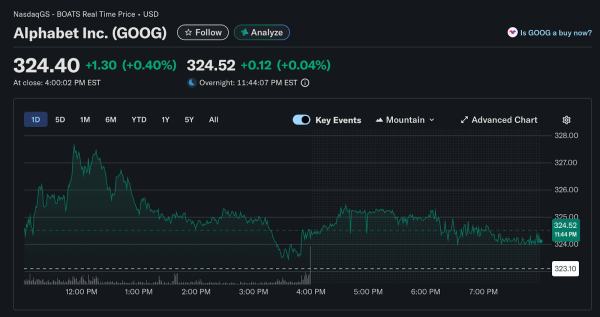
The immediate market reaction tells the entire story. Alphabet shares plummeted 7% to $309.32 on February 5, marking the steepest intraday decline since May. This happened despite the company posting its first $400 billion revenue year and beating expectations on earnings, cloud growth, and virtually every other financial metric investors typically celebrate.
When Good News Becomes Bad News
Alphabet’s fourth quarter performance deserved applause based on traditional metrics. Revenue climbed 18% to $113.8 billion, crushing the $111.4 billion consensus. Earnings per share jumped to $2.82 from $2.15 year-over-year, well above the $2.65 projection.
Google Cloud revenue surged nearly 48% year-over-year, making it the fastest-growing major cloud provider. The division’s backlog exploded 55% sequentially and more than doubled annually, reaching $240 billion at quarter’s end. These numbers typically send stocks soaring.
But markets no longer care about what companies accomplished last quarter. They care about what those accomplishments cost and whether the spending required to sustain growth makes economic sense. At $185 billion, Alphabet plans to spend more in 2026 than it invested in the previous three years combined.
The Free Cash Flow Conundrum
Deutsche Bank characterized Alphabet’s spending plan as “stunning the world.” That’s diplomatic language for investors questioning whether returns will justify investment at this scale.
The math gets uncomfortable quickly. Approximately 60% of capital expenditures flow toward servers, with 40% allocated to data centers and networking equipment. That’s physical infrastructure with a finite useful life requiring constant replacement and upgrade cycles.
CEO Sundar Pichai admitted during the earnings call that “compute capacity” keeps him awake at night. He expects Alphabet to remain supply-constrained throughout 2026 despite the record infrastructure investment. Translation: spending $185 billion still won’t meet demand.
Comparing the Hyperscaler Arms Race
Alphabet’s spending commitment dwarfs competitors pursuing similar AI ambitions. Meta projects $115 billion to $135 billion in 2026 capex, nearly double 2025’s $72.2 billion but still far below Alphabet’s range.
Microsoft declined to provide specific 2026 guidance, stating only that spending will “decrease sequentially” after $37.5 billion in the most recent quarter. That suggests Microsoft sees diminishing returns from endless infrastructure expansion.
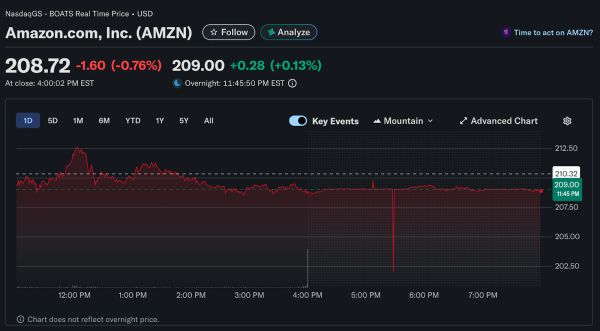
Amazon reports earnings after Alphabet, with analysts expecting 2025 capex near $124.5 billion and approximately 18% growth to $146.6 billion in 2026. Even Amazon’s aggressive timeline looks conservative compared to Alphabet doubling down.
The 52% to 61% gap between Alphabet’s guidance and analyst expectations signals fundamental strategic divergence. While competitors adopt measured approaches, Alphabet gambles that infrastructure constraints rather than customer demand will determine cloud market share.
What $185 Billion Actually Buys
Finance chief Anat Ashkenazi detailed how 2026 spending will deploy across divisions. Investments target AI compute capacity for Google DeepMind, meeting “significant cloud customer demand,” strategic investments in “other bets,” and improving user experience to “drive higher advertiser ROI in Google services.”
That’s marketing language obscuring a critical reality. Alphabet acquired data center company Intersect for $4.75 billion in December, demonstrating the company’s scramble for energy infrastructure to power AI workloads. When billion-dollar acquisitions represent marginal infrastructure additions, the scale of the challenge becomes apparent.
Gemini, Alphabet’s flagship AI application, now claims 750 million monthly active users, up from 650 million last quarter. That’s impressive growth requiring massive compute capacity. But monetization remains unclear. How many of those users generate revenue, justifying the infrastructure supporting them?
The Apple Partnership’s Hidden Cost
Alphabet’s deal overhauling Apple’s Siri virtual assistant using Gemini models sounds like a strategic victory. Pichai emphasized Apple choosing Google as its “preferred cloud provider” during the earnings call.
But consider economics, Apple negotiates from strength with multiple viable alternatives. Those partnerships typically involve revenue-sharing arrangements that compress margins. Winning prestigious partnerships at the cost of profitability creates optics without substance.
The Software Sector Contagion
Alphabet’s spending announcement didn’t just punish its own stock. The entire software sector shed 30% of value over three months as investors reassessed how long AI investments require before generating positive returns.
When the industry leader admits it can’t build infrastructure fast enough despite doubling capital expenditures, it signals systemic supply constraints that no amount of spending immediately solves. Power availability, land acquisition, and equipment manufacturing capacity all impose hard limits on deployment speed.
ServiceNow fell 7.60% on February 5. Salesforce dropped 4.76%. These companies don’t compete directly with Alphabet in infrastructure, but they suffered from a broader reassessment of AI economics. When belief systems crack, correlation overwhelms fundamentals.