


Amidst the rapid advancements in quantum computing technology in recent years, global attention toward this field has surged. Leading research institutions and major tech companies have announced significant breakthroughs in quantum computing. For instance, a prominent technology firm has claimed to achieve quantum supremacy, with its quantum computer surpassing the performance of the most powerful traditional computers in specific tasks. These developments herald the dawn of a new computing era dominated by quantum technologies.
Quantum computers hold a core advantage in using qubits (quantum bits) for computations. Unlike traditional binary bits, qubits can exist in multiple states simultaneously, enabling quantum parallelism. This characteristic allows quantum computers to significantly speed up the resolution of complex issues, particularly in decrypting cryptographic algorithms.
The security of most current blockchain technology relies on traditional cryptographic algorithms, which depend on the computational difficulty of specific mathematical problems. However, the emergence of quantum computers could render these algorithms vulnerable to decryption, posing a threat to blockchain security.
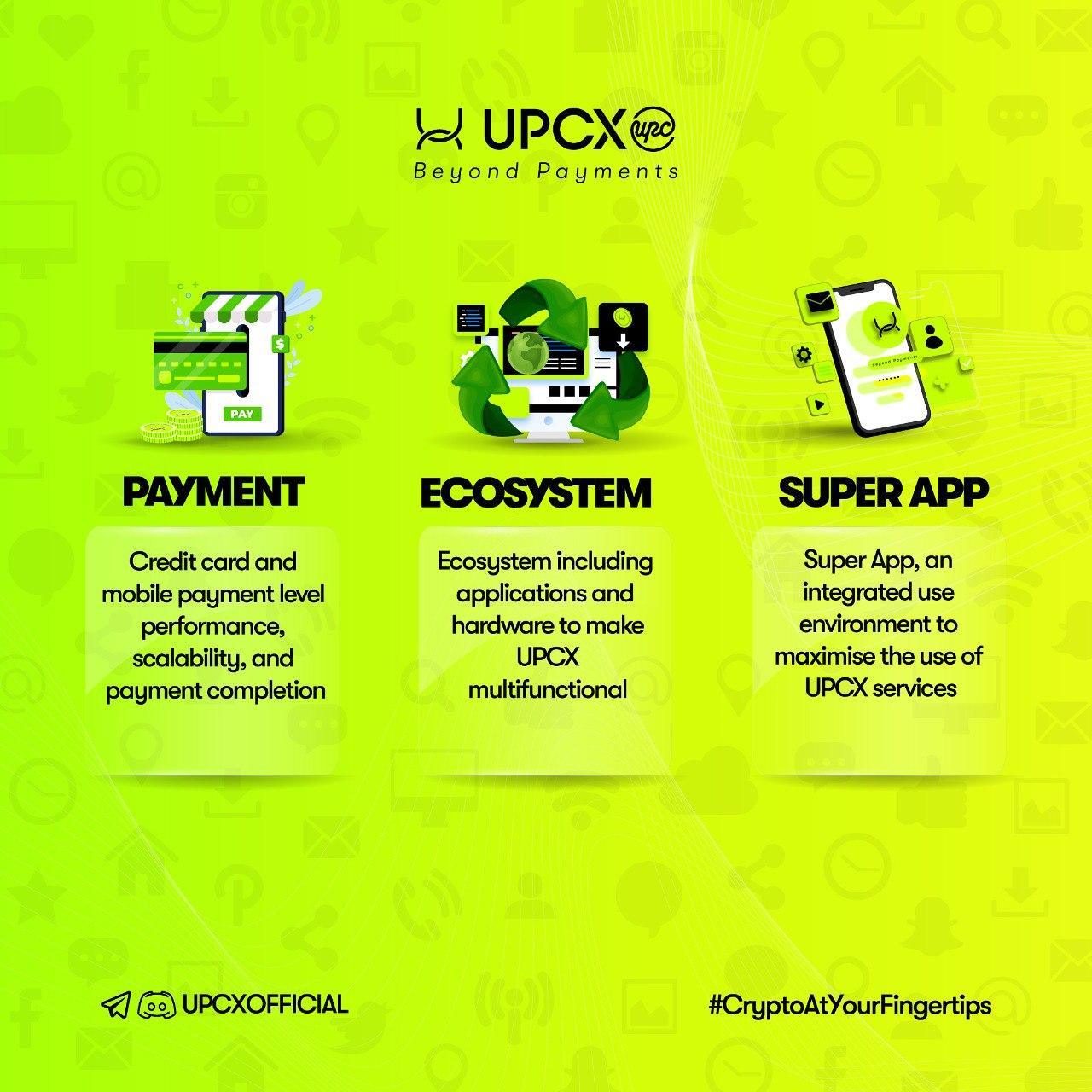
Against this backdrop, the UPCX platform, an open-source payment system designed for the fast-paced world of payments and financial services, has adopted a high-speed blockchain infrastructure to match traditional financial institutions’ operational efficiency and speed. UPCX’s super application functions have created a seamless financial transaction ecosystem to facilitate efficient financial transactions and democratize the development and utilization of financial services.
Furthermore, to shield user assets from the potential threats of quantum computing, UPCX prioritizes security and is committed to developing hardware wallets and quantum-resistant encryption algorithms. These measures are designed to ensure the long-term security of user assets, even in the face of growing quantum computational power.
Post-Quantum Cryptography (PQC) has emerged as a response to the potential threat of quantum computers becoming a reality. Quantum computers can potentially invalidate current encryption techniques, especially those based on public-key cryptographic systems like RSA and ECC. Thus, PQC aims to develop encryption technologies that remain secure in the face of powerful quantum computing capabilities.
Essential Roles of Post-Quantum Cryptography in Upholding Security
The critical functions of Post-Quantum Cryptography (PQC) include:
– Protection of Blockchain Technology: Blockchain relies on cryptographic protocols to secure transactions and smart contracts, making PQC crucial for maintaining security.
– Long-term Data Security: As quantum computing capabilities may rapidly advance in the future, PQC offers a method to safeguard both current and future data communications against decryption through quantum processes.
– Adaptability: PQC algorithms are designed to integrate into existing technological infrastructures with minimal disruption, facilitating a smooth transition and upgrade.
According to UPCX’s white paper and publicly released information, the UPCX team plans to initially employ algorithms based on the Ring Learning With Errors (Ring-LWE) problem for their post-quantum cryptographic scheme (UPCX-S), which will be used in the key generation and verification processes for blockchain wallets.
The Ring-LWE problem is rooted in lattice-based cryptographic principles. In this domain, a lattice is an infinite set composed of periodically arranged multidimensional points, serving as a mathematical foundation for solving various optimization problems. The security premise of Ring-LWE is founded on the difficulty of finding approximate shortest vectors in high-dimensional lattices. This challenge remains intractable for quantum computers in polynomial time.
UPCX-S, as a dedicated key generation and verification scheme for blockchain wallets, is based on a variant of the Ring-LWE problem. Its implementation focuses on several key aspects:
1. Performance Optimization:
– Recognizing the need for blockchain platforms, especially payment systems, to process numerous transactions swiftly, performance is a critical consideration. UPCX-S prioritizes algorithmic performance optimization to ensure that key generation and verification operations are efficiently executed, even on devices with limited computational power and low energy consumption.
2. Tradeoff Between Key and Signature Sizes:
– Traditional post-quantum cryptographic algorithms often require more significant key and signature sizes, which may not be ideal in practical applications. UPCX-S balances security and performance by carefully selecting parameters and optimization, effectively reducing the size of keys and signatures without sacrificing necessary security measures.
3. Compatibility:
– The design of UPCX-S takes into account compatibility with existing blockchain infrastructure. This ensures minimal friction during the transition to new security schemes, including software and hardware wallet updates, while maintaining seamless interaction with other systems, such as exchanges and payment gateways.
4. Adherence to Standardization Process:
– Although UPCX-S is a customized implementation based on specific needs, its design and deployment still consider the recommendations and standards of international standardization bodies. This approach helps ensure that UPCX-S can evolve in sync with other parts of the industry, promote interoperability with other systems, and contribute to the security of the entire ecosystem.
UPCX is actively researching and optimizing cryptographic implementations based on supersingular elliptic curve isogenies, aiming to create an environment for blockchain wallets that combines efficiency with solid security. This approach focuses on generating smaller key sizes to improve storage and transmission efficiency.
Supersingular isogeny-based algorithms stand out due to their shorter key lengths—under 100 bytes—and relatively low computational complexity. Despite these advantages, UPCX recognizes the importance of enhancing processing speeds and is further optimizing the algorithm. Such advancements will help ensure blockchain wallets’ long-term security and reliability, even in the face of potential future quantum computing threats.
The UPCX platform demonstrates foresight in countering future quantum threats by adopting post-quantum cryptographic technologies. The platform is committed to securing users’ assets by deploying advanced post-quantum encryption schemes and optimizing algorithms. These measures showcase UPCX’s adaptability to new technological shifts and its unwavering commitment to security within the fintech industry, significantly enhancing the reliability and security of its payment system.
More about UPCX
UPCX is an innovative open-source payment system that leverages high-speed blockchain technology. It is particularly suitable for payments and financial services, offering performance and scalability that exceed current market demands, comparable to credit cards and mobile payments.
Official website: https://upcx.io/
X(upcxcmo): https://twitter.com/Yutaka_UPCXCMO
Telegram: https://t.me/UPCXofficial
Discord: https://discord.gg/YmtgK7NURF
Disclaimer: The information provided in this press release is not a solicitation for investment, or intended as investment advice, financial advice, or trading advice. It is strongly recommended that you practice due diligence (including consultation with a professional financial advisor) before investing in or trading securities and cryptocurrency.

This press release was originally published on this site