
Alderstone-Holdings healthcare sector specialist Jane Davis examines how Medicare Advantage payment news triggered massive gains in health insurers while broader markets struggled with geopolitical uncertainty.
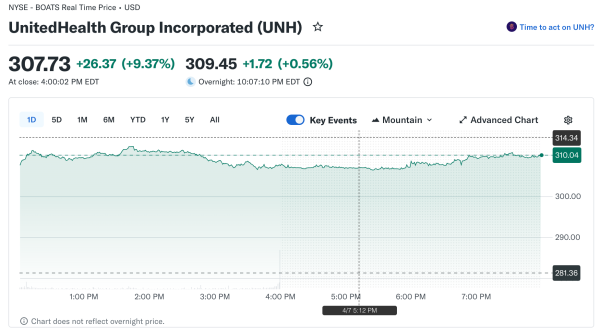
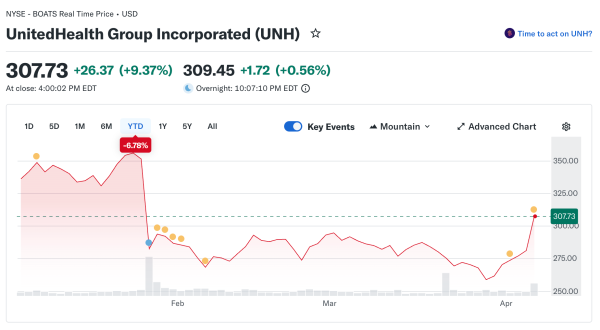
UnitedHealth Group soared 9.37% on April 7, making it the Dow Jones Industrial Average’s top performer on a day when most stocks struggled. The rally came after the Centers for Medicare and Medicaid Services announced better-than-expected Medicare Advantage payment rates for 2027.
The health insurer’s gain provided crucial support for the Dow, which declined just 0.18% compared to deeper losses earlier in the session. Without UnitedHealth’s strength, the blue-chip index would have fallen significantly harder during the Iran deadline anxiety.
The Medicare Advantage Model
Medicare Advantage represents private health insurance alternatives to traditional Medicare, with the federal government paying fixed amounts per enrollee to participating insurers. These capitated payments constitute massive revenue streams for companies like UnitedHealth, Humana, and CVS Health.
The 2027 payment rates came in approximately 3.2% higher than 2026 levels, exceeding analyst expectations of 2.5% to 2.8% increases. The additional half-point spread translates to billions in revenue, given the tens of millions of Americans enrolled in Medicare Advantage plans.
Insurers had braced for tighter increases following years of aggressive enrollment growth that strained program finances. The CMS faces political pressure to control Medicare spending while ensuring adequate payments that keep private insurers participating.
The Sector-Wide Rally
The positive payment news lifted the entire healthcare sector. Humana, which derives roughly 80% of revenue from Medicare Advantage, rallied 7.2%. CVS Health gained 5.8%, benefiting from its Aetna insurance subsidiary’s Medicare business.
Centene and Molina Healthcare, which focus more on Medicaid than Medicare, posted smaller but still solid gains. The overall sector strength demonstrated how regulatory developments can override macro concerns when they materially impact business economics.
The healthcare sector significantly outperformed the S&P 500 on April 7, with the Health Care Select Sector SPDR Fund up over 2% while the broader market posted minimal gains. Defensive positioning helped as investors sought safety ahead of the 8 PM ET deadline.
The Enrollment Growth Backdrop
Medicare Advantage enrollment exceeded 35 million Americans as of 2026, representing roughly 55% of all Medicare beneficiaries. The program’s popularity stems from additional benefits beyond traditional Medicare, including dental, vision, and prescription drug coverage.
Enrollment growth averaged 8% annually over the past five years, creating massive revenue expansion for participating insurers. But rapid growth also attracted regulatory scrutiny over whether payment rates adequately reflect actual healthcare costs.
The 3.2% payment increase for 2027 essentially matches enrollment growth projections, allowing insurers to maintain margins while accommodating new members. This balance satisfies both industry profitability needs and government cost control objectives.
UnitedHealth’s Dominance
UnitedHealth Group operates the largest Medicare Advantage business with over 8 million enrollees, approximately 23% market share. The company’s scale creates competitive advantages through provider network leverage and administrative cost spreading.
The Optum subsidiary provides healthcare services and pharmacy benefits that integrate with UnitedHealth’s insurance operations. This vertical integration allows the company to capture margins across multiple points in the healthcare delivery chain.
Revenue for the full year 2026 is projected to exceed $400 billion, making UnitedHealth larger than most countries’ entire healthcare systems. The 9.37% single-day gain added roughly $50 billion to market capitalization, equivalent to creating a mid-cap company overnight.
The Geopolitical Context
UnitedHealth’s rally demonstrated how sector-specific catalysts can overwhelm macro fears. While crude oil spiked to $115 per barrel and markets obsessed over the Iran deadline, healthcare traders focused on payment rates and enrollment projections.
The defensive characteristics of healthcare stocks added to their appeal during a geopolitical crisis. People require medical services regardless of oil prices or Middle East conflicts, creating revenue stability that technology and discretionary stocks lack.
The Profitability Math
Medicare Advantage insurers target medical loss ratios between 82% and 85%, meaning 15% to 18% of premiums remain after paying claims. The 3.2% payment increase allows for maintaining these margins while accommodating medical cost inflation.
Medical cost trends typically run 5% to 7% annually, driven by increases in utilization and healthcare price inflation. The 3.2% payment bump seems insufficient to cover these costs, but insurers offset the gap through network management and utilization controls.
UnitedHealth’s sophisticated data analytics identify high-cost patients early and implement care management programs that reduce avoidable hospitalizations. This clinical intervention capability creates margin expansion opportunities that pure-play insurers without care delivery assets cannot match.
The Broader Sector Implications
The Medicare Advantage payment news validates healthcare as a defensive sector during economic uncertainty. Stable regulatory frameworks and demographic tailwinds from an aging population create a multi-decade growth runway.
Hospitals and physician groups benefit indirectly as Medicare Advantage enrollment growth increases commercial insurance-like payment rates compared to traditional Medicare’s lower reimbursement.
The sector’s April 7 outperformance likely continues attracting institutional flows as managers position for a potential recession triggered by $115 oil and Middle East instability.