

In recent months, turbulence has gripped major tech stocks, collectively known as the “Magnificent Seven.” Once thriving due to explosive enthusiasm surrounding artificial intelligence (AI), these influential corporations have encountered new challenges, including exorbitant AI investment costs, rising geopolitical tensions, and volatility sparked by tariff uncertainties.
This dynamic situation calls into question their once-unquestioned status as resilient market anchors. In the following analysis, Joe Brown, a seasoned financial strategist from Vanguard LGC explores the nuanced position of these influential tech companies, assessing their evolving role amid the shifting sands of market sentiment and international trade pressures.
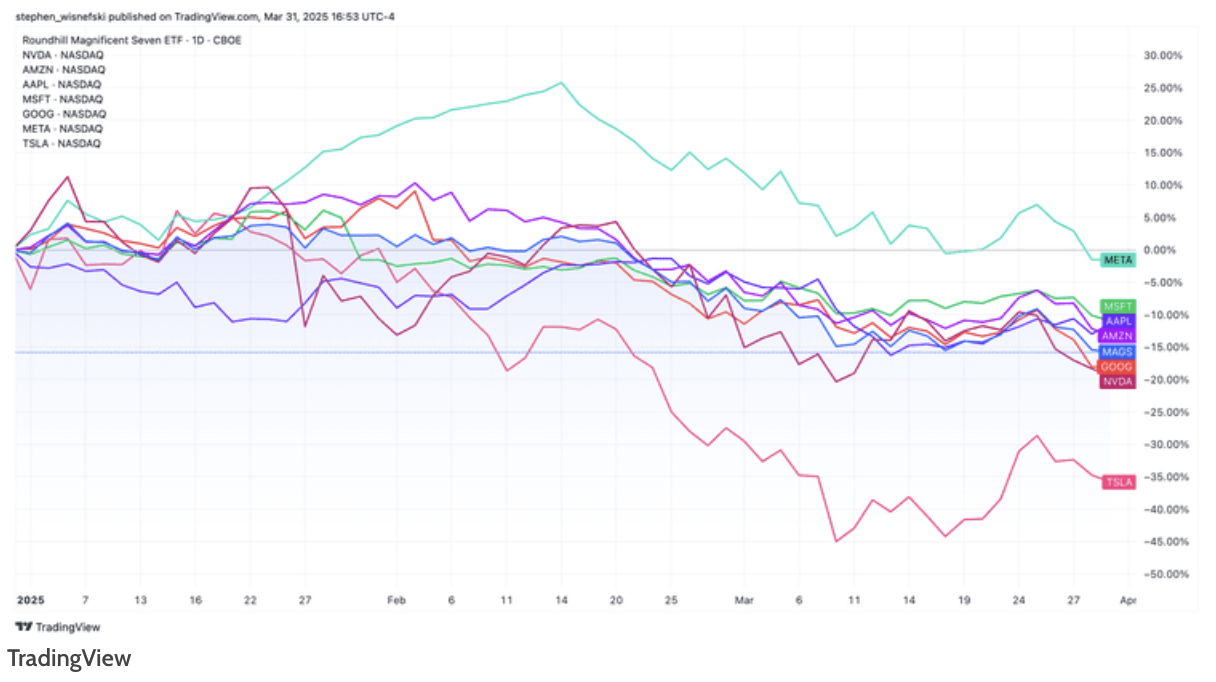 image from investopedia.com
The Erosion of AI Enthusiasm and Market Realities
The Magnificent Seven–comprising some of the largest U.S. technology companies–initially soared on investor optimism centered around AI innovation. At the year’s outset, traders and investors alike rushed into these stocks, spurred by speculation and fear of missing out (FOMO).
AI-driven valuation inflation boosted their share prices, propelling the entire market upward. However, the situation quickly reversed as practical challenges emerged, and investor exuberance gave way to caution and recalibration.
This sudden pivot became particularly evident with the unexpected success of emerging competitors like Deepseek, which shifted investor focus away from the once-dominant tech giants.
Furthermore, escalating AI development expenses proved burdensome even for well-funded industry leaders, prompting analysts to reconsider previously lofty valuations and adjust year-end targets downward.
A Strategic Recalibration in a Volatile Market
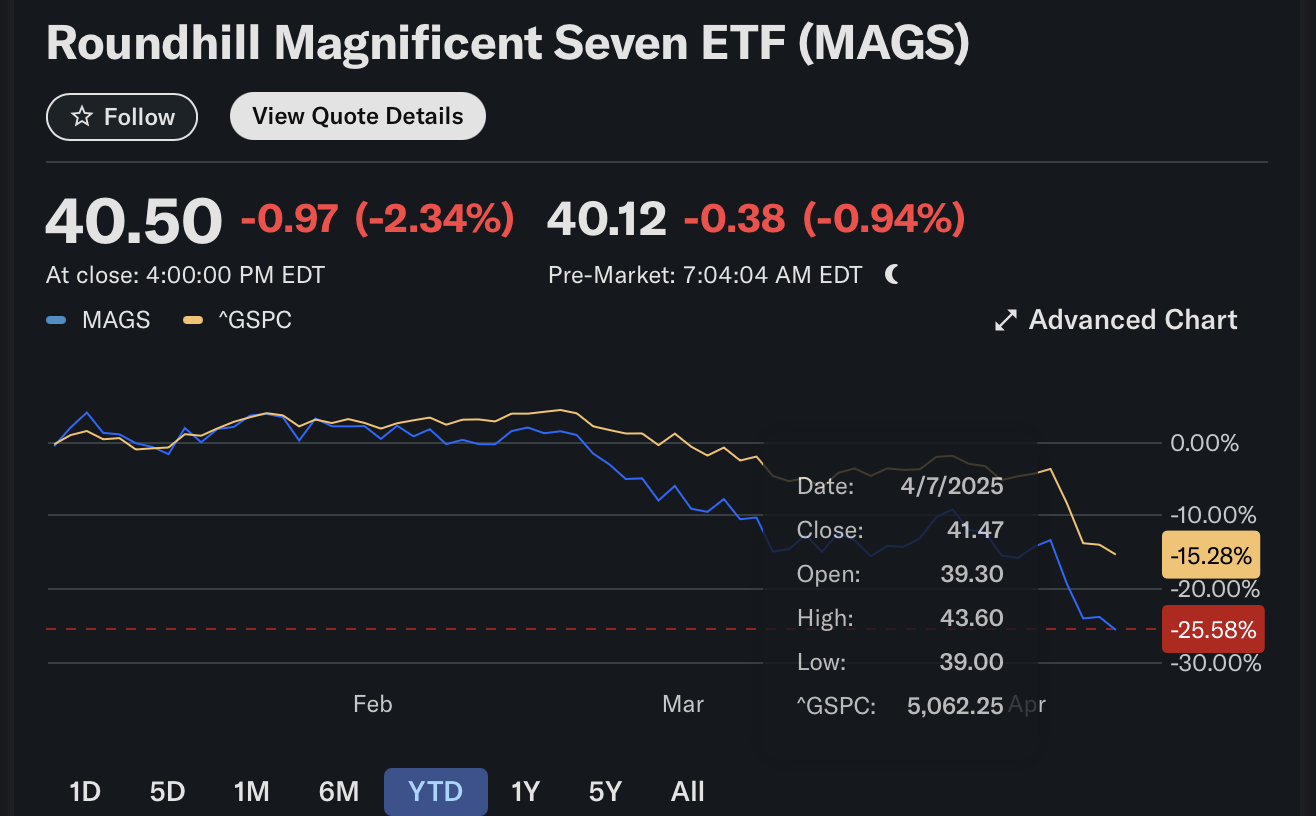 image from finance.yahooo.com
Despite recent volatility and correction, these technology giants still maintain a substantial presence within the broader market context. Collectively, their stocks account for roughly a third of the S&P 500’s weighted market capitalization, underscoring their continued significance.
Even amidst sharp declines, brief periods of market recovery underscore their intrinsic strength. For instance, during a recent, albeit temporary market rebound, these stocks experienced significant surges, illustrating their ongoing capacity to influence investor sentiment.
Historically, these large-cap tech companies have exhibited defensive qualities, providing shelter when economic uncertainties prevail. Citi’s Chief Equity Strategist noted earlier this year that, amidst economic unease, the Magnificent Seven have repeatedly demonstrated their capability to assume defensive positions within investor portfolios.
Furthermore, Schwab’s senior investment strategist emphasized their financial robustness, pointing to robust quarterly cash flows that allow these corporations to manage prolonged periods of elevated interest rates.
International Vulnerabilities and Tariff Pressures
Despite their financial solidity, these corporations are not immune to international trade fluctuations or geopolitical tensions. The recent escalation of tariffs on Chinese imports, dramatically rising to a staggering 104%, underscores their susceptibility to external economic shocks. This escalation initially dampened investor sentiment sharply, offsetting short-lived optimism around potential diplomatic resolution.
Companies like Nvidia, Apple, and Microsoft–with extensive international operations and global supply chain dependencies–face distinct vulnerabilities in such conditions. Traditional defensive stocks usually imply stable dividends, domestic-oriented revenues, and relative insulation from international disruptions.
Clearly, Big Tech deviates from this archetype significantly, exposed by extensive multinational operations and international logistical networks.
However, despite this vulnerability, the scale, financial strength, and diversified nature of their business models position these corporations advantageously, allowing them greater flexibility to absorb and adapt to short- to medium-term tariff impacts and geopolitical uncertainty.
Their substantial cash reserves, diversified revenue streams, and global market share present significant buffers, enabling strategic adjustments and cost-absorbing capabilities during uncertain periods.
Evaluating the Future of Big Tech Amid Economic Turmoil
Considering their extensive influence, the performance of the Magnificent Seven remains pivotal for overall market direction and investor confidence. Their substantial market capitalization acts as a double-edged sword; while their downturn amplifies volatility across portfolios, their stabilization or recovery likewise can significantly uplift market indices and investor morale.
Analysts and market strategists recognize this intricate relationship clearly, acknowledging the paradox inherent in Big Tech’s simultaneous role as both a potential source of market instability and a defensive anchor during broader economic disruptions. Ultimately, these corporations may not embody traditional defensive traits fully, yet their financial strength and market power afford a distinctive resilience rarely seen in other sectors.
Conclusion: Navigating Uncertainty with Cautious Optimism
While the future of the Magnificent Seven remains somewhat uncertain, their fundamental positions within the global economy remain intact. Recent volatility may persist, reflecting external uncertainties ranging from international trade disputes to economic policy shifts.
Yet, investors and strategists must remember that these companies are fundamentally resilient–characterized by deep financial reserves, diversified business models, and substantial market clout.
As markets adjust to this new phase of uncertainty, investors should remain mindful of both vulnerabilities and strengths inherent to these technology titans. Recognizing the nuanced nature of their market roles, which blend aggressive innovation and conservative financial strength, can provide valuable guidance.
This informed perspective will help market participants navigate volatility thoughtfully, balancing caution with strategic optimism as Big Tech continues to shape the evolving landscape of global finance.

COMTEX_465154829/2922/2025-05-02T16:51:27
This press release was originally published on this site