
In the complex chessboard of global trade relations, a recent strategic maneuver has sparked significant attention in international financial markets. America’s current president made headlines once again by initiating a temporary pause in previously announced reciprocal tariffs, coupled with an intensified economic stance towards China.
This intriguing development has sent ripples across financial sectors worldwide, raising critical questions regarding future global economic stability. To clarify the complexities surrounding these policy shifts, Camila Jones, a seasoned financial analyst from Vanguard LGC, dives deep into the underlying implications and potential long-term effects.
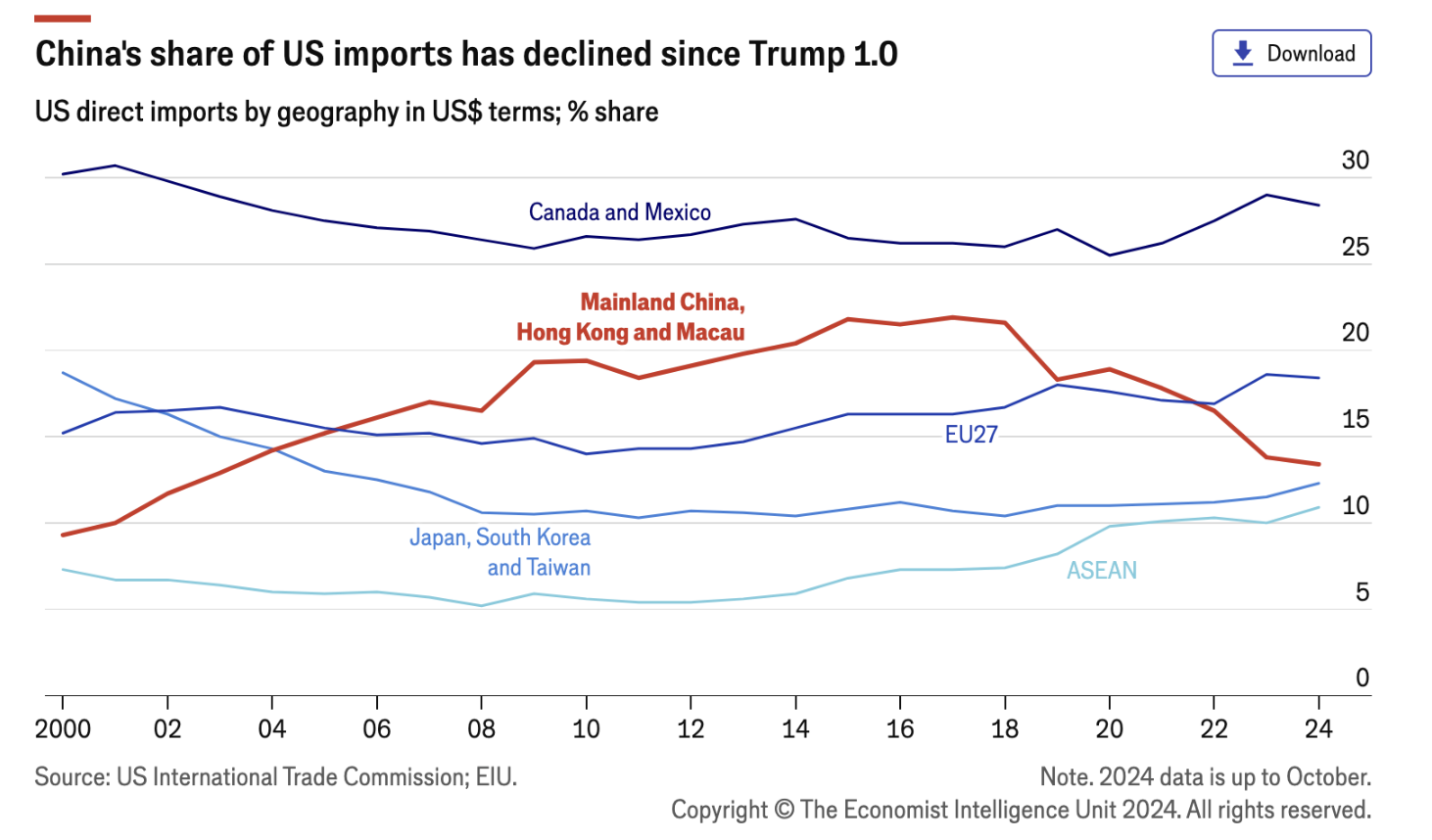 image from eiu.com
Temporary Tariff Pause Brings Market Optimism
In a surprising announcement via social media, America’s current president declared an immediate 90-day suspension of reciprocal tariffs, maintaining the existing 10% duties introduced recently on numerous global trade partners. The president stated explicitly that these countries have refrained, upon his recommendation, from retaliating against the United States, thereby justifying this strategic pause.
Financial markets responded positively, swiftly translating into noticeable growth. Notably, following the announcement, stocks surged by over 7%, reflecting investor optimism amid ongoing trade uncertainties. This market rally highlights investor confidence and the short-term relief afforded by temporary diplomatic measures.
 image from theguardian.com
Sharpened Stance on China Intensifies Economic Pressure
Simultaneously, the administration reinforced its stance on China, escalating economic pressure significantly. The president’s directive stipulated a new, steep tariff rate of 125% on Chinese imports, justified by perceived disrespect and economic imbalance from China towards the United States.
The severity of this measure underscores the increasing divergence in trade policies towards different international partners and emphasizes an explicit focus on isolating China economically.
According to the Treasury Secretary, the strategic adjustment was long-planned and unrelated to the recent volatility experienced by financial markets. Stressing that over 75 countries had reached out proactively to negotiate, he outlined that the reprieve allowed the administration to design customized agreements, personally supervised by America’s current president.
Strategic Communication and Market Perception
The decision’s timing, interestingly coinciding with the president’s social media messages encouraging followers to capitalize on favorable market conditions (“great time to buy”), raises intriguing considerations about communication strategies and market psychology. Such signals from governmental leadership potentially reassure investors, temporarily soothing volatility and uncertainty.
Nonetheless, the clarity surrounding specific trade relationships, notably with major economic blocks like the European Union, remains ambiguous. Despite the EU’s simultaneous announcement of their reciprocal tariffs, the administration’s lack of direct reference to Europe leaves uncertainty lingering. This unresolved detail continues to foster cautious speculation amongst market participants.
Internal Administration Dynamics Influence Investor Sentiment
Further influencing market sentiment is the internal reshuffling of key economic advisors. Analysts highlight the prominence of the Treasury Secretary in advising policy direction, complemented by the Commerce Secretary’s responsibility for negotiation specifics. Market experts interpret this internal alignment positively, perceiving it as a stabilizing influence for investors seeking reassurance of structured, predictable negotiations moving forward.
The Financial Impact on American Households
Despite immediate market enthusiasm, economic experts highlight the potential domestic consequences of the tariff strategy. According to recent findings from a respected Yale Budget Lab study, tariffs are projected to elevate domestic prices by approximately 2.3%, translating into an average annual cost increase of around $3,800 for American families.
Such economic analysis underscores the tangible financial impacts these policy decisions have on household budgets, suggesting that the long-term implications could temper initial market optimism.
International Response and Negotiation Outlook
Currently, 185 nations globally face ongoing tariffs of at least 10%, impacting international trade significantly. With Japan, South Korea, and Vietnam among the earliest scheduled to engage in negotiations, initial talks set to begin imminently will provide crucial insights into the evolving geopolitical trade landscape.
Nevertheless, questions persist regarding the feasibility of completing these intricate trade discussions within the designated 90-day window, hinting at a potentially prolonged negotiation period that may extend uncertainties.
Navigating Uncertainty in Financial Markets
As financial markets remain sensitive to shifts in trade policy, investors worldwide will closely monitor developments over the coming weeks. The Treasury Secretary emphasized the administration’s commitment to “negotiate in good faith,” presenting a cautiously optimistic narrative intended to stabilize investor sentiment amid ongoing unpredictability.
In summary, while the recent tariff adjustments and intensified China-centric policies have sparked immediate market enthusiasm, underlying uncertainties, and potential economic implications highlight the complexity of navigating global trade dynamics. Investors, policymakers, and financial experts alike remain vigilant, recognizing that the resolution of these strategic decisions will significantly shape economic stability for the foreseeable future.

COMTEX_465113989/2922/2025-05-01T12:38:56
This press release was originally published on this site