
Alderstone-Holdings chief market strategist Joseph Zainberg examines the extraordinary psychological shift that transformed April 7 from a disaster scenario into evidence of market resilience and opportunity for disciplined investors.
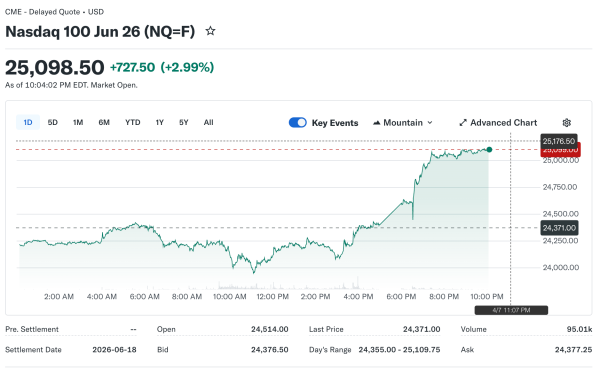
April 7, 2026, will be studied in trading psychology courses for generations. Markets spent six hours pricing in potential catastrophe before reversing course in approximately 30 minutes to close marginally positive. The S&P 500 finished up 0.08% at 6,616.85 after touching intraday lows down 1.2%, demonstrating remarkable resilience in the face of a genuine existential threat.
The transformation occurred precisely when Pakistani Prime Minister Shehbaz Sharif’s ceasefire proposal reached the White House around 4 PM ET, less than four hours before the President’’s 8 PM deadline for Iran to reopen the Strait of Hormuz or face infrastructure destruction.
The Morning Sentiment
Trading opened with markets already under pressure. Crude oil near $112 per barrel reflected Strait closure costs, while overnight developments offered no progress toward diplomatic resolution. The US President’s Truth Social post warning that “a whole civilization will die tonight” sent stock futures plunging in pre-market trading.
Risk-off positioning dominated early action. Technology stocks led declines, with the Nasdaq underperforming. Defensive sectors, including utilities, consumer staples, and healthcare, attracted inflows from investors seeking safety ahead of the deadline.
Volatility measures spiked as options traders positioned for potential chaos. The VIX touched 24 intraday, the highest level since the February technology selloff. Put options on major indices traded at elevated premiums as hedging demand overwhelmed available supply.
The Midday Acceleration
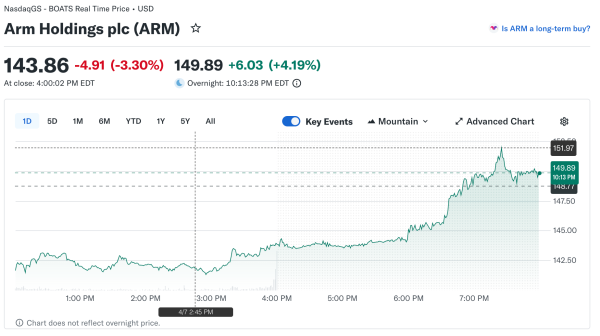
By noon ET, selling pressure intensified. Apple fell 3.67% on foldable iPhone concerns. ARM Holdings dropped 5% following a downgrade. These stock-specific catalysts compounded broader geopolitical fears, creating a feedback loop where all selling seemed justified.
Crude oil briefly touched $115.85, up over 40% from pre-crisis levels around $80. Energy sector strength failed to offset weakness elsewhere, with the S&P 500 down over 1% and threatening to test 6,500 support levels.
Treasury yields plunged as safe-haven flows accelerated. The 10-year briefly traded below 4.10%, down 20 basis points from the prior close. Bond market volatility exceeded equity volatility, signaling genuine fear rather than routine profit-taking.
The 4 PM Catalyst
When news broke that Pakistan proposed a two-week ceasefire, market reaction was instantaneous and violent. S&P 500 futures jumped 50 points in the first minute. Volume exploded as algorithms detected the headline and repositioned simultaneously.
The speed of reversal caught many traders off guard. Short sellers who added to positions during the decline faced immediate losses and rushed to cover, amplifying the rally. Market makers struggled to adjust quotes fast enough, creating brief periods of disorderly pricing.
Crude oil plunged $5 from intraday highs as traders reassessed supply disruption probabilities. Energy stocks initially fell on oil’s decline before recovering as investors concluded the ceasefire preserved upside while reducing catastrophic tail risks.
The Sector Rotation Nuances
Not all sectors participated equally in the reversal. Technology remained weak despite the rally, with the Nasdaq closing up just 0.10% compared to the S&P’s 0.08%. Stock-specific concerns about Apple and ARM persisted regardless of geopolitical developments.
Healthcare finished as the clear winner, up over 2% on the day. UnitedHealth’s 9.37% gain from Medicare Advantage news demonstrated how sector-specific catalysts can override macro fears for companies with regulatory visibility.
Financials showed relative strength throughout the session, suggesting institutional investors viewed them as undervalued following recent selloffs. Banks benefit from steeper yield curves during geopolitical stress, creating a natural hedge against some crisis scenarios.
The Behavioral Finance Lessons
The April 7 price action illustrates classic behavioral biases in real-time. Recency bias caused traders to extrapolate morning weakness into catastrophic outcomes, ignoring the historical tendency for geopolitical crises to resolve diplomatically.
Anchoring on the 8 PM deadline created false precision about timing and outcomes. Markets assumed the deadline represented a hard constraint when in reality diplomatic processes operate on fluid timelines subject to negotiation.
Herding behavior amplified moves in both directions. Morning selloff accelerated as traders saw others selling. Afternoon rally gained momentum as fear of missing the reversal drove buying. Both phases demonstrated how behavioral factors overwhelm fundamental analysis during stress.
The Path Forward
The two-week ceasefire, if accepted, provides temporary stability but doesn’t eliminate uncertainty. Markets will likely experience similar volatility when the next deadline approaches, creating additional trading challenges.
Positioning heading into the ceasefire period favors maintaining balanced portfolios rather than extreme sector bets. Energy upside from Strait closure reverses if tensions ease. Technology downside from recession fears moderates if oil normalizes.
The April 7 experience reminds investors that markets climb a wall of worry. Days that feel most catastrophic often mark local bottoms as all negative sentiment gets priced in simultaneously, leaving only upside surprises possible.