Gold prices struggled to regain momentum in early Tuesday trading, stabilizing after a sharp sell-off that has pushed the metal firmly into bearish territory. The recent price action reflects a broader shift in investor sentiment, as macroeconomic pressures begin to outweigh earlier safe-haven demand.
QuilCapital’s financial analyst Benjamin B delivers a structured breakdown of the forces driving gold’s continued weakness and what the situation could mean for traders in the near term.
Gold Remains Under Pressure After Record Highs
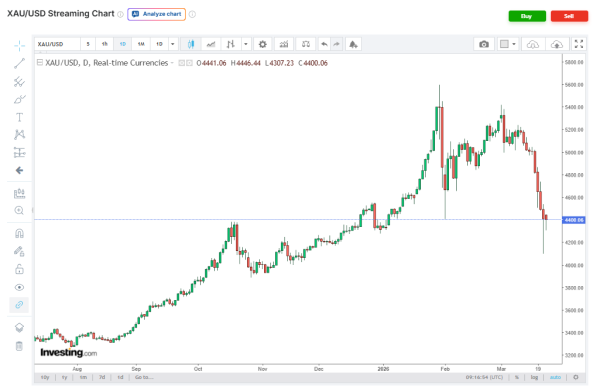
Spot gold briefly dipped before recovering to trade near $4,404 per ounce, while futures contracts hovered around $4,358 per ounce, signaling hesitation among buyers. Despite the temporary stabilization, the broader trend remains clearly negative.
Since reaching a peak of $5,594.82 per ounce in late January, gold has now declined by more than 21%, officially entering bear market territory. The speed of this correction has been notable, especially after last week’s nearly 10% drop, the steepest weekly decline seen since September 2011.
This shift marks a significant reversal from the strong bullish momentum observed earlier this year and reflects changing macro conditions.
Dollar Strength Limits Upside Potential
One of the key drivers behind gold’s weakness is the strengthening U.S. dollar. The dollar index rose by approximately 0.5%, making gold more expensive for investors using other currencies and reducing overall demand.
At the same time, U.S. Treasury yields continue to climb, further pressuring the precious metal. The 10-year Treasury yield increased to around 4.38%, reinforcing the appeal of yield-bearing assets over non-interest-bearing gold.
This combination of a stronger dollar and rising yields has created a challenging environment for gold, limiting any meaningful recovery attempts in the short term.
Profit-Taking And Position Adjustments Add Pressure
Beyond macroeconomic factors, market behavior has played a crucial role in amplifying the recent decline. After an extended rally that saw gold gain more than 64% over the past year, investors are now locking in profits and reducing exposure.
Large institutional participants and leveraged funds have been trimming positions, contributing to increased volatility. During uncertain market conditions, assets that previously performed well often become sources of liquidity.
Rate Expectations Continue To Shape Market Direction
Another important factor influencing gold’s trajectory is the evolving outlook for U.S. monetary policy. Persistent inflation has reduced expectations for aggressive rate cuts, keeping interest rates elevated for longer than previously anticipated.
Higher rates tend to weigh on gold, as they increase the opportunity cost of holding non-yielding assets. Investors are increasingly favoring instruments that offer returns, particularly in a high-rate environment.
As a result, gold’s appeal as a defensive asset is being tested under current market conditions.
Gold Faces Continued Pressure
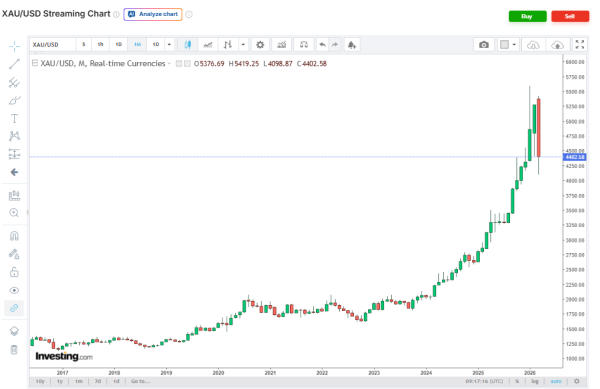
Gold’s recent price action reflects a market adjusting to stronger macroeconomic headwinds, particularly the rise in the U.S. dollar and Treasury yields. While the metal has entered bear market territory after falling more than 21% from its peak, the broader narrative remains complex.
This highlights a market balancing short-term pressure with longer-term structural support. As investors continue to reassess risk and monetary policy expectations evolve, gold’s next move will likely depend on how these competing forces unfold.