
In a dramatic twist, Wall Street has defied expectations, clawing its way back to its strongest weekly performance since 2023, despite a week defined by volatility, trade tension, and unsettling bond market behavior. The rebound in equities stands in sharp contrast to the persistent instability across other key indicators, particularly in Treasuries and currency markets. Yet beneath the surface, uncertainty reigns, raising questions about how long this rally can truly last.
Lucas Morran, QuilCapital‘s financial strategist, examines how this fragile optimism may be masking deeper systemic strains and explores what investors should watch as pressure mounts on policymakers and markets alike.
A Rally That Masks Deeper Market Turmoil
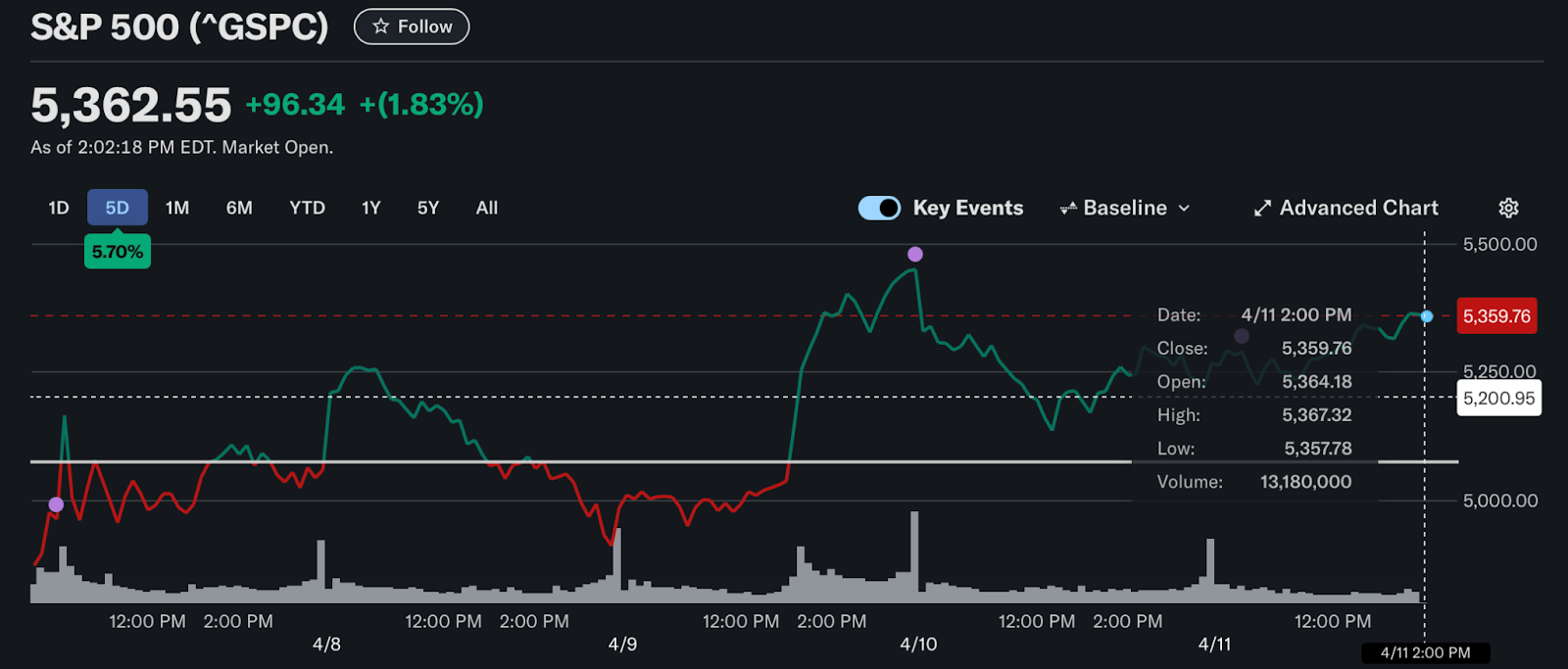 image from finance.yahoo.com
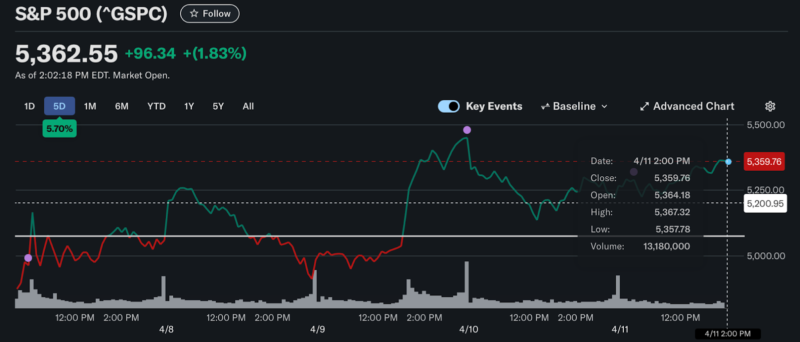
Friday’s stock market reversal surprised many traders. The S&P 500 gained 1.2%, while the Nasdaq 100 advanced 1.3% and the Dow Jones climbed 1%, helping cement a potential end to a volatile week with the strongest equity rally since last year. However, this recovery comes with caveats: investors are largely reacting to a pause in bond market chaos rather than any true easing of macroeconomic risks.
The 30-year Treasury yield, though slightly down by Friday, remains up by 45 basis points since the previous week, marking one of the most dramatic surges in borrowing costs since the pandemic. Meanwhile, the U.S. dollar hit a six-month low, signaling reduced investor confidence in the greenback’s safe-haven status.
Equity markets may be rising, but they’re moving in opposition to other asset classes–a divergence that hints at systemic stress rather than healthy optimism.
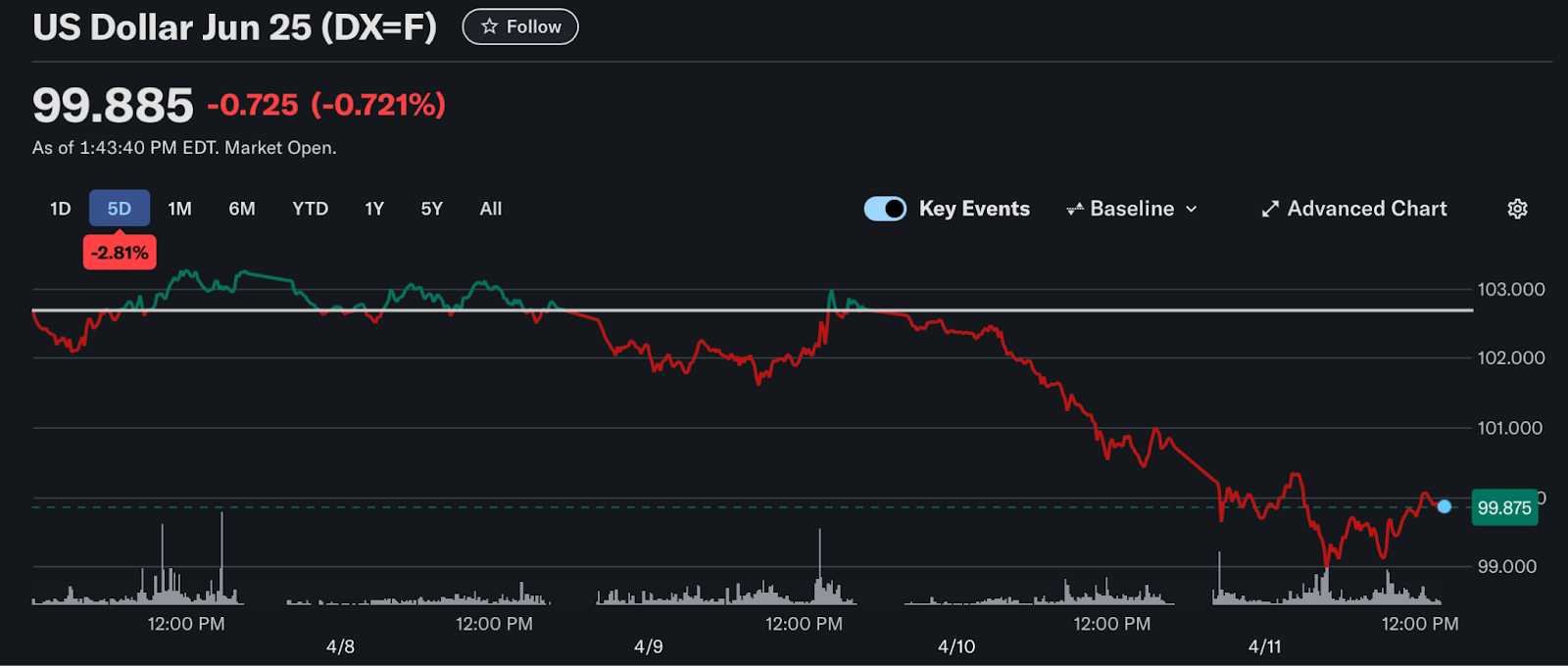 image from finance.yahoo.com
Trade Wars and Safe-Haven Doubts
Much of the market’s confusion stems from rapidly shifting U.S. trade policies. The latest round of tariffs–quickly imposed and then partially paused–has jolted global sentiment. China responded by slapping increased tariffs on all U.S. imports, a move that could significantly impact bilateral trade flows and corporate revenues.
This response has had cascading effects. For example, Tesla halted orders for its U.S.-manufactured Model S and Model X vehicles in China, as the tariffs rendered them uncompetitive. Shares of U.S. chipmakers with domestic manufacturing also dived, underlining the tangible consequences of the escalating economic skirmish.
Even market veterans are drawing sobering comparisons. Some strategists warn that U.S. assets are behaving more like those from emerging markets than from a developed economy. The erosion of the dollar’s strength, combined with the volatility in bond markets, has led some to question whether the U.S. can maintain its traditional role as the world’s financial anchor.
Sentiment Sours as Inflation Fears Rise
While markets wrestled with external pressures, internal data painted a bleak picture of consumer confidence. Surveys released on Friday revealed a sharp drop in consumer sentiment, fueled by a surge in long-term inflation expectations to multi-decade highs. Even before the policy shifts midweek, American households were already feeling the strain.
This erosion in confidence suggests that consumers are increasingly anxious about the future–not just because of headlines, but due to real economic pressures that affect spending, saving, and investing behaviors. For a consumption-driven economy like the U.S., this represents a major risk to continued growth.
Bond Market Panic and China’s Role
The bond market has been ground zero for this week’s financial turbulence. Rising yields on longer-dated Treasuries have unnerved analysts and investors alike. Theories are now circulating about China possibly selling U.S. debt, though evidence remains circumstantial. Still, the prospect of such action has revived old fears about geopolitical tensions translating into financial weaponry.
Adding to concerns, analysts are worried about a potential “kerfuffle” in the Treasury market–an unusual term used by a top bank executive to describe what might be a liquidity crunch or regulatory dislocation. Many now believe the Federal Reserve will be forced to intervene, but likely only after signs of more systemic stress emerge.
Barclays analysts echoed these concerns, noting that until Treasuries return to normal behavior, other risk assets such as equities are likely to remain fragile and prone to sharp swings.
A World Watching U.S. Policy Shifts Closely
The global ripple effects are already being felt. As the MSCI World Index rose 0.9%, international investors found themselves trying to navigate an increasingly chaotic landscape. While some saw opportunities in undervalued assets, many are adopting a defensive stance, moving capital into short-duration bonds or away from the U.S. altogether.
Two-year Treasuries are now being eyed as safer bets amid the uncertainty. Strategists have recommended short positions on equities until the S&P 500 hits 4,800 points while advocating for long bets on shorter-dated debt instruments that carry less risk in turbulent environments.
Conclusion: Resilience or Reversal Ahead?
The sharp rebound in equities may offer a brief moment of relief, but it does little to resolve the deeper concerns plaguing the markets. With U.S.-China trade relations deteriorating, consumer confidence dipping and Treasury markets sending distress signals, the road ahead is far from clear.
As investors recalibrate their strategies, the global financial system stands at a potential inflection point. While central banks may eventually step in to calm the storm, the timing and scale of such interventions remain unknown.

COMTEX_465114484/2922/2025-05-01T12:52:13
This press release was originally published on this site