
Alderstone-Holdings technology sector analyst Sami B Davis breaks down how Broadcom defied market gravity with strategic AI partnerships while competitors wilted under Iran conflict pressure.
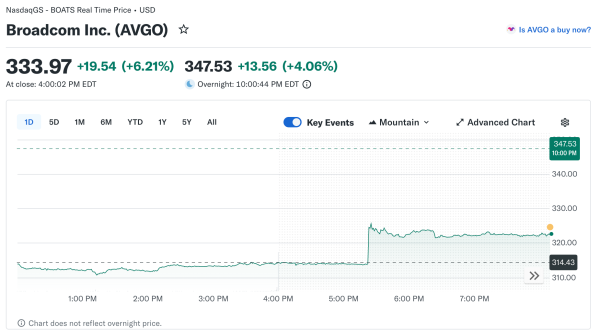
Amid one of the most volatile trading sessions in recent memory, Broadcom delivered a masterclass in how concrete business developments can override macro fears. The semiconductor company surged 5% on April 7 after announcing long-term agreements to supply custom AI chips to Alphabet and Anthropic, the company behind Claude AI.
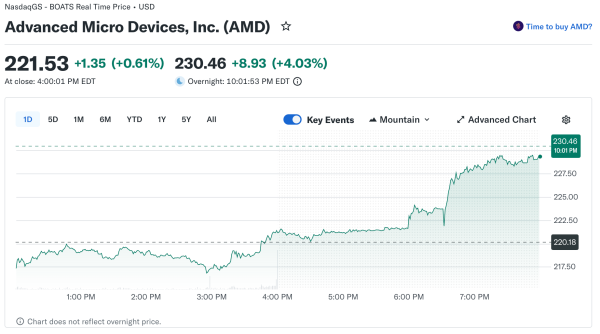
The rally stood out in sharp contrast to broader semiconductor weakness. NVIDIA managed just 0.26% gains despite being the sector leader in AI acceleration. AMD rose 0.61% while Micron actually declined as traders fled speculative positions ahead of the 8 PM ET deadline for Iran.
The Anthropic Connection
Broadcom’s partnership with Anthropic represents strategic positioning in the AI infrastructure race. Anthropic competes directly with OpenAI in frontier model development, creating demand for specialized chips optimized for their specific workloads.
The agreement extends beyond simple chip supply into co-design relationships where Broadcom engineers work directly with Anthropic’s technical teams to optimize hardware for their training runs and inference deployments. This level of integration creates switching costs and long-term revenue visibility that commodity chip sales cannot match.
CEO Hock Tan stated the company has “line of sight to $100 billion in AI chip revenue” over the coming years. That forecast reflects contracted business rather than market projections, giving investors confidence even as broader AI spending faces scrutiny.
The Alphabet Advantage
Alphabet’s custom chip requirements dwarf most hyperscalers due to the company’s $185 billion capital expenditure plans for 2026. The tech giant announced in February it would more than double its spending to build AI infrastructure, creating massive demand for specialized processors.
Broadcom will supply TPUs (Tensor Processing Units) under the long-term agreement. These custom accelerators offer better performance per dollar for Google’s specific AI workloads compared to general-purpose GPUs, though they lack the flexibility of chips like Nvidia’s offerings.
The partnership demonstrates how hyperscalers are diversifying chip supply beyond Nvidia’s dominance. While Nvidia maintains leadership in training large models, inference workloads increasingly run on custom silicon optimized for specific tasks. Broadcom captures this segment that Nvidia doesn’t prioritize.
Why the Market Responded
Broadcom’s 5% rally occurred while the S&P 500 spent most of the day down over 1% and the Nasdaq struggled in negative territory. Three factors explain the divergence.
First, the partnerships represent contracted revenue rather than speculative demand. When oil prices spike to $115 per barrel and recession fears mount, investors flee companies dependent on sustained economic growth. Broadcom’s multi-year agreements provide insulation.
Second, the announcement came from partnerships rather than capital raises. Some semiconductor companies fund expansion through dilutive equity offerings or debt that weighs on shares. Broadcom secures business without balance sheet stress.
Third, the timing countered negative narratives about AI spending slowdowns. After Alphabet’s massive capex announcement sparked fears about returns on investment, concrete chip orders demonstrate that spending translates into actual business activity.
The Competitive Landscape Shifts
Broadcom’s rise comes as Nvidia faces questions about maintaining its 80%+ market share in AI accelerators. The $178.10 closing price for Nvidia represents solid performance but lacks the explosive momentum that characterized 2024 and early 2025.
Intel’s 4.19% rally to $52.91 on news it joined Terafab project shows alternative chip architectures gaining traction. The collaboration validates Intel’s manufacturing capabilities after years of execution struggles that cost the company market leadership.
AMD posted modest 0.61% gains despite having no major news. The company benefits from Nvidia’s supply constraints and pricing, but lacks the custom chip relationships that differentiate Broadcom’s positioning.
The Geopolitical Context
Broadcom’s outperformance becomes more impressive considering the macro backdrop. Crude oil briefly touched $115 per barrel as markets priced in an extended Strait of Hormuz closure. That level of energy shock typically crashes technology stocks dependent on economic growth.
The Pakistan ceasefire proposal, arriving around 4 PM ET, provided relief that lifted all equities in the final hour. But Broadcom was already up mid-session when other tech names remained deeply negative, demonstrating genuine buying interest rather than short covering.
Treasury yields fell as safe-haven demand increased, with the 10-year yield swinging in a 20-basis-point range intraday. In that environment, high-multiple growth stocks usually suffer regardless of company-specific news.
Looking Ahead
Broadcom faces earnings in May 2026, where management will provide updated guidance incorporating the new partnerships. Analysts expect revenue growth acceleration in the second half of 2026 as chip deliveries ramp.
The stock’s 5% single-day gain reflects optimism about these agreements. Sustaining momentum requires execution in manufacturing and meeting hyperscaler demand without delays that plagued competitors.
The Pakistan ceasefire proposal, buying two weeks of negotiation time, provides breathing room for markets to focus on fundamentals rather than geopolitical crisis. Broadcom’s ability to rally during chaos demonstrates the power of contracted revenue visibility.