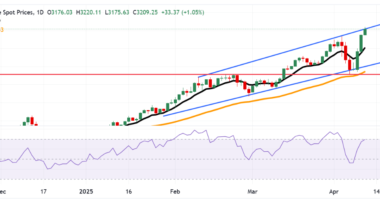
The USD/JPY pair has delivered yet another session defined by indecision and aggressive intraday swings. Traders continue to push the pair back and forth, struggling to establish a sustainable directional bias. However, recent candlestick behavior suggests that selling pressure in the US Dollar may be fading. The brokers at Alderstone-Holdings provide a comprehensive breakdown of this topic in this article.
Monday’s candlestick reflected strong bearish sentiment, yet Tuesday’s follow-through lacked conviction. Instead of accelerating lower, the pair stabilized, hinting at possible exhaustion among sellers. When bearish momentum fails to expand after a strong downside candle, it often signals a market nearing short-term capitulation.
Markets rarely move in straight lines. Even within broader bearish structures, technical stabilization often precedes sharp reversals, especially when positioning becomes crowded.
Extreme Dollar Short Positioning: A Contrarian Signal
One of the most compelling arguments for a potential USD rebound lies in positioning data. The US Dollar is heavily shorted, with speculative short volume reaching levels not seen in approximately 14.5 years.
From a technical and behavioral finance perspective, this is critical. When positioning reaches historical extremes, markets become fragile and prone to sharp reversals, including short squeezes, forced liquidation rallies, and rapid volatility spikes as crowded trades unwind.
If incoming data, particularly inflation metrics, come in stronger than expected, traders heavily positioned short could be forced to unwind positions aggressively. This dynamic can create sharp upside moves in USD/JPY.
Core PCE Inflation: The Next Major Catalyst
This week’s focus turns to Core PCE inflation, the Federal Reserve’s preferred inflation gauge. The policy direction of the Federal Reserve hinges significantly on sustained inflation trends.
If Core PCE comes in hotter than expected, expectations for aggressive rate cuts could diminish. If it comes in cooler than expected, dollar weakness may temporarily resume.
Currently, markets appear to be pricing in more rate cuts than may ultimately materialize. Should inflation prove sticky, the Fed may not cut as deeply or as quickly as traders anticipate.
This repricing risk creates asymmetric upside potential for the dollar, particularly against structurally weaker currencies like the Yen.
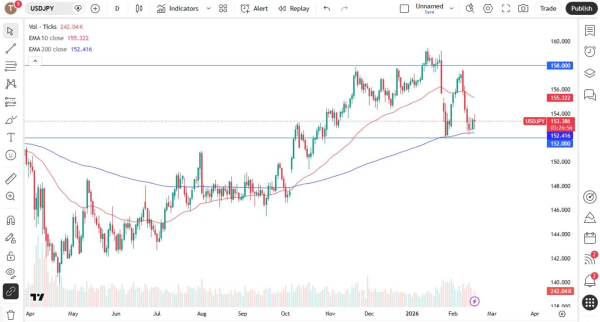
The Structural Problem Facing the Bank of Japan
The narrative surrounding Japan often centers on potential monetary normalization. However, structural realities complicate this story significantly.
The Bank of Japan has signaled tentative steps toward rate normalization, but raising rates aggressively would pose severe risks to the domestic economy.
Japan’s debt-to-GDP ratio is among the highest in the developed world. Meaningful rate increases would dramatically raise government servicing costs, pressure fiscal stability, and risk destabilizing financial markets.
Beyond debt concerns, Japan’s demographic profile further constrains policy flexibility. An aging population and shrinking workforce reduce the economy’s ability to withstand higher borrowing costs.
In short, while the rhetoric around normalization exists, the room to execute is extremely limited.
The Carry Trade Remains a Dominant Theme
At its core, USD/JPY remains a carry trade story. As long as US interest rates remain significantly higher than Japanese rates, the Fed refrains from aggressive easing, and the BOJ maintains limited tightening capacity, the policy divergence is likely to persist.
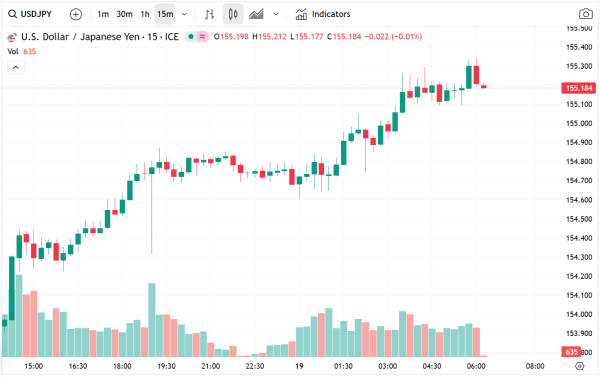
Capital will naturally gravitate toward higher-yielding US assets.
The interest rate differential remains a powerful tailwind for USD/JPY. Even modest repricing of Fed expectations could widen that differential once again.
Carry trades thrive in environments where volatility stabilizes, and rate spreads remain attractive. A slowdown in dollar selling could quickly re-ignite this structural flow.
Will the Bank of Japan Intervene?
There is always the possibility of intervention from the Bank of Japan or Japanese authorities if the Yen weakens too rapidly.
However, history shows that intervention without policy alignment tends to provide only temporary relief. If rate differentials remain wide and global capital flows favor the dollar, sustained Yen strength becomes difficult to maintain.
Authorities may attempt to slow depreciation, but reversing structural forces is another matter entirely.
Technical Bias: Buying Dips
Short-term pullbacks may occur, particularly around major data releases. However, unless the macro landscape shifts decisively in favor of Japan, the broader framework supports a stronger dollar over time.
If the Fed does not cut as aggressively as markets currently expect, especially later this year, the Yen could face renewed selling pressure.
Conclusion
USD/JPY sits at a critical inflection point. Short-term volatility reflects uncertainty surrounding inflation data and central bank policy. Yet beneath the surface, several structural factors favor a potential turnaround in the US Dollar: crowded short positioning, rate differential advantages, limited BOJ flexibility, and major technical breakout potential above 162.00.
Should these elements align, the Yen may once again find itself under sustained pressure. In that environment, the strategy remains clear: look for opportunities to buy USD/JPY on pullbacks and position for a broader structural upside move.