

In a sharp reversal from the previous day’s optimism, global markets once again plunged into turmoil, as mounting tensions between the United States and China triggered a broad sell-off across stocks, currencies, and commodities.
The financial landscape is now dominated by fears that these economic conflicts could cause deeper, more lasting damage to global growth and stability. As volatility returns with force, a financial analyst from QuilCapital, Ben Olson, explores the intricacies of this market unraveling and what it signals for the months ahead.
Escalating Trade Disputes Rattle Investor Confidence
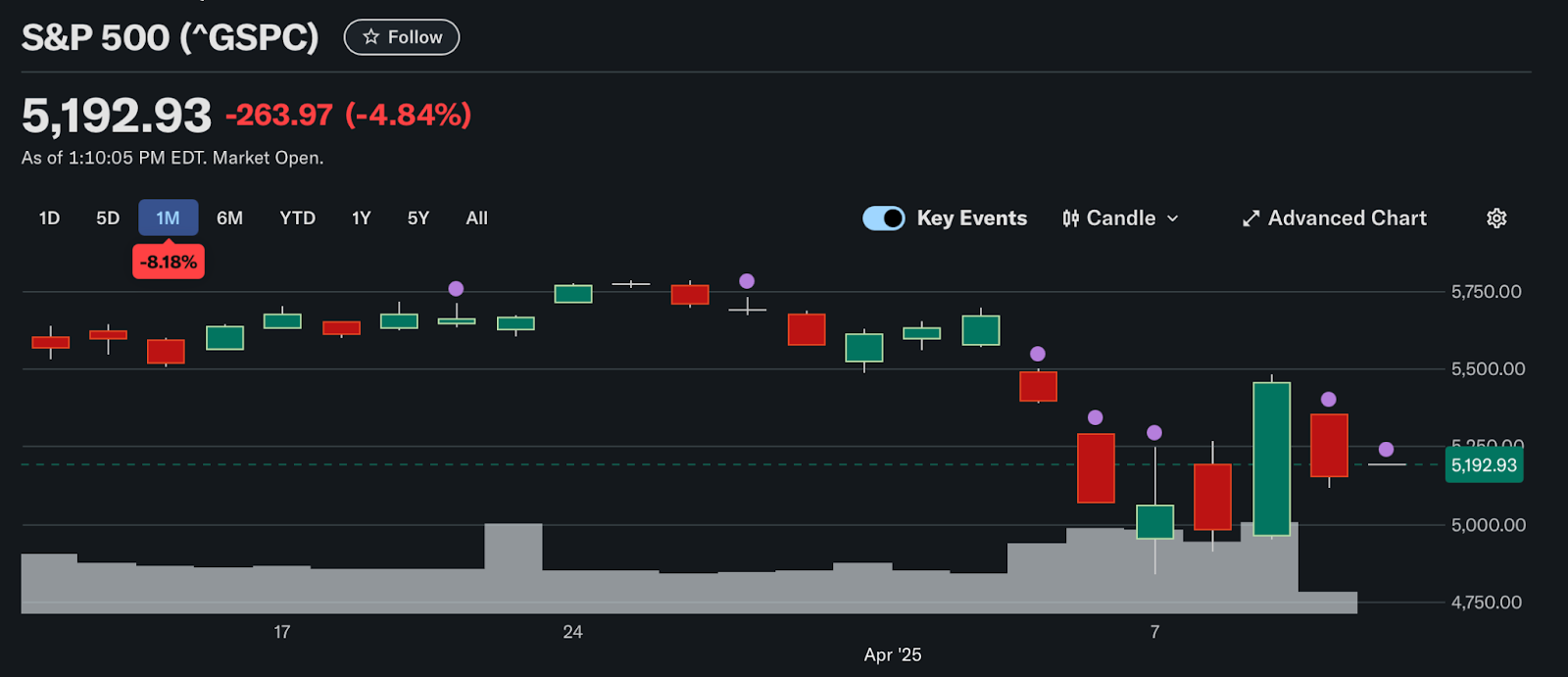 image from finance.yahoo.com
Wall Street’s brief respite came to an abrupt end as the trade war between the world’s two largest economies intensified. US tariffs on Chinese goods now total a staggering 145%, with new measures introduced to counterbalance the retaliatory policies coming from Beijing. This abrupt shift in tone erased gains from what had been the largest stock-buying surge in five years, replacing hope with renewed uncertainty.
Markets responded swiftly and severely. The S&P 500 plummeted 6%, while the Nasdaq 100 dropped 6.8% and the Dow Jones Industrial Average lost 5.1%. Globally, the MSCI World Index fell by 3%, reflecting a widespread retreat from risk.
Traders are increasingly focused on how this economic stalemate will influence future earnings, employment trends, and overall GDP growth. The sentiment is clear: this is no longer a temporary disruption but a potentially structural threat to global financial equilibrium.
 image from finance.yahoo.com
From Euphoria to Alarm: A Swift Market Turnaround
Just 24 hours earlier, optimism had been sparked by a White House decision to delay certain tariffs, sparking a rally that some likened to the bullish momentum of 2008’s stimulus-driven bounce. However, investors quickly revised their expectations, recognizing that the postponement offered no resolution–only more delay.
The shift illustrates the fragility of market sentiment in an era where geopolitical decisions rapidly alter financial trajectories. A 10% base tariff might have seemed manageable, but the looming threat of further escalation, especially within the 90-day negotiation window, has rekindled fears of a prolonged trade war with serious consequences for corporate America and beyond.
Global Trade and Corporate Strategy at Crossroads
Multinational corporations have begun tapping the brakes on spending, production, and hiring. As the uncertainty surrounding trade negotiations deepens, so does the likelihood that businesses will delay investment decisions, a move that can ripple across supply chains and labor markets.
Even as America’s current administration frames these tariffs as a tool to rebalance trade relationships and curb China’s retaliatory tactics, many industry strategists view the approach as destabilizing. From a macroeconomic perspective, the continuation of aggressive tariff policies only exacerbates global anxiety and risks pulling down consumer sentiment along with business confidence.
Bond Market Anomalies Signal Deeper Concerns
Ordinarily, periods of market stress trigger a flight to safety, often benefiting government bonds. Yet this time, longer-term Treasuries bucked expectations, with 30-year yields rising nine basis points to 4.8%. This unusual behavior suggests that investors may no longer trust bonds to perform their traditional stabilizing role in times of financial stress.
Meanwhile, the dollar is approaching its lowest level since October, signaling that investors may be reassessing the strength of the U.S. economy in light of these developments. This retreat from U.S. assets highlights a broader sense of unease that now permeates both domestic and international investment communities.
Inflation Data Offers Few Comforts
March’s inflation numbers appeared to show cooling across key categories, but many analysts caution against overinterpretation. These figures were recorded before the most recent round of tariffs, and the expectation is that inflationary pressures will re-emerge once these new levies begin filtering through the economy.
While a modest drop in prices for services like hotel stays and airfare might seem positive at first glance, they could also indicate declining consumer demand, a potential warning sign of economic slowdown. As one financial strategist put it, “Lower inflation caused by shrinking economic activity is not the solution markets are looking for.”
Federal Reserve Takes a Cautious Stance
Amid all this volatility, the U.S. Federal Reserve remains hesitant to alter its course. Several central bank officials have voiced concerns that tariff-related inflation could become more entrenched, despite initial assumptions that it would be short-lived.
The President of the Federal Reserve Bank of Kansas City remarked on his reluctance to view the current inflation spike as a passing issue, while the Dallas Fed President emphasized the importance of ensuring that these cost pressures do not become baked into the economy. For now, the Fed seems content to maintain interest rates and monitor evolving conditions, even as market volatility puts pressure on policymakers to respond.
Conclusion: A Time for Caution and Clarity
In this era of heightened financial tension, investors are navigating an increasingly complex and uncertain environment. The shifting nature of global trade, coupled with inconsistent policy signals, makes long-term planning more difficult for both businesses and individuals. As the data continues to evolve, so too must our understanding of risk and opportunity in a transformed global marketplace.
For now, financial experts–like those at QuilCapital–are closely watching for signs of resolution, while preparing for further turbulence. Amid the noise, one thing remains clear: the stakes have never been higher for global economic stability.

COMTEX_465114292/2922/2025-05-01T12:47:46
This press release was originally published on this site