
The global semiconductor sector has been navigating choppy waters due to ongoing geopolitical tensions and tariff issues, with significant impacts on major industry players like Intel and Apple. As the stakes continue to rise, these challenges underscore the fragility and the interconnected nature of global tech supply chains.
In this exploration, a financial strategist from Vanguard LGC, Marko Banjac, delves into the multifaceted impacts of these economic policies and offers insights into potential future scenarios.
Financial Shockwaves Through Silicon and Beyond
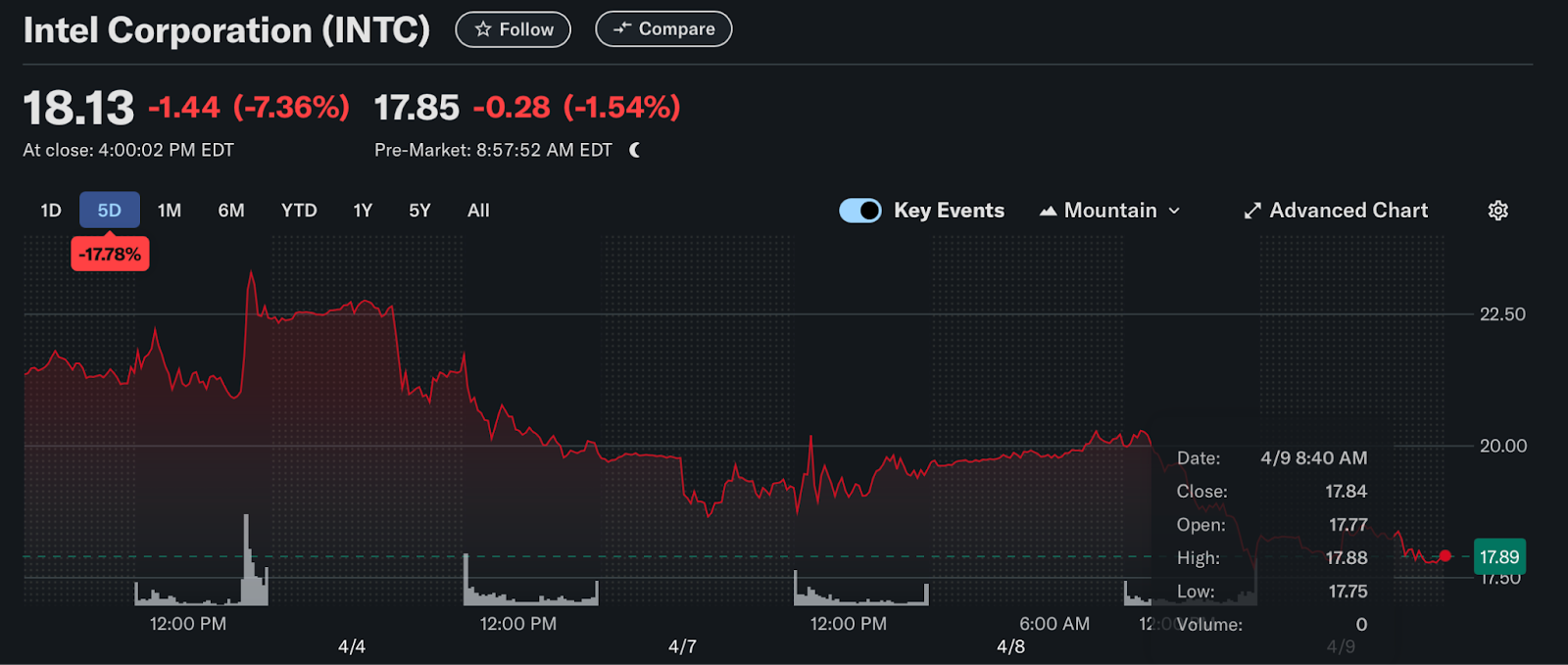 image from finance.yahooo.com
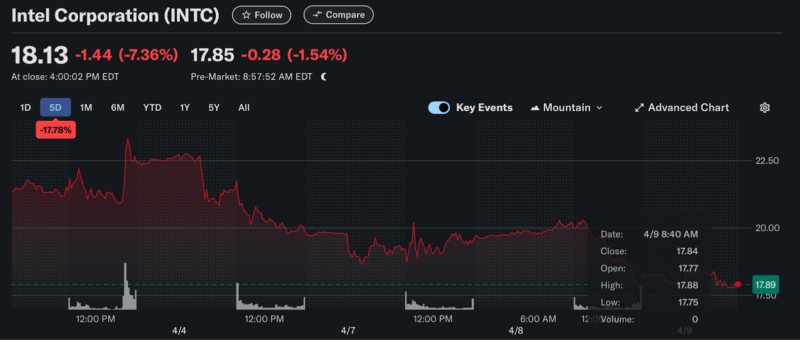
On a recent trading day, Intel Corporation’s (NASDAQ: INTC) stock plummeted by 7.3%, closing at a 16-year low of $18.13. This sharp decline is a direct result of the escalating tariff disputes that have left the semiconductor industry on shaky ground. Intel’s ordeal is compounded by a year-over-year performance dip, with shares tumbling over 50%.
In a bold move to counteract these downturns, the company enlisted the expertise of the former CEO of Cadence Design Systems, now tasked with revitalizing Intel’s corporate culture and operational efficacy.
Intel’s strategic pivot includes the forthcoming roll-out of its 18A semiconductor process. This innovation is not just a technological upgrade; it is pivotal for the revival of Intel’s foundry services, targeting a release in the latter half of the year. However, the enthusiasm is tempered by Intel’s daunting financial burdens, highlighted by a troubling $2.2 billion negative cash flow from the previous fiscal year.
Apple’s Predicament Amidst Trade Wars
 image from finance.yahooo.com
Similarly, Apple Inc. (AAPL, Financials) faced a significant downturn, with its shares dropping 5% following comments from the U.S. administration pushing for domestic manufacturing of iPhones.
This decline is part of a broader 23% reduction in Apple’s market value over just four days. The U.S. Trade Representative’s refusal to exempt Apple from the sweeping tariff policies exacerbates the uncertainty, potentially leading to a drastic increase in iPhone prices, up to $3,500, and severe margin pressures in the near term.
Despite Apple’s attempts to diversify its manufacturing base to countries like India, Vietnam, and Brazil, new tariffs on these regions threaten to further disrupt its supply chain. Recent logistical maneuvers saw Apple airlifting iPhones from India to circumvent a 10% U.S. tariff, underscoring the lengths to which the company is going to mitigate tariff impacts.
Meanwhile, escalating trade tensions with China, following comprehensive tariff impositions by the U.S., have led to reciprocal actions from China, adding layers of complexity to Apple’s operational strategies.
The Broader Industry Impact and Future Outlook
The semiconductor industry at large is feeling the ripple effects of these trade and tariff confrontations. As companies grapple with these challenges, the repercussions are evident across stock valuations and global supply chain configurations.
Analysts remain cautious, projecting significant earnings adjustments for tech giants like Apple, with forecasts suggesting a potential 28% dip in fiscal 2025 earnings should the tariff hurdles persist.
Investor Caution and Strategic Implications
The market’s reaction to these developments speaks volumes. Investors are increasingly factoring geopolitical risk into their valuations, especially for tech firms with global footprints. The sharp selloffs in Intel and Apple stocks suggest fading optimism about near-term solutions.
Moreover, earnings expectations are beginning to adjust downward, even as companies ramp up public messaging about innovation and resilience. Apple is scheduled to report its fiscal second-quarter results on May 1, with analysts forecasting earnings per share of $1.61 and revenue of $94.04 billion. While strong on the surface, these numbers could face revisions if trade friction worsens.
The broader takeaway is clear: tech firms can no longer afford to ignore the policy landscape. What was once a niche concern for regulatory affairs teams is now a boardroom-level priority. Risk mitigation strategies must evolve, not just around supply chains, but also around debt management, political forecasting, and production flexibility.
Conclusion
Intel and Apple–two of the most influential companies in the tech sector–are learning hard lessons in a world where economic policy and corporate performance are deeply intertwined. As tariffs become more than just a policy tool and evolve into market-moving catalysts, companies must rethink their strategies with both foresight and agility.
From heavy stock declines to supply chain dilemmas, the path forward will require more than innovation. It will demand a recalibration of where and how value is created in the global tech ecosystem. For investors, analysts, and corporate leaders alike, the message is unmistakable: geopolitics is now as critical as product development in shaping tech’s future.

COMTEX_465097077/2922/2025-05-01T02:29:34
This press release was originally published on this site