
Taurus One senior market analyst Ron Weber examines the cryptocurrency sector’s most violent correction since 2022, as Bitcoin hemorrhages 41% from its October peak and institutional money rushes for the exits.
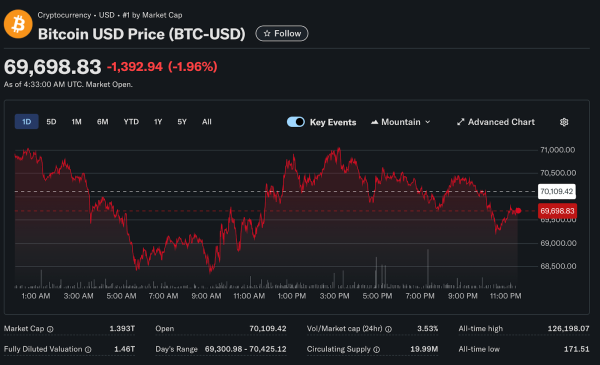
The digital asset that touched $126,000 just four months ago now trades at $69,365, putting nearly every investor who bought after mid-November underwater. But the headline number misses the real story. What’s happening beneath the surface reveals a fundamental shift in how major players view crypto exposure.
Spot Bitcoin ETF outflows hit $817 million in a single trading session last week. That’s not retail panic. That’s institutional repositioning at scale. The products designed to bring Wall Street money into crypto are now facilitating its escape route. These same vehicles channeled billions into Bitcoin during the rally, creating the euphoria that pushed prices above six figures.
The Leverage Massacre Nobody Saw Coming
$5.42 billion in liquidations swept through crypto markets since January 29. This wasn’t gradual deleveraging. This was forced selling triggered by margin calls cascading through the system like dominoes.
Futures open interest collapsed to nine-month lows. When leveraged positions unwind this aggressively, it creates a self-reinforcing spiral. Prices fall, triggering margin calls, forcing more selling, pushing prices lower still. The feedback loop accelerates with each wave of liquidations.
The Crypto Fear and Greed Index plummeted to 15, marking extreme fear territory. For context, the index only dropped to 9 once in the past four years during the depths of 2022’s crypto winter. Current sentiment ranks among the most pessimistic readings on record, surpassing levels seen during exchange collapses and regulatory crackdowns.
Why $70,000 Mattered More Than Anyone Realized
The $70,000 level wasn’t just a round number on charts. It represented a crowded positioning zone where too many traders placed their stop losses and too many institutions marked their risk limits.
Once Bitcoin broke below this threshold, mechanically driven selling took over. Algorithms don’t hesitate. They don’t wait for better prices. They execute immediately. The brief dip to $60,300 demonstrated what happens when technical levels fail in thin liquidity conditions. Every seller is overwhelmed by available bids.
Market structure amplified the move. With futures open interest at multi-month lows, there were fewer offsetting positions to absorb the selling pressure. Every sale had an outsized impact on price discovery. Market makers widened spreads. Depth evaporated. Slippage exceeded historical norms by multiples.
The Macro Backdrop Gets Uglier
While crypto enthusiasts blame technical factors, macro conditions deserve equal attention. Treasury yields climbed as the Federal Reserve maintained its cautious stance. The central bank’s January meeting minutes showed participants want more evidence before cutting rates.
Translation: higher-for-longer interest rates. That’s poison for speculative assets like cryptocurrency. When risk-free Treasury yields offer attractive returns, the opportunity cost of holding volatile digital assets increases substantially.
The U.S. dollar weakened to four-year lows, yet Bitcoin didn’t benefit from typical dollar-weakness dynamics. That’s a red flag. Historically, crypto rallied when the greenback stumbled. This decoupling suggests deeper problems than simple currency correlation breakdowns can explain.
Institutional Adoption Meets Reality Check
Bitcoin was supposed to mature into a legitimate asset class. Corporate treasuries bought billions. Pension funds dipped their toes. Even skeptics acknowledged its staying power after crossing $100,000.
Now those same institutional buyers face uncomfortable portfolio reviews. Bitcoin allocations designed at $120,000 look drastically different at $70,000.
Risk committees that approved crypto exposure based on diversification arguments now question whether the asset class delivers what was promised. Performance attribution becomes painful when your hedge underperforms the assets it was supposed to hedge against.
The regulatory landscape adds complexity. U.S. senators drafted comprehensive crypto legislation that could shift oversight from the SEC to the CFTC. While potentially positive in the long term, regulatory uncertainty creates near-term hesitation among institutions managing other people’s money.
What the Charts Actually Tell Us
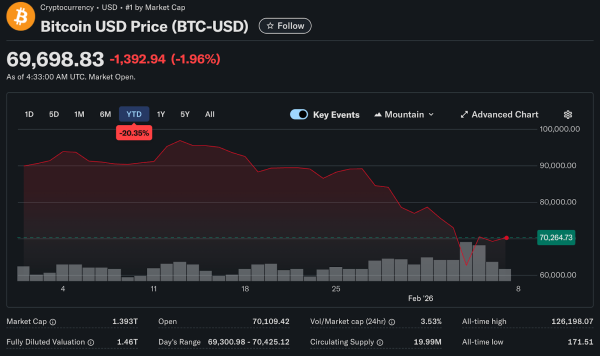
Technical analysts point to Bitcoin trading below its 200-day exponential moving average. This indicator historically signaled extended consolidation periods rather than immediate reversals.
Support levels cluster around $65,000 to $67,000. If these zones fail, the next meaningful support doesn’t appear until $55,000, which marks the breakout level from earlier consolidation patterns. That’s another 18% decline from current levels.
Resistance stacks up heavily near $80,000 to $82,000. Recovery attempts face a gauntlet of overhead supply from investors looking to exit at better prices than current levels. Each rally attempt gets sold aggressively.
Final Calculation
Bitcoin’s correction from $126,000 to $69,000 represents more than price discovery. It’s a stress test of cryptocurrency’s institutional adoption thesis. The asset survived similar drawdowns before, but this time feels different because the participants have changed.
Retail investors can hold through volatility on belief alone. Institutional allocators face quarterly reviews and risk mandates. That structural difference matters when planning position sizing and time horizons for potential recovery scenarios.