Apollo Global Management is tightening redemption access in its flagship private credit vehicle after facing a surge in investor withdrawal requests. The move reflects growing stress within the private credit space, as investors seek liquidity amid shifting market conditions.
In this analysis, Emma D, a financial expert from QuilCapital, explores what this move signals for positioning within the alternative credit space.
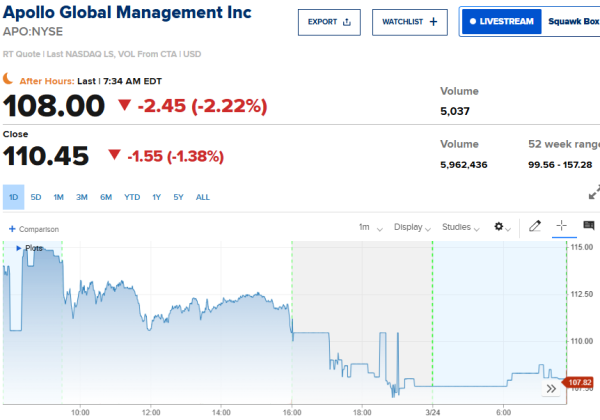
Redemption Requests Exceed Fund Limits
Apollo’s $15 billion private credit fund received withdrawal requests equivalent to 11.2% of total shares, more than double its 5% quarterly redemption cap. As a result, the firm will only fulfill a portion of these requests.
Investors seeking to exit the fund will receive approximately 45% of their requested capital, translating to about $730 million distributed on a prorated basis. The limitation highlights the mismatch between investor liquidity demands and the structure of private credit investments.
Firm Holds Line On Redemption Cap
While some competitors have adjusted their policies to accommodate investor demand, Apollo has chosen to maintain its existing framework. The firm views the 5% cap as a necessary measure to protect long-term value for remaining investors.
This approach contrasts with other asset managers that have relaxed restrictions in recent months to ease redemption pressures. Apollo’s decision signals a more conservative stance, prioritizing portfolio stability over short-term liquidity.
The firm emphasized that its responsibility is to balance the interests of both exiting and remaining investors, reinforcing its long-term investment philosophy.
Fund Performance Shows Relative Stability
Despite the pressure from redemption requests, the fund’s performance has remained relatively resilient. Net asset value per share declined by 1.2% over the three months ending Feb. 28.
This compares favorably to the broader U.S. leveraged loan market, which dropped 2.2% over the same period. The relative outperformance suggests that, despite challenges, the fund has maintained some stability in a volatile environment.
However, even modest declines can contribute to increased investor caution, particularly in less liquid asset classes.
Private Credit Sector Faces Growing Scrutiny
The surge in withdrawal requests reflects broader concerns within the private credit market. Investors have become increasingly cautious about exposure to certain sectors, particularly those perceived as more vulnerable to economic shifts.
While Apollo has positioned itself as focusing on larger and more stable borrowers, it has not been immune to industry-wide pressures. The rise in redemption activity indicates that sentiment toward private credit has shifted.
This trend suggests that liquidity concerns are becoming more prominent as investors reassess risk across alternative assets.
Software Exposure Remains Key Consideration
One notable aspect of the fund’s portfolio is its exposure to the technology sector. Software-related loans account for 12.3% of the fund’s holdings, making it the largest sector allocation.
This concentration has drawn attention from market participants, as software companies have been a focal point of concern in the current environment.
Investors are increasingly evaluating sector exposure within private credit portfolios, particularly in areas where valuations and growth expectations may face pressure.
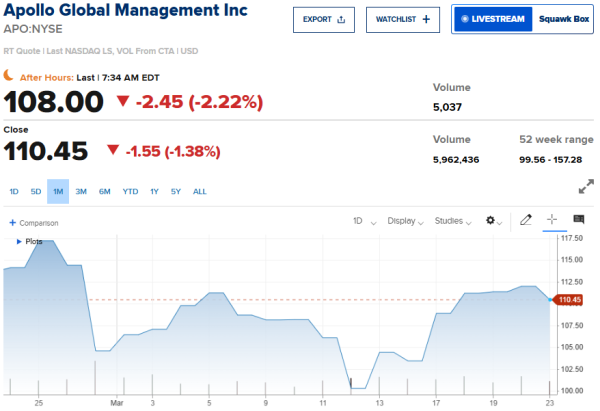
Market Outlook
The situation underscores a broader shift in investor behavior, with liquidity and risk management becoming central considerations. While private credit remains an important asset class, recent events suggest that volatility and redemption pressures could persist in the near term.